
From Dark Hallways to Instant Coziness: How Tech Creators Use Smart Door Sensors for DIY Welcome Home Automation
Imagine walking up to your porch after a long, exhausting evening. Your hands are crammed with heavy grocery bags, the weather outside is freezing, and the interior of your house is pitch black. Instead of clumsily dropping your keys to fumble around for a manual wall switch, the exact second you open the front door, a warm, ambient glow washes over your entryway, the thermostat shifts to a cozy 72°F, and your favorite relaxing playlist begins playing softly in the living room.
This isn't a futuristic mansion scene—it is an effortless, low-cost DIY project that top European and American smart home creators are building using compact, high-efficiency smart door sensors.
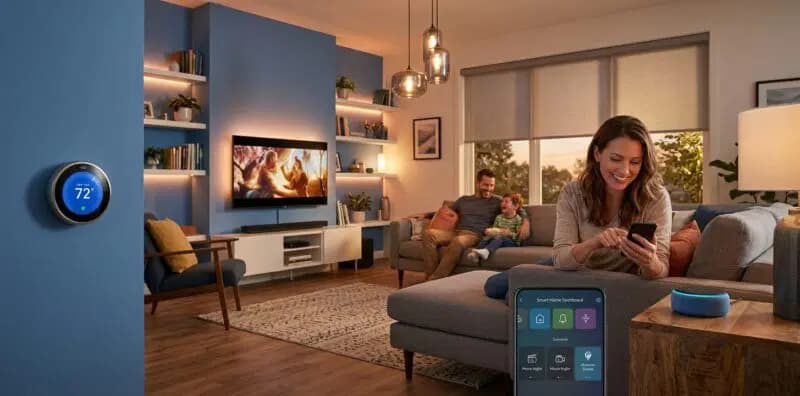
[Insert Image 1: Main Banner Hero Shot]
Today, we are going behind the scenes with Chloe Vance, a Berlin-based interior design and smart home lifestyle creator, to discover exactly how she uses wireless magnetic sensors to completely redefine her evening routine.
The Deep-Dive Creator Interview: Upgrading Everyday Living
Team: Chloe, thank you for inviting us into your space! Your "Welcome Home" social media reels have clocked millions of views. What inspired you to build this specific automation?
Chloe: Honestly, it came from pure daily frustration. My apartment’s main light switch is placed awkwardly about six feet away from the actual front door. Walking into a pitch-black hallway every single night while balancing an armful of design equipment felt like a minor hazard. I wanted my home to actively greet me the instant I stepped over the threshold, without relying on delayed cloud routines or ugly, bulky hardware.
[Insert Video 1: Cinematic Reels/TikTok Embed]
Team: Walk us through the hardware. Many of your followers were surprised by how tiny and budget-friendly the setup is. What are you using?
Chloe: Everyone assumes you need thousands of dollars in hardwired electrical remodeling, which is a nightmare if you rent. I am literally just using standard Zigbee 3.0 smart door sensors. It consists of a tiny main sensor and a slim magnetic strip. I stuck them onto my door frame using the pre-applied heavy-duty double-sided tape in less than two minutes. No drilling, no wires, completely invisible.
[Insert Image 2: Close-up Buyer Product Shot]
Team: Let's talk about the technical magic. How exactly do you get the lights to turn on automatically with zero delay?
Chloe: The core secret is using Zigbee 3.0 instead of laggy standard Wi-Fi. My smart door sensors talk directly to my universal smart gateway. Inside the eWeLink app, I set up a simple conditional routine: IF door sensor state changes from Closed to Open, THEN turn on Entryway Smart Bulb to 40% warm gold. Because it executes locally through the gateway, the trigger is instantaneous. The door cracks open less than an inch, and the room is already bright. It completely changes the psychological feeling of coming home.
Step-by-Step Blueprint: Build Your Own Welcome Home Scene
Ready to duplicate Chloe's cozy setup? Follow this simple, data-backed integration blueprint to build reliable smart home devices linkages in your own home:
Mount the Sensor Pair: Place the main transmitter on your door frame and the magnetic strip on the moving door panel. Ensure the alignment gap between the two pieces is under 15mm when the door is fully shut.
Pair to Your Smart Hub: Open your app (e.g., eWeLink or Amazon Alexa), tap "Add Device," and tap the small reset button on the sensor to sync it with your Zigbee gateway in seconds.
Program Your "Arriving Home" Scene: Create a smart scene. Condition: Sensor is opened. Action: Toggle your smart plugs or smart bulbs to your preferred brightness and power states.
Add Time Restrictions (Pro Tip): To ensure your lights don't unnecessarily turn on during the middle of a bright sunny day, add a condition specifying the routine should only execute between Sunset and Sunrise.