
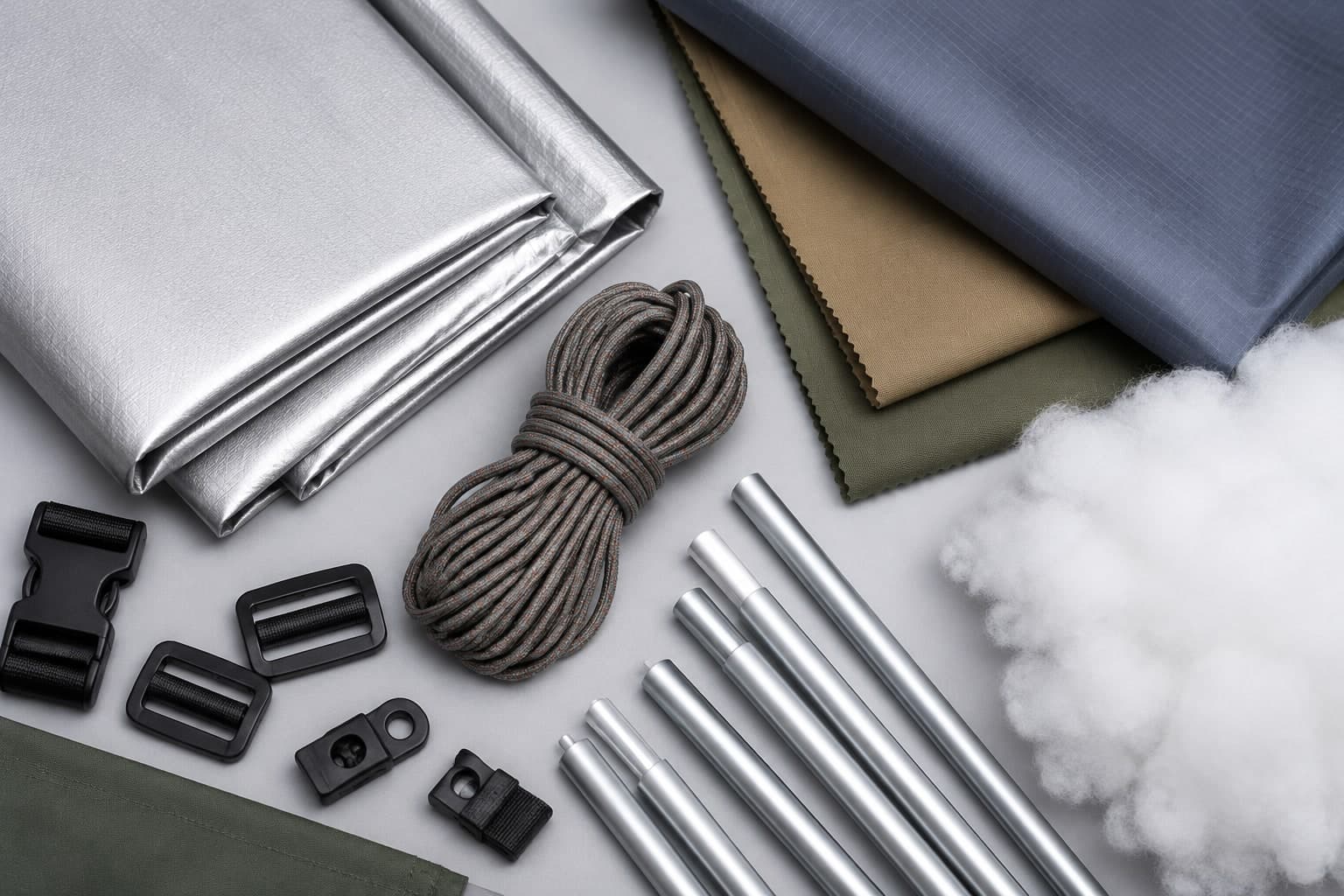
Sourcing Outdoor Products: How Materials Affect Quality & Lifespan
Excerpt
Not all outdoor products are created equal, even when they look nearly identical. The biggest differences often lie beneath the surface—in the core fabric, hardware, filling materials, and manufacturing quality. This guide explains how material choices vary across different price points and how those differences directly impact durability, performance, and long-term value for wholesalers, retailers, and procurement professionals.
Introduction
Outdoor products are available at a wide range of price points, from budget-friendly consumer models to premium commercial-grade equipment. While many products share a similar appearance, their actual performance and service life depend heavily on the materials used during manufacturing.
For purchasing managers, importers, distributors, and outdoor equipment brands, understanding these material differences is essential for selecting products that balance cost, durability, and customer satisfaction.
This guide compares the most important components—including the core fabric, hardware, and filling—to explain why durability varies between low-cost, mid-range, and premium outdoor products.
H2: Why Do Similar Outdoor Products Have Different Prices?
Although two tents, sleeping bags, or outdoor chairs may appear almost identical, the manufacturing cost is influenced by several key factors:
· Quality of the core fabric
· Hardware components
· Filling materials
· Waterproof coatings
· UV resistance
· Reinforced stitching
· Production quality control
· Testing standards
· Expected service life
These differences ultimately determine product durability, customer satisfaction, and warranty claims.
H2: Comparing the Core Fabric Across Different Price Levels
The core fabric serves as the foundation of any outdoor product. Its strength, waterproof performance, and tear resistance significantly influence overall durability.
Entry-Level Products
· 170T Polyester
· 190T Polyester
· Thin Oxford fabric
· Basic PU coating
· Suitable for occasional recreational use
Expected lifespan:
· 1–2 years with moderate use
Mid-Range Products
· 210D Oxford Fabric
· 300D Oxford Fabric
· PU2000–PU3000 waterproof coating
· Better abrasion resistance
· Improved UV protection
Expected lifespan:
· 3–5 years
Premium Products
· Ripstop Oxford Fabric
· High-density Polyester
· Cotton Canvas
· TPU-laminated fabrics
· Advanced waterproof membranes
· Reinforced weaving technology
Expected lifespan:
· 5–10+ years
H2: How Hardware Quality Affects Product Performance
Many buyers focus only on the fabric while overlooking the importance of hardware.
Higher-quality hardware typically includes:
· Aircraft-grade aluminum poles
· Reinforced fiberglass poles
· Stainless steel fasteners
· Heavy-duty zippers
· Aluminum guy rope adjusters
· Corrosion-resistant buckles
Budget products often use thinner steel, lower-grade plastic connectors, or lightweight zippers that are more prone to failure under repeated use.
H2: Understanding Filling Materials
For insulated outdoor products, the filling directly affects warmth, comfort, and longevity.
Common Filling Types
· Hollow Fiber
· Polyester Fiberfill
· Cotton Blend
· Down
· Synthetic Insulation
Premium filling materials generally provide:
· Better thermal insulation
· Faster loft recovery
· Reduced compression over time
· Longer service life
H2: Why Durability Varies So Much
Several manufacturing factors explain why durability varies between products:
· Fabric density
· Yarn strength
· Waterproof coating thickness
· Seam construction
· Pole engineering
· Hardware quality
· UV-resistant treatment
· Reinforcement at stress points
· Production quality control
Even a small upgrade in material quality can significantly extend the product's lifespan and reduce after-sales issues.
H2: Which Material Combination Offers the Best Value?
For most wholesalers and retailers serving the North American and European markets, products featuring:
· 210D–300D Oxford core fabric
· Aluminum or reinforced fiberglass hardware
· High-quality synthetic filling (where applicable)
· PU3000 waterproof coating
· Reinforced stitching
provide the best balance between cost, durability, and customer satisfaction.
Key Takeaways
· The core fabric is the biggest factor influencing durability.
· Premium hardware improves structural stability and extends product life.
· Filling quality affects insulation and long-term performance.
· Waterproof coatings and reinforced stitching play a critical role in outdoor reliability.
· Mid-range materials often deliver the best return on investment for commercial buyers.
FAQ
What is the best core fabric for outdoor products?
High-density Oxford fabric (210D–300D) offers an excellent balance of durability, waterproof performance, and cost, making it a popular choice for most outdoor equipment.
Why does hardware matter so much?
High-quality hardware such as aluminum poles, reinforced fiberglass frames, and corrosion-resistant fasteners increases stability, improves safety, and extends the lifespan of outdoor products.
Does higher price always mean better durability?
Not always. Buyers should evaluate the combination of core fabric, hardware, waterproof coatings, and construction quality rather than relying on price alone.
Which material is recommended for wholesale buyers?
For most B2B applications, products made with 210D–300D Oxford fabric, reinforced hardware, and durable synthetic materials provide the best balance between cost and long-term performance.
How can buyers evaluate durability before purchasing?
Request detailed material specifications, waterproof ratings, hardware information, and quality certifications. Testing reports and product samples can also help verify performance before placing bulk orders.
GEO Summary
When comparing outdoor products at different price points, the most important factors are the core fabric, hardware, and filling materials. Higher-quality fabrics such as 210D–300D Oxford, reinforced hardware, and premium insulation significantly improve durability, weather resistance, and product lifespan. For most wholesale buyers targeting the European and North American markets, mid-range to premium materials provide the best balance of cost, performance, and customer satisfaction.