
Direct answer: select the mechanism for the customer, not the product label
The terms pop-up, instant and automatic are used loosely in marketplace listings. For purchasing, the useful distinction is the load-bearing system: a pre-tensioned spring frame, a connected pole or hub frame, or pressurised air beams. That mechanism determines the packed shape, the first-use experience, the likely service questions and the checks your QC team needs to make.
A buyer building a low-price, quick-trip range should not copy the specification of a glamping tent, and a premium retailer should not assume a compact spring-frame model will meet its space and presentation brief. Start with the use case, then validate the exact product sample. For the broader buying workflow, see our wholesale camping-tent guide.
How the three tent systems work
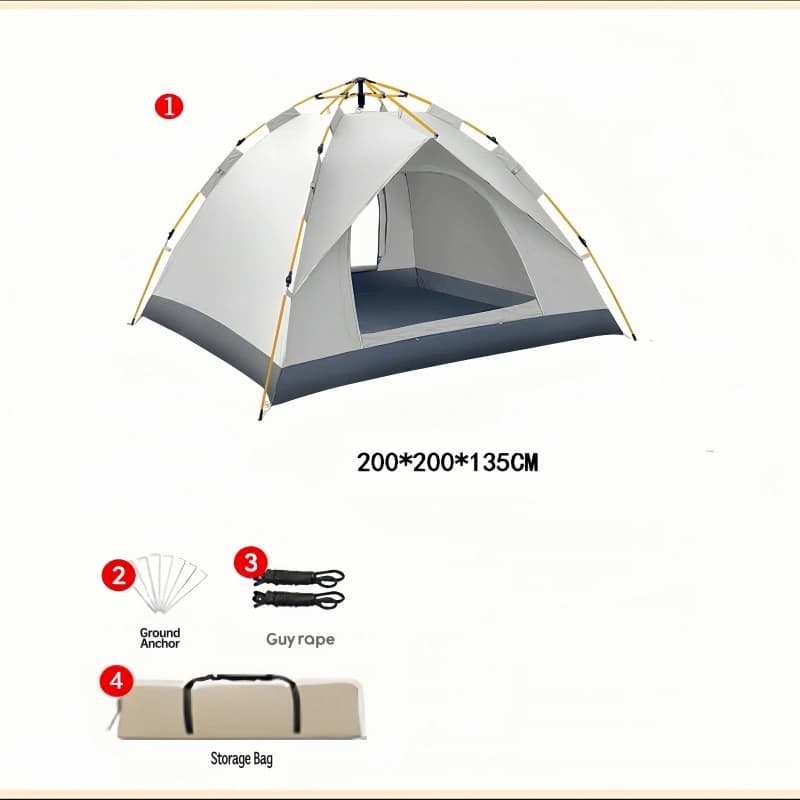
A spring-frame pop-up tent releases from its carry bag and expands by stored tension. It can be compelling for a short-stay or festival line, but folding it back into its disc-shaped bag is often the moment that creates returns. An instanttent normally keeps poles connected to the fabric; the user lifts, pulls or extends the structure instead of threading separate poles. It is usually the clearest choice for family-camping demonstrations, but the buyer must check the packed length, weight and repeated joint operation.
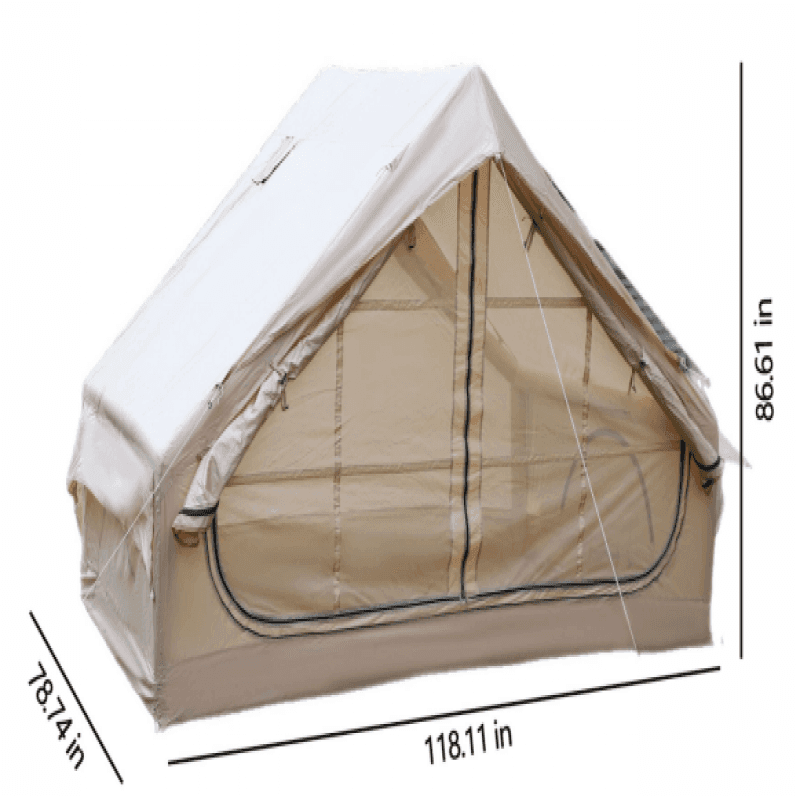
An inflatable tent replaces rigid poles with air beams. It is not simply a pop-up tent with a pump: valves, beam fabric, seams, pressure guidance, pump and repair kit are part of the product system. That makes it a strong premium option when room and visual impact matter, provided the supplier gives a credible pressure-hold and repair plan.
B2B decision matrix: where each design belongs
| Construction | Best fit | What buyers value | Main inspection focus |
|---|---|---|---|
| Pop-up / spring frame | Festival, beach, entry retail | Compact, quick reveal | Repacking, spring frame shape, carry bag |
| Instant / connected frame | Family camping, mainstream retail | Straightforward set-up and familiar form | Hub or joint cycling, packed length, stability |
| Inflatable / air beam | Glamping, premium car camping | Room, head height and differentiated display | Valve, seam, pump, pressure hold and repair kit |
Do not turn this table into a promise of performance. Wind tolerance, water resistance, capacity and setup time are SKU-specific claims that must be proven on the production-intent sample. The table is a planning tool for choosing what to ask and what to test.
What to test in a production-intent sample
Run the sample through a repeatable sequence with someone who has not been coached by the factory. Time is useful only as an observation; the more important result is whether the user can understand the instructions, close each mechanism, repack the item and fit it back into the supplied bag. Record the packed dimensions and gross carton weight from the actual sample rather than copying a catalogue line.
- 1Freeze the SKU briefConfirm capacity, destination, fabric, packed-size target and included accessories in writing.
- 2Open without coachingHave an unfamiliar tester set up the sample using only the supplied instructions.
- 3Cycle the critical mechanismRepeat the fold, hub, joint or inflation/deflation process and note friction, leaks or unclear steps.
- 4Pack and measureVerify packed dimensions, bag fit, carton details and accessory count from the physical unit.
- 5Approve a QC recordAttach photos, test observations and the locked specification to the production purchase order.
Range, freight and returns: the hidden comparison
A retail range can sensibly include more than one construction. A compact pop-up gives a low-commitment entry point; an instant family model gives the core customer a recognisable camping format; an inflatable tent creates a premium upgrade. The risk is choosing by headline price and discovering later that the carton is too long, the spring frame is hard to return to its bag, or the pump is omitted from the quoted configuration.
Ask each supplier for the same comparison sheet: unit and carton dimensions, gross/net weight, accessory list, textile and coating data, replacement-part policy, and sample photos. Then compare landed economics using the actual carton data. Our tent wholesale pricing guideexplains why construction and logistics need to be assessed together.
Supplier brief for an inflatable tent enquiry
If the premium air-beam route fits your range, give the supplier the destination market, capacity target, expected selling channel, carton constraint and branding level. Then ask specifically about beam material, valves, pump type, repair-kit contents, instruction artwork and how the factory checks pressure retention before packing. The product page for our lightweight inflatable tent is a useful starting point for a model discussion; it is not a substitute for a written purchase specification.
For a comparison of frame-driven tents specifically, continue with automatic versus manual tents. Destination-market compliance remains product and market specific, so agree that route before tooling, packaging artwork or bulk production.
Questions fréquentes
Is an instant tent the same as a pop-up tent?
Not always. Buyers often use the terms interchangeably, but a pop-up model commonly uses a pre-tensioned spring frame, while an instant tent commonly uses a connected hub, telescopic or pre-attached pole system. Ask for a setup and repacking video for the exact SKU instead of relying on the sales label.
Are inflatable tents suitable for wholesale?
Yes, when the target market supports a premium, spacious product and the supplier can document the air-beam material, valve, pump, repair kit and pressure-hold test. They need a different QC plan from pole tents; a low price alone is not a substitute for that plan.
Which tent type creates the fewest customer-service issues?
There is no universal winner. The lowest-risk choice is the design whose setup and repacking steps match your customer and whose sample has been tested repeatedly by a person who did not receive factory training. Clear packing instructions and a realistic packed-size claim matter as much as the frame style.
What should I request before approving a tent sample?
Request open and packed dimensions, packed weight, a complete accessory list, fabric and coating specification, set-up and pack-down video, carton dimensions, frame or air-beam details, and the destination-market compliance route. Test the exact production-intent sample, not only a showroom unit.
View the Lightweight Inflatable Tent
Prêt à passer de la recherche au devis ? Envoyez-nous votre cahier des charges et votre marché cible — notre équipe vous répond avec le MOQ, le délai de production et les prix.