Quick answer: what a good wholesale tent order looks like
A sound wholesale camping-tent order comes down to five decisions, in order: construction type, fabric and waterproofing, size and capacity mix, MOQ and price, and destination-market certification. Get those right on paper before you request a sample and you avoid the two expensive mistakes importers make — ordering the wrong construction type for their channel, and discovering a certification gap after production. The rest of this guide works through each decision with real numbers.

Tent construction types compared
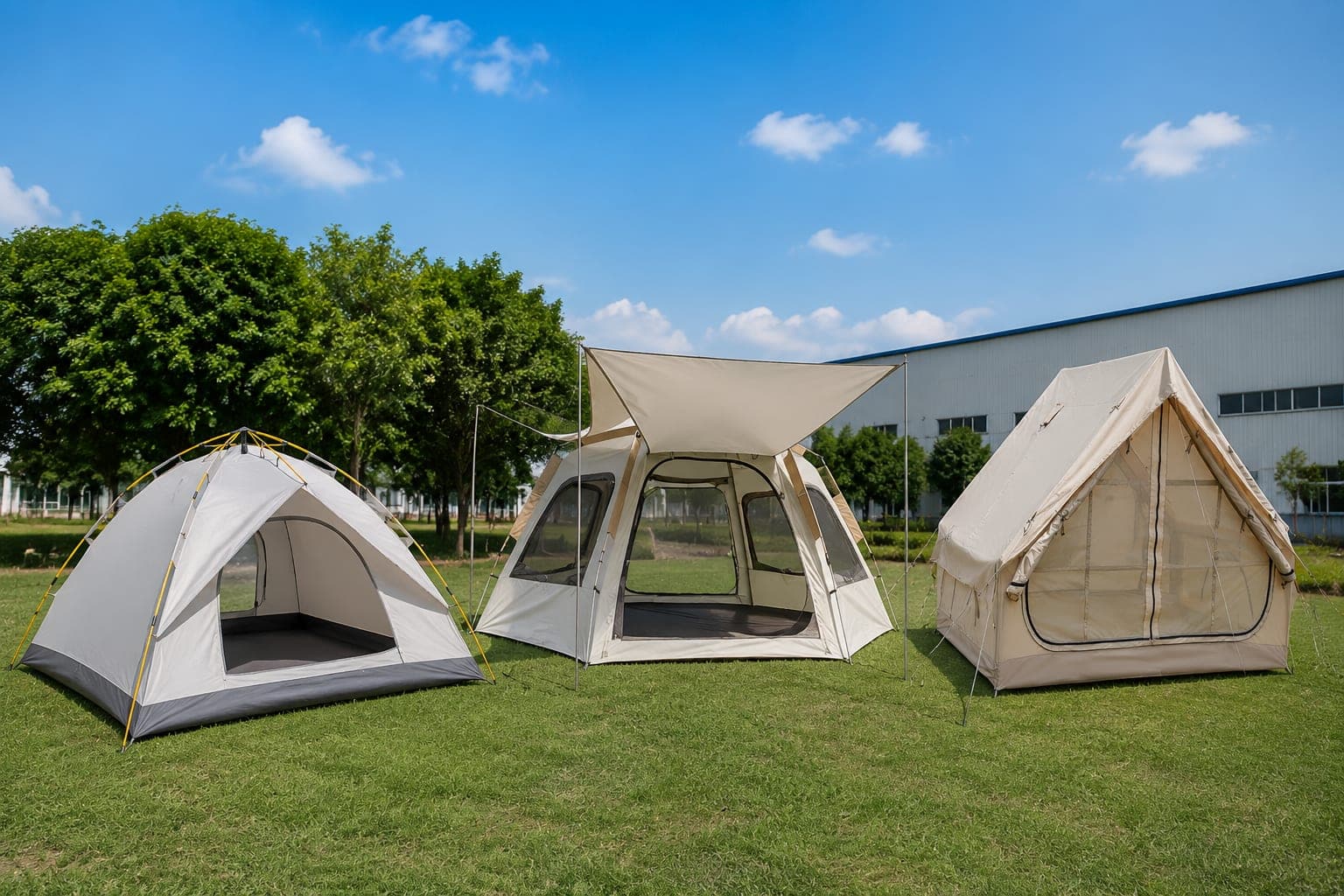
Construction type is the decision that most affects your price, your returns rate and your channel fit. There are three families you will actually be quoted on:
| Type | Setup | Best channel | Price band | Watch-outs |
|---|---|---|---|---|
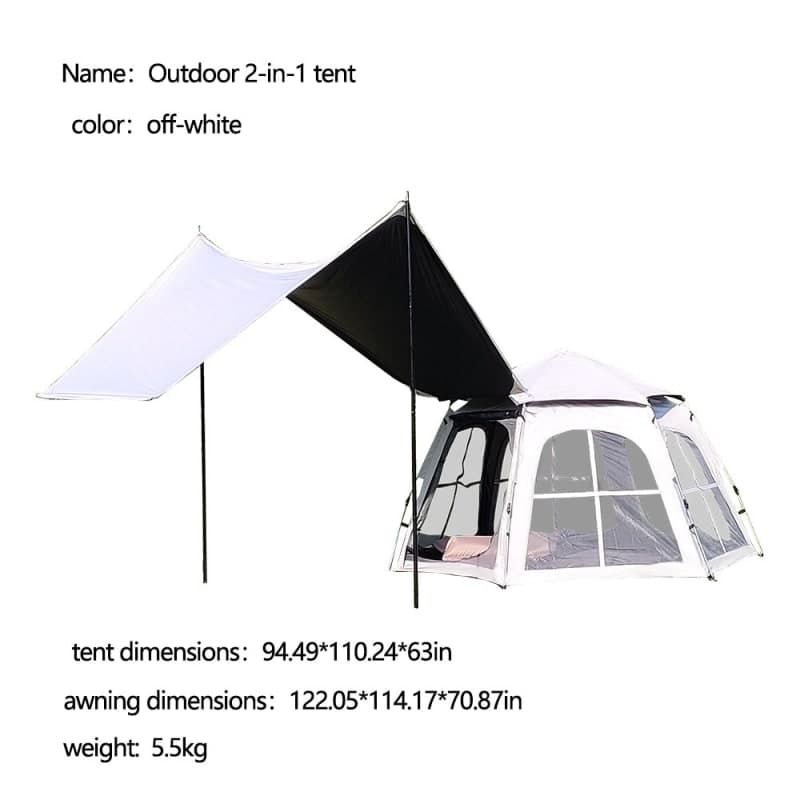
| Pop-up (spring frame) | Seconds, self-erecting | Beach, festival, entry retail | $12–$30 | Harder to fold; lower wind resistance |
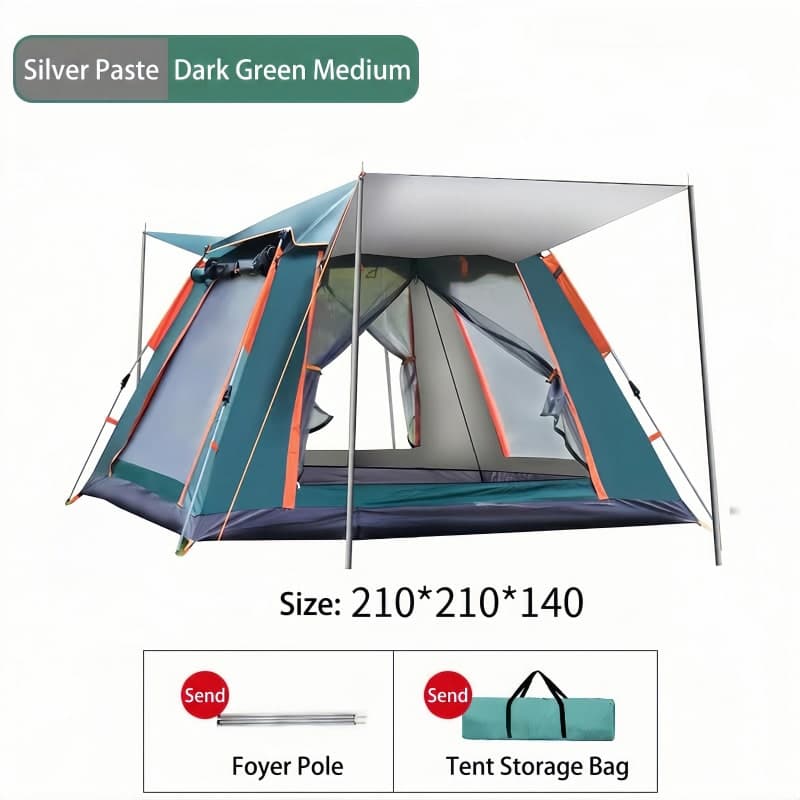
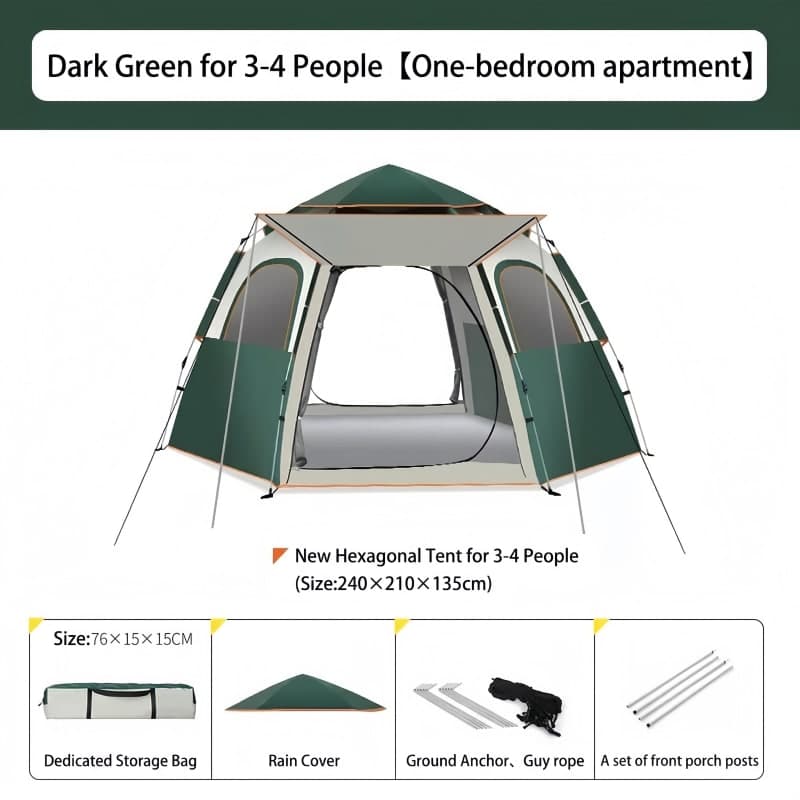
| Instant / automatic (hydraulic) | Seconds, one-pull frame | Family camping, mid retail | $30–$70 | Heavier; confirm frame durability |
| Inflatable (air-beam) | 1–3 min with pump | Glamping, premium | $45–$85 | Needs a reliable pump; seam quality is critical |
For most first orders into North America and Europe, an automatic no-setup tent is the safest volume play — it photographs well, demos easily online, and sits in the mid price band where margins are healthiest. Reserve inflatable air-beam models for a premium or glamping line, and keep pop-ups for beach and festival SKUs.
Fabric, denier and waterproofing
Denier (the “D” number) measures yarn thickness, and it is the single spec buyers most often get wrong. As a rule, aim for 210D or above for mainstream camping tents; below 150D you are in ultralight territory where durability drops and returns rise. Pair that with a PU (polyurethane) waterproof coating rated to a hydrostatic head of 1500mm or more for genuine rain resistance, and a silver-coated finish for UV and heat.
Our tent range standardises on 210D silver-coated Oxford polyester with PU 1500mm+ coating precisely because it is the balance point most Western buyers want. Whatever you source, get the denier and hydrostatic-head figures written into the spec sheet — verbal assurances are where quality quietly slips.
Pricing & MOQ
Factory-direct 2026 tent pricing runs roughly $12–$85per unit. Where you land inside that band is driven by size, fabric denier, coating and hardware — not by the supplier being “cheap” or “premium.” A 2-person pop-up and a 5-person multi-room instant tent are simply different amounts of material and labour.
On MOQ, outdoor gear starts at around 10 pieces per model when you use an existing mould and a stocked fabric; a bespoke mould or custom-woven textile raises it. Mixing several tent SKUs in one shipment is the most effective way to reach a workable container load without over-committing on any single model — a common approach for buyers testing a new range. For the full price-by-type-and-size breakdown, see our 2026 tent wholesale pricing guide, and for the deposit and tooling-fee mechanics, our approach is 30% deposit with the balance against a copy of the bill of lading.

Certification that gates import
A tent that fails a mandatory test cannot clear customs, so certification is not a formality to leave until last. The requirements differ by destination:
| Market | Typically required | Also check |
|---|---|---|
| United States | CPAI-84 flame retardancy (via CPSC/CPSIA) | Prop 65 (California) |
| European Union | CE / GPSR general safety | EN 581 (camping furniture), REACH |
| United Kingdom | UKCA marking | REACH-equivalent chemical rules |
We arrange the laboratory testing pathway for your target market per order. For the full picture across outdoor categories, see our outdoor product certification guide for the EU, US & UK.
The sourcing workflow
Run the order in this sequence and each decision de-risks the next:
- 1Define the specConstruction type, denier, waterproof rating, size mix — on paper first.
- 2Confirm MOQ & priceGet the FOB price band and MOQ for that exact spec, plus deposit terms.
- 3Lock certificationAgree the test pathway for your destination market before tooling.
- 4Sample & inspect10–15 day sample; check seams, frame, waterproofing, pack size.
- 5Produce with in-line QCInspection during the run, not only on the finished batch.
Common mistakes to avoid
- Sampling before the spec is fixed. A sample only tells you something if you know exactly what it is meant to be. Nail denier, coating and size first.
- Ignoring pack size. An instant tent that pitches in seconds but packs large will cost you in freight and in retail shelf space. Confirm the folded dimensions.
- Leaving certification to the end. Discovering a CPAI-84 or CE gap after production means a reworked order and a missed season. Lock it before tooling.
- Single-SKU over-commitment. Mix tent models to reach a container load rather than betting the whole order on one unproven design.
Key takeaways
- Match construction type to channel: pop-up for beach/festival, automatic for family retail, inflatable for premium.
- Aim for 210D+ fabric and PU 1500mm+ waterproofing, written into the spec.
- Budget $12–$85 per tent by size and spec; MOQ from ~10 pieces on stocked tooling.
- Lock destination-market certification (CPAI-84 / CE / UKCA) before tooling, not after.
Frequently Asked Questions
What is the minimum order quantity for wholesale camping tents?
Outdoor-gear MOQ starts at around 10 pieces per model when you use an existing mould and a fabric we already stock. A new custom mould or a bespoke fabric raises the minimum, because tooling and material runs carry their own minimums. Tell us the model and customisation level for an exact figure.
How much do wholesale camping tents cost?
Factory-direct 2026 pricing runs roughly $12–$85 per tent, with the spread driven by size, fabric denier, coating and hardware. A small pop-up sits at the low end; a large multi-room instant tent sits at the top. See our tent pricing guide for the full breakdown by type and size.
What fabric is best for wholesale camping tents?
For most markets, 210D silver-coated Oxford polyester with a PU 1500mm+ waterproof rating balances weight, durability and cost. Lighter 75D–150D fabrics suit ultralight lines; heavier canvas suits glamping. Always confirm the denier and hydrostatic-head rating in writing before sampling.
Which certifications do camping tents need to import?
The US commonly requires CPAI-84 flame-retardancy (via CPSC/CPSIA), the EU requires CE/GPSR conformity and often EN 581 for camping furniture, and the UK requires UKCA. Chemical rules like REACH and California Prop 65 also apply. We arrange the testing pathway per order for your destination market.
How long does tent production take?
A repeat order on existing tooling ships in about 15 days. A first run needing a new mould adds tooling time, and where certification testing is on the critical path it adds roughly 30 days more. Samples run about 10–15 days.
Explore Our Wholesale Tent Range
Ready to move from research to a quotation? Send us your specification and target market — our team comes back with MOQ, lead time and pricing.