Quick answer: match the mechanism to the channel
Automatic versus manual is not a quality question — good and bad tents exist in both — it is a fit question. The setup mechanism changes four things a reseller cares about: how the tent demos, how much it weighs and how it packs, how likely it is to come back as a return, and what it costs to land. Decide which of those matters most in your channel and the answer follows. This guide works through each, then gives you a route to set your automatic-to-manual mix.

What actually differs
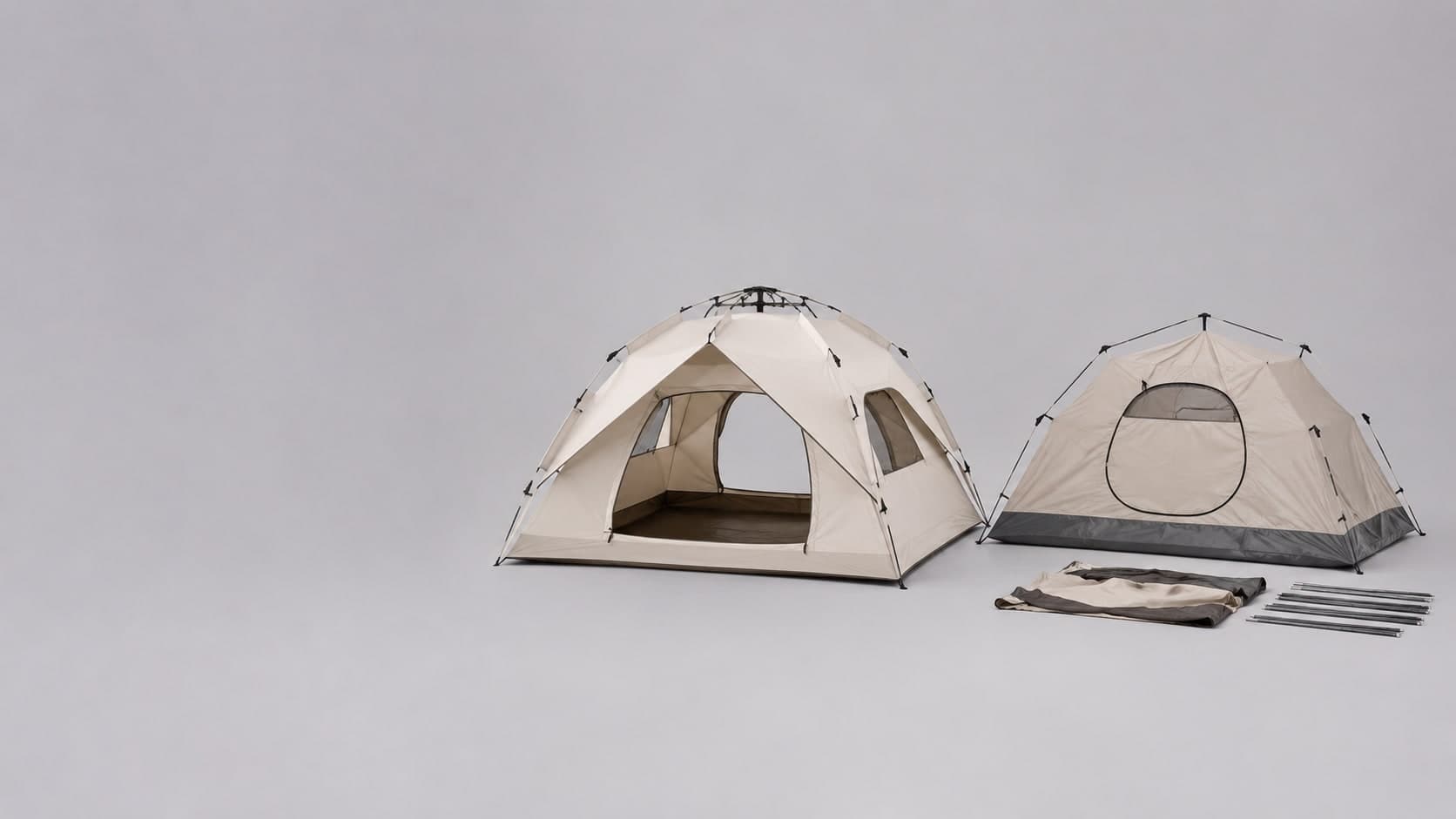
A manual tent ships as fabric plus a set of separate poles that the user threads and tensions by hand. It is the oldest and simplest construction: few parts, light, flat-packing, and any broken pole is replaceable in the field. The cost is time and fiddliness at pitch, which is exactly what a tired family or a first-time buyer dislikes.
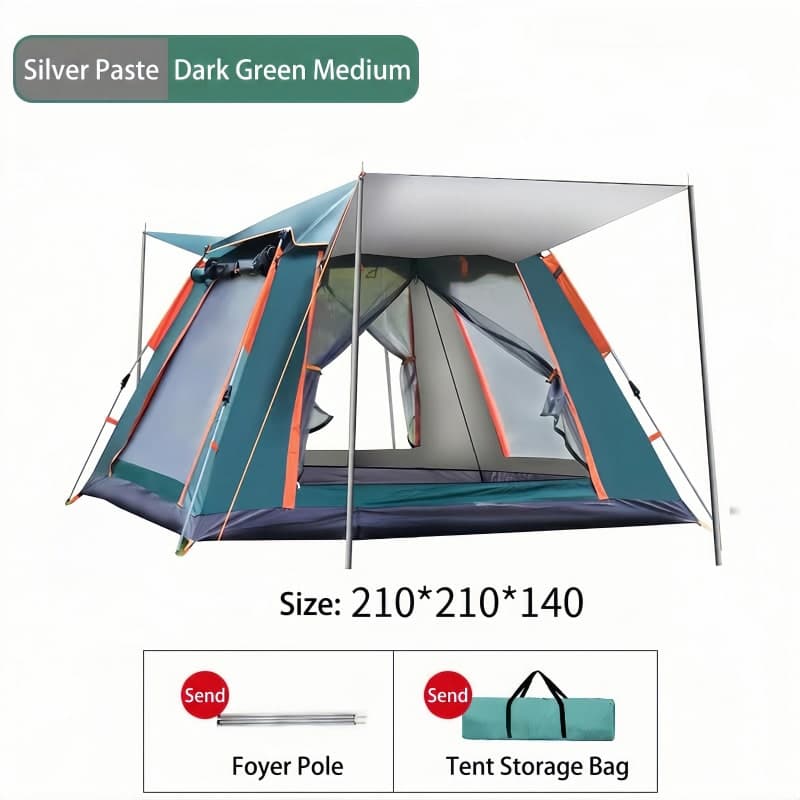
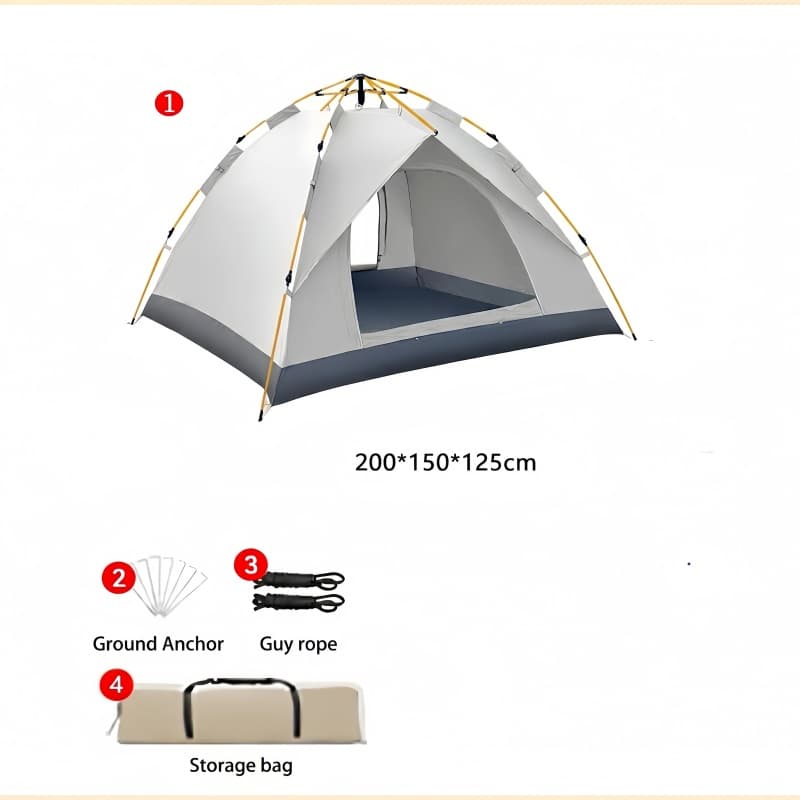
An automatic tent — sold as hydraulic, one-pull, instant or no-setup — builds the frame into the tent so it erects from a single action in seconds. That convenience is the whole sales proposition, and it is why these models demonstrate so well in a fifteen-second video. The trade is mechanical: a built-in frame means hinges, joints and a tensioning mechanism, which add weight, add pack bulk, and add places that can fail. The engineering question that decides quality is therefore frame durability, not fabric alone.
Side-by-side comparison
| Factor | Automatic (hydraulic / no-setup) | Manual (pole assembly) |
|---|---|---|
| Setup | Seconds, single action | Minutes, threads and tensions poles |
| Demo / UGC appeal | High — the pitch is the ad | Low — nothing to show |
| Weight | Heavier (built-in frame) | Lighter |
| Pack size | Larger, often round | Smaller, flatter |
| Failure points | More — hinges, joints, mechanism | Fewer — poles field-replaceable |
| Freight efficiency | Lower (bulk) | Higher (flat pack) |
| Best channels | Online retail, family, entry | Backpacking, value, specialist |
The highlighted column is not a recommendation that automatic is better — it marks the option most first-time importers lead with because it fits the largest, most demo-driven channel. Your own mix should follow your customers, which the next two sections make concrete.
When automatic wins
Choose automatic as your lead SKU when any of these describes your channel:
- You sell online. The single-action pitch is the most persuasive thing you can put in a listing video or a piece of user content. A tent that assembles itself sells itself.
- Your buyers are families or first-timers.No pole threading means no frustration, no lost parts and no “how do I set this up” support tickets or one-star reviews.
- You want the healthy-margin middle. Automatic models sit in the mid price band, above bare pop-ups and below premium inflatables, which is usually where the best margin lives. Our automatic no-setup tent is built for exactly this position.
The one thing you must not skip when stocking automatic is frame testing. Cycle the open and close action on the sample many times, because the mechanism is where these tents fail and a return on a broken frame is far more expensive than any unit-cost saving.
When manual wins
Keep manual pole tents in the range — or lead with them — when the channel rewards what a built-in frame costs you:
- Weight and pack size are the spec. Backpacking, hiking and cycle-touring buyers weigh their kit. A lighter, flatter-packing pole tent wins that comparison outright.
- Durability and field repair matter. Expedition and heavy-use buyers value that a snapped pole is replaced on the trail, whereas a failed hydraulic frame ends the trip. Fewer moving parts is a feature here.
- You compete on price. Manual tents cost less to make and less to ship, so they let you hit an entry price point an automatic model cannot reach.

Pack size, freight & returns
Two hidden costs decide the real margin difference between the two, and neither shows on the unit price.
Freight. An automatic frame packs larger and often round, so it uses container volume less efficiently than a flat-packing pole tent. On a full container that difference in cubic metres is real money, and it narrows the apparent margin advantage of the higher-priced automatic model. Always confirm the folded dimensions, not just the pitched size, and work out cost per landed unit rather than cost per piece.
Returns.Automatic tents fail at the mechanism; manual tents fail at a pole or at customer frustration during setup. Automatic’s failure is more expensive to you because it usually means a whole-unit return rather than a spare part. This is why frame durability testing and clear pack-down instructions pay for themselves. For the full price picture by type and size, see our 2026 tent wholesale pricing guide.
How to decide your mix
You are rarely choosing one for the whole business — you are setting a ratio. Work down this route:
- 1Name the primary channelOnline and family-camping lead toward automatic; backpacking and value lead toward manual.
- 2Weigh freight vs demoIf freight cost dominates your model, manual's flat pack matters; if conversion does, automatic's demo wins.
- 3Set a lead SKUPick the one model that fits the primary channel and make it the hero of the range.
- 4Add the counterweightCarry one or two models of the other type for the buyers your lead SKU does not serve.
- 5Mix into one containerCombine automatic and manual SKUs to reach a workable load without over-committing on either.
That last step is also the cheapest way to de-risk the decision: because outdoor MOQ starts at around 10 pieces per model on stocked tooling, you can test both mechanisms in a single shipment. Our low-MOQ sourcing strategies guide covers how to consolidate a mixed order into one container load.
Common mistakes to avoid
- Buying automatic on demo appeal without testing the frame. The mechanism is the failure point; cycle it hard on the sample before you commit.
- Comparing on pitched size, not pack size. The folded dimensions drive your freight bill and your shelf footprint.
- Putting a manual tent in a demo-led channel. With nothing to show, a pole tent underperforms exactly where automatic thrives.
- Ignoring pack-down instructions. Many automatic-tent returns are buyers who cannot fold it back, not a real fault. Clear instructions cut that return rate.
- Betting the whole order on one mechanism. Mix SKUs and let sell-through, not a guess, set your ratio for the next order.
Key takeaways
- Automatic vs manual is a channel-fit decision, not a quality ranking.
- Automatic wins on demo appeal and speed; manual wins on weight, freight and field repair.
- Frame durability is the one spec to test hard on an automatic sample.
- Compare on pack size and cost-per-landed-unit, not just unit price.
- Mix both types into one container to test the ratio at ~10 pieces per model.
Frequently Asked Questions
Are automatic tents better than manual tents?
Neither is better outright — they serve different channels. Automatic (hydraulic or no-setup) tents pitch in seconds and demo brilliantly online, which suits family camping, entry retail and first-time buyers, but they pack larger and carry more moving parts that can fail. Manual pole tents are lighter, cheaper to ship and field-repairable, which suits backpacking, value and specialist lines. Match the mechanism to how your customers buy and use the tent.
Do automatic tents break more easily?
They have more to break. A hydraulic or spring frame adds hinges, joints and a tensioning mechanism that a simple pole tent does not have, so there are more potential failure points and a field repair is harder. That is manageable with good tooling and QC, but it makes frame durability the single most important thing to verify on the sample — cycle the open/close action repeatedly before you commit.
Which tent type is cheaper to import?
Manual pole tents are usually cheaper both to make and to ship: fewer parts, lighter weight and a smaller, flatter pack that uses container volume more efficiently. Automatic frames cost more in materials and take more space folded. Across our range factory-direct tents run roughly $12–$85 depending on size and spec, with the automatic frame adding cost within that band rather than sitting outside it.
What is the MOQ for automatic and manual tents?
Outdoor-gear MOQ starts at around 10 pieces per model when you use an existing mould and a fabric we already stock, and that applies to both automatic and manual designs. A new custom frame or a bespoke fabric raises the minimum because tooling and material runs carry their own economics. Mixing several tent SKUs in one shipment is the usual way to reach a workable container load while testing a range.
Which tent should a first-time importer start with?
For most first orders into North America and Europe an automatic no-setup tent is the safest volume play: it photographs and demonstrates well online, sits in the mid price band where margins are healthiest, and needs no assembly instructions that generate support tickets. Keep a manual pole model in the range for weight-sensitive and budget buyers once the core line proves out.
See Our Automatic No-Setup Tent
Ready to move from research to a quotation? Send us your specification and target market — our team comes back with MOQ, lead time and pricing.