How should I use these examples?
Send the product link together with the configuration that needs a response. For these examples, identify the tent size, tripod version or fleece garment measurements. Add your destination market, intended quantity and the decision you are trying to make. If you have already received a sample, include its identifier and dated photos so the discussion follows the same item.
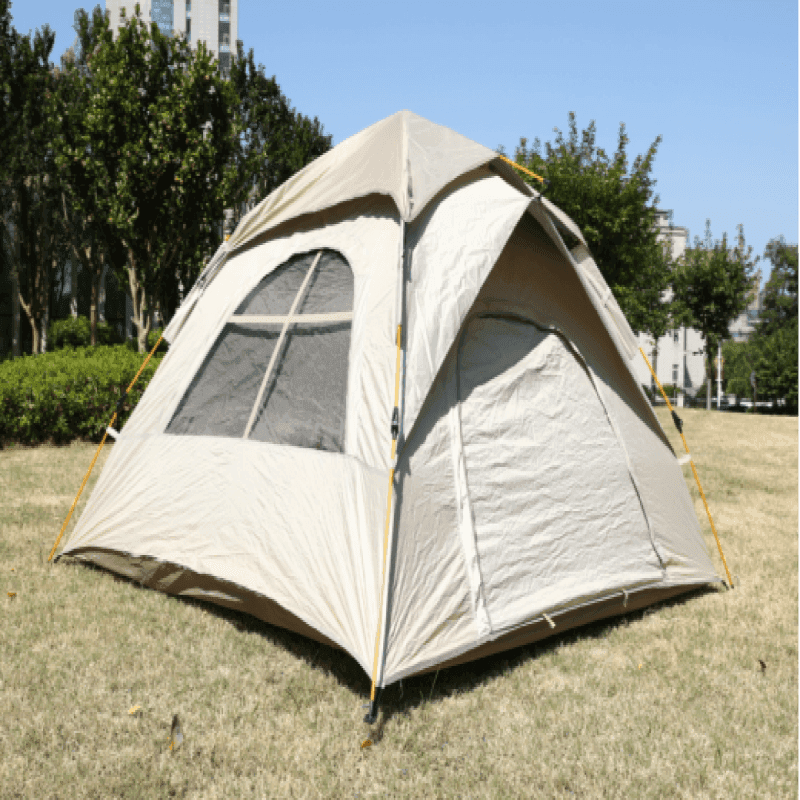
What distinguishes this reference? — Automatic Tent with Two Doors and Two Windows | Three Sizes
Three size rows are published for the two-door, two-window tent. The 200 × 200 cm version is listed at 2.7 kg, while the 220 × 200 cm version is listed at 2.6 kg; do not replace these with an assumed size-to-weight progression. Both use the stated 77 × 15 × 15 cm packed format. Door and window counts describe the layout, not a measured airflow rate.
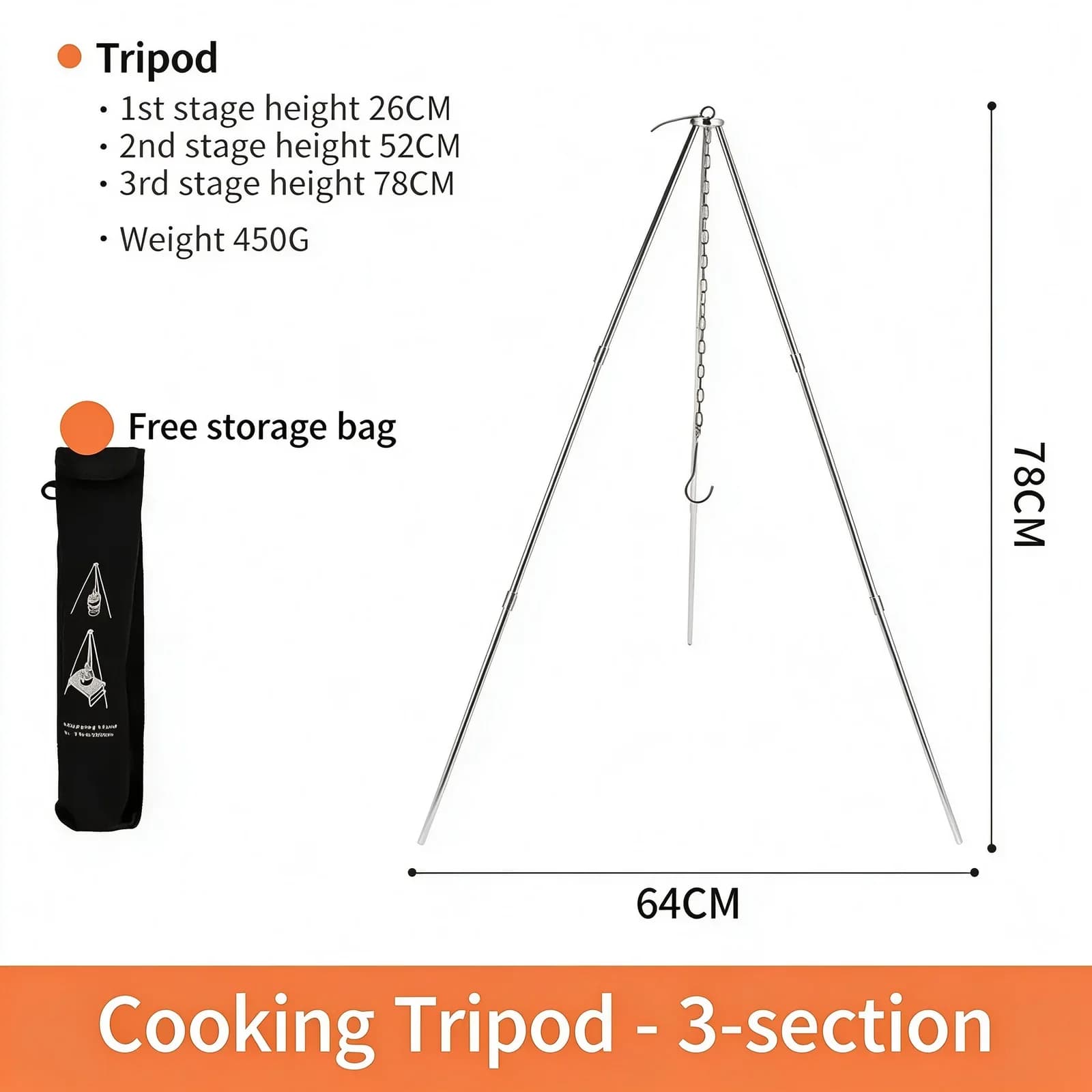
What distinguishes this reference? — Aluminium Alloy Camping Cookware Tripod | Folding Pot Stand
The tripod is offered as three-piece and four-piece versions: 52 cm wide × 80 cm high at 480 g, or 75 cm wide × 110 cm high at 540 g. Those are configuration choices, not quantities of tripods in a package. The listed material is 6061 aluminium alloy. A pot and stove are not part of this tripod listing.
What distinguishes this reference? — Fleece-Lined Outdoor Jacket | Warm Casual Travel Outerwear
The jacket record specifies thick polar-fleece lining and a 400 g reference weight for casual outdoor and travel layering. Keep the lining description distinct from the outer-shell material, which is not fully specified here. Compare finished garment measurements, layer allowance and fastening details on the chosen sample; the weight alone does not establish a temperature rating or a waterproof-shell classification.
What should I keep with the selected reference?
Keep one specification sheet for each shortlisted version. Put the product URL, size, colour and dated photographs at the top, then distinguish published facts from requested changes. If the brief combines a tent, a cooking item and clothing, give each its own line and quantity. Their dimensions, materials and accessories describe different things and should not be merged into a single specification. For example, a tent’s packed length is a storage measurement, a kettle’s external dimensions do not state its usable capacity, and backpack litres do not describe torso fit. When a field is absent, leave it marked for confirmation instead of borrowing a value from a visually similar item. Before comparing quotations, check that they refer to the same version and supply scope. Record any substitutions explicitly, including the affected component, colour or packaging. This makes later sample review more useful: the reviewer can compare an identified item against a written requirement instead of trying to reconstruct a decision from a photo and a price.