
Outdoor Product Sourcing FAQ
Practical answers for B2B buyers comparing Seawing product references and preparing a focused outdoor-gear enquiry.
What does the Seawing buyer FAQ answer?
Practical answers for B2B buyers comparing Seawing product references and preparing a focused outdoor-gear enquiry.
Using the product catalog
How do I find the right outdoor product?
Start with the product family and intended use, then compare the published dimensions, materials, construction, colours and included items on each product page.
Can I compare several products in one enquiry?
Yes. Add each relevant product name or link to your inquiry list and describe the role each item should play in your range.
What should I send with an enquiry?
Send the closest product reference, intended use, target market, estimated quantity and required specification.
Where can I learn more about product selection?
Use the buyer guides linked below for category comparisons, specification vocabulary and sourcing workflows.
In-depth guides
Still have a question?
Send the product reference, intended use, target market, estimated quantity and required specification.
Build a product-specific buying brief
Use these examples to make broad sourcing questions specific. An air mattress needs a size and model, a guyline needs a length and construction, and a poncho needs its version and colour. Ask about the exact missing field rather than requesting an undefined “best” product. Keep order-policy questions separate from product measurements.
Worked catalog references
Each photo identifies the named catalog reference. These are separate products, not a bundled set or evidence of a completed customer project.
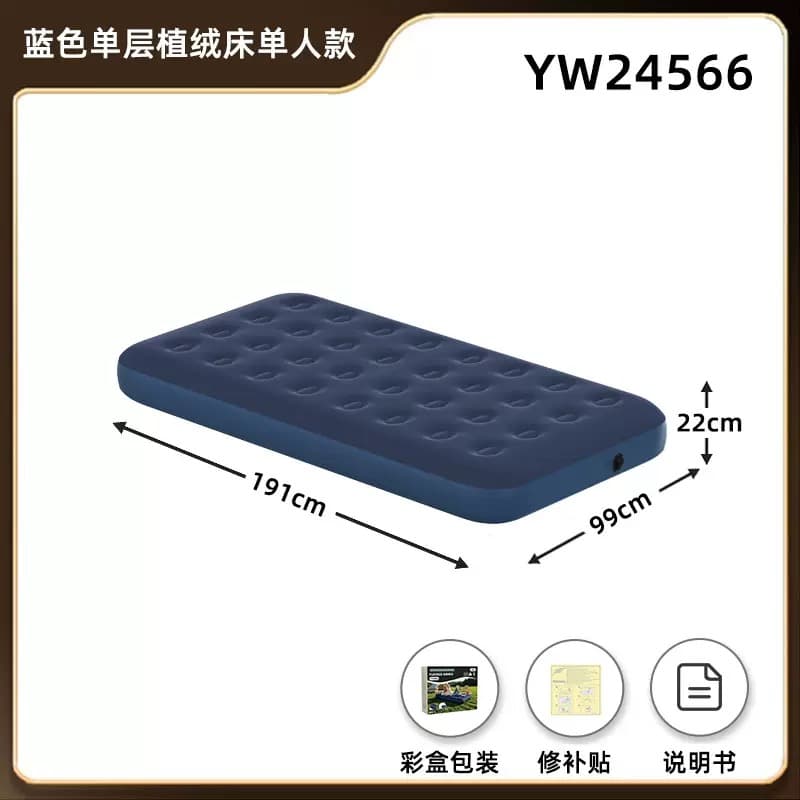
All five mattress references have a listed height of 22 cm, but their widths differ from 73 to 183 cm. The Queen and King references are also longer at 203 cm, versus 191 cm for the first three. Match the code YW24565–YW24569 to the chosen dimensions. The contents list includes a repair patch and instructions; a pump is not named in that list.
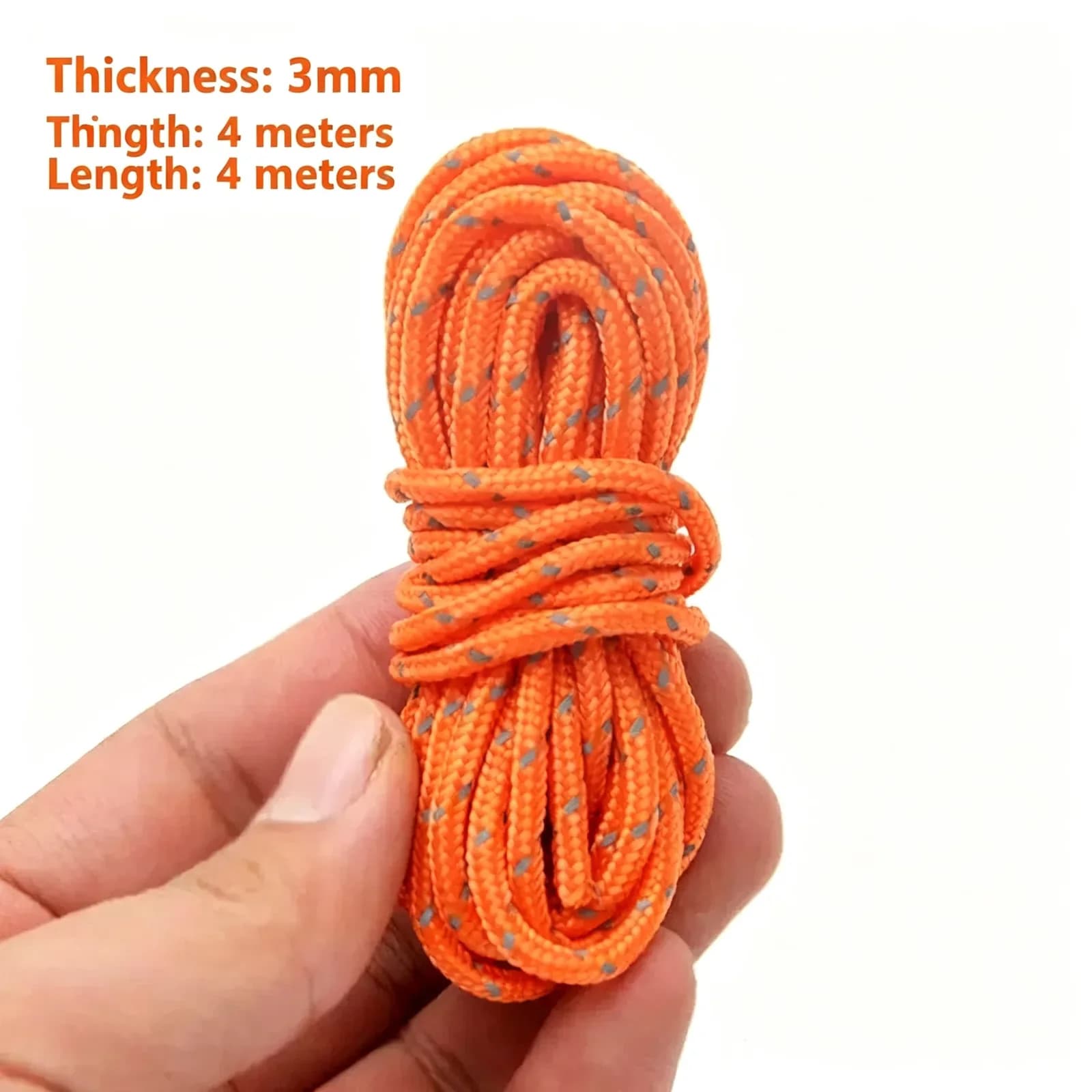
The orange guyline is listed as 4 m long and 3 mm in diameter, with a PP core, polyester yarn and reflective thread. Preserve all three construction terms in the specification. Reflective thread identifies a feature of the rope, not a breaking-load result. When pairing it with a tent, name the attachment and adjustment hardware separately and check the required quantities against that tent’s instructions.
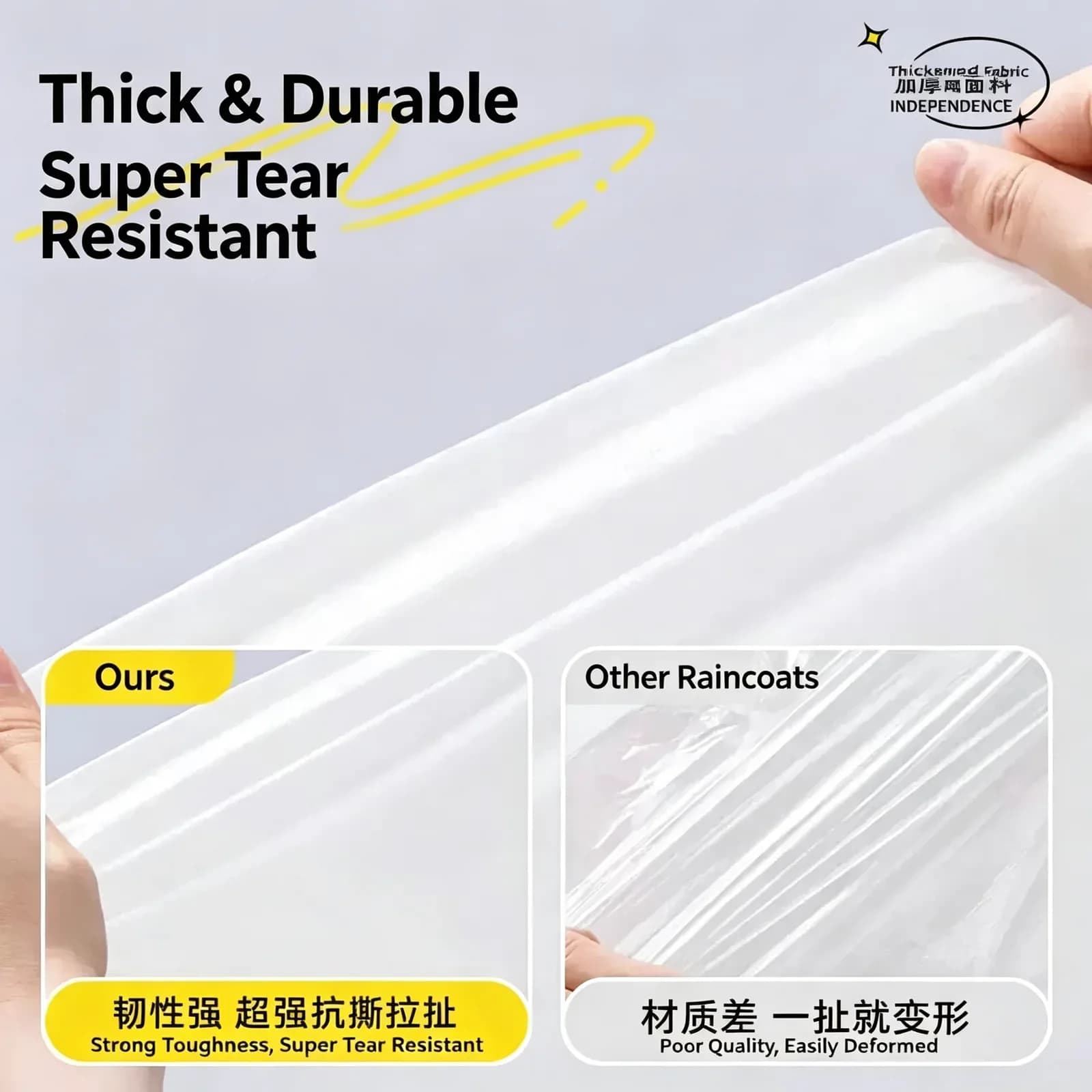
This reusable poncho record shows adult and children’s presentations, a drawstring hood and elastic cuffs. The listed colours are clear, blue, pink, yellow, purple and black. Adult and child labels are not a complete measurement chart: record garment length, width and sleeve or opening dimensions for the chosen version before defining a size range. Keep each colour-and-size combination identifiable in the order.
Compare catalog references
| Product reference | Catalog specifications |
|---|---|
| Flocked Inflatable Travel Mattress | Five Sizes |
|
| Reflective Tent Guyline | 4 m × 3 mm Camping Rope |
|
| Extra-Thick Portable Raincoat | Reusable Adult & Kids Poncho |
|
Keep the comparison traceable
Keep one specification sheet for each shortlisted version. Put the product URL, size, colour and dated photographs at the top, then distinguish published facts from requested changes. If the brief combines a tent, a cooking item and clothing, give each its own line and quantity. Their dimensions, materials and accessories describe different things and should not be merged into a single specification. For example, a tent’s packed length is a storage measurement, a kettle’s external dimensions do not state its usable capacity, and backpack litres do not describe torso fit. When a field is absent, leave it marked for confirmation instead of borrowing a value from a visually similar item. Before comparing quotations, check that they refer to the same version and supply scope. Record any substitutions explicitly, including the affected component, colour or packaging. This makes later sample review more useful: the reviewer can compare an identified item against a written requirement instead of trying to reconstruct a decision from a photo and a price.
From product selection to a sample brief
- 1Choose the exact referenceSave the product link and the comparison fields relevant to your range.
- 2Record the configurationList the size or version, colour and items you want supplied together.
- 3Evaluate the sampleCheck the selected configuration against your written checklist and retain photos of the result.
- 4Agree the bulk orderRecord the approved version, quantity, packing and delivery terms in the final quotation.
Questions for your buying brief
How should I use these examples?
Use these examples to make broad sourcing questions specific. An air mattress needs a size and model, a guyline needs a length and construction, and a poncho needs its version and colour. Ask about the exact missing field rather than requesting an undefined “best” product. Keep order-policy questions separate from product measurements.
What distinguishes this reference? — Flocked Inflatable Travel Mattress | Five Sizes
All five mattress references have a listed height of 22 cm, but their widths differ from 73 to 183 cm. The Queen and King references are also longer at 203 cm, versus 191 cm for the first three. Match the code YW24565–YW24569 to the chosen dimensions. The contents list includes a repair patch and instructions; a pump is not named in that list.
What distinguishes this reference? — Reflective Tent Guyline | 4 m × 3 mm Camping Rope
The orange guyline is listed as 4 m long and 3 mm in diameter, with a PP core, polyester yarn and reflective thread. Preserve all three construction terms in the specification. Reflective thread identifies a feature of the rope, not a breaking-load result. When pairing it with a tent, name the attachment and adjustment hardware separately and check the required quantities against that tent’s instructions.
What distinguishes this reference? — Extra-Thick Portable Raincoat | Reusable Adult & Kids Poncho
This reusable poncho record shows adult and children’s presentations, a drawstring hood and elastic cuffs. The listed colours are clear, blue, pink, yellow, purple and black. Adult and child labels are not a complete measurement chart: record garment length, width and sleeve or opening dimensions for the chosen version before defining a size range. Keep each colour-and-size combination identifiable in the order.
What should I keep with the selected reference?
Keep one specification sheet for each shortlisted version. Put the product URL, size, colour and dated photographs at the top, then distinguish published facts from requested changes. If the brief combines a tent, a cooking item and clothing, give each its own line and quantity. Their dimensions, materials and accessories describe different things and should not be merged into a single specification. For example, a tent’s packed length is a storage measurement, a kettle’s external dimensions do not state its usable capacity, and backpack litres do not describe torso fit. When a field is absent, leave it marked for confirmation instead of borrowing a value from a visually similar item. Before comparing quotations, check that they refer to the same version and supply scope. Record any substitutions explicitly, including the affected component, colour or packaging. This makes later sample review more useful: the reviewer can compare an identified item against a written requirement instead of trying to reconstruct a decision from a photo and a price.