
Multi-SKU Outdoor Packaging and Barcode Handoff
Control outdoor SKU packaging, sales units, barcode responsibility and artwork versions with a practical handoff matrix before approving a release.
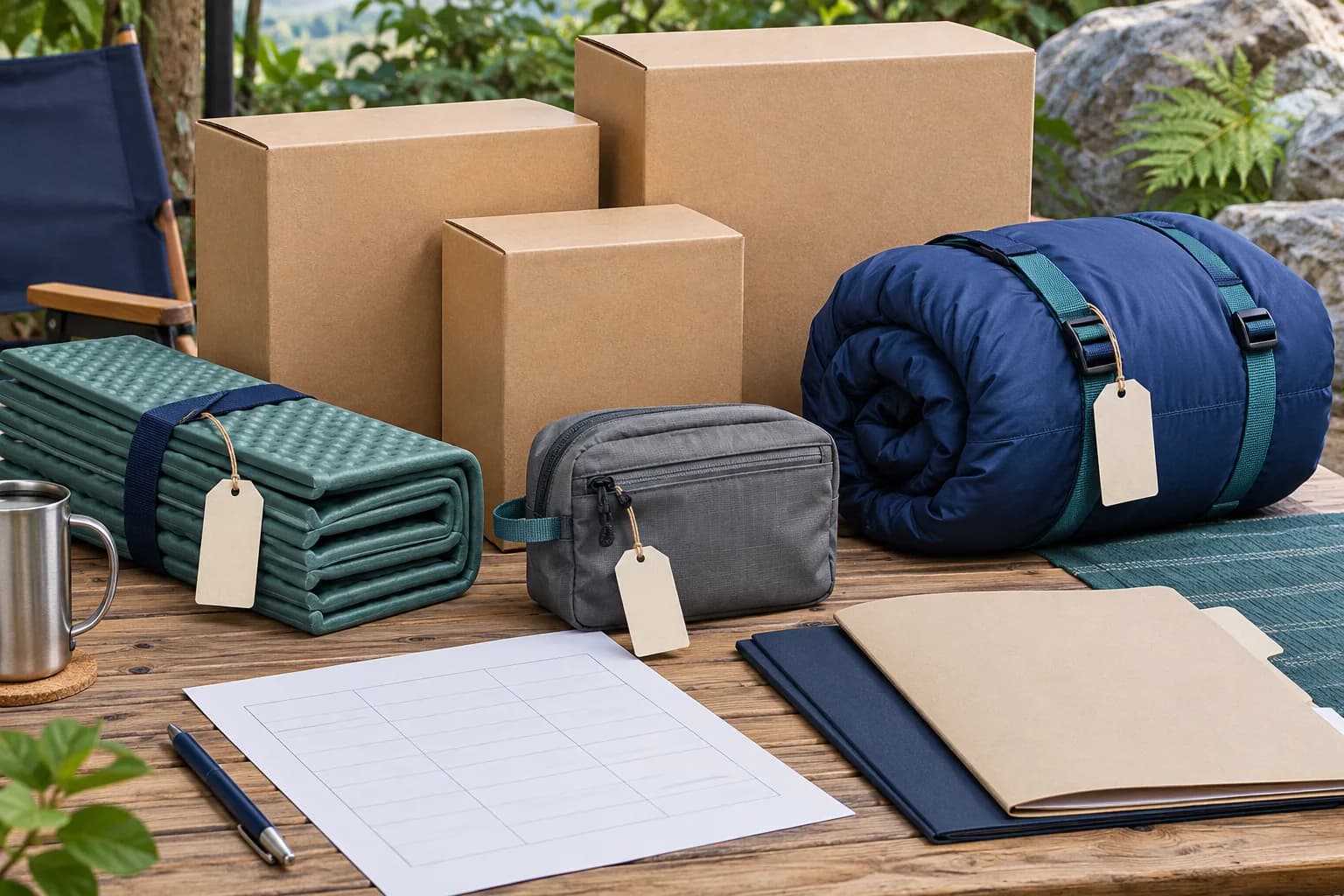
AI-generated editorial cover; generic packages do not represent approved Seawing packaging or a barcode service.
Define what the customer will buy
A range of outdoor products is not automatically one retail bundle. Start with the exact SKU and option, then describe whether it will be sold individually, as a defined assortment or through another proposed pack. Record contents separately from packaging material and from the shipping case. A carrying sack is not automatically a retail box, and a carton photograph does not establish an agreed case quantity.
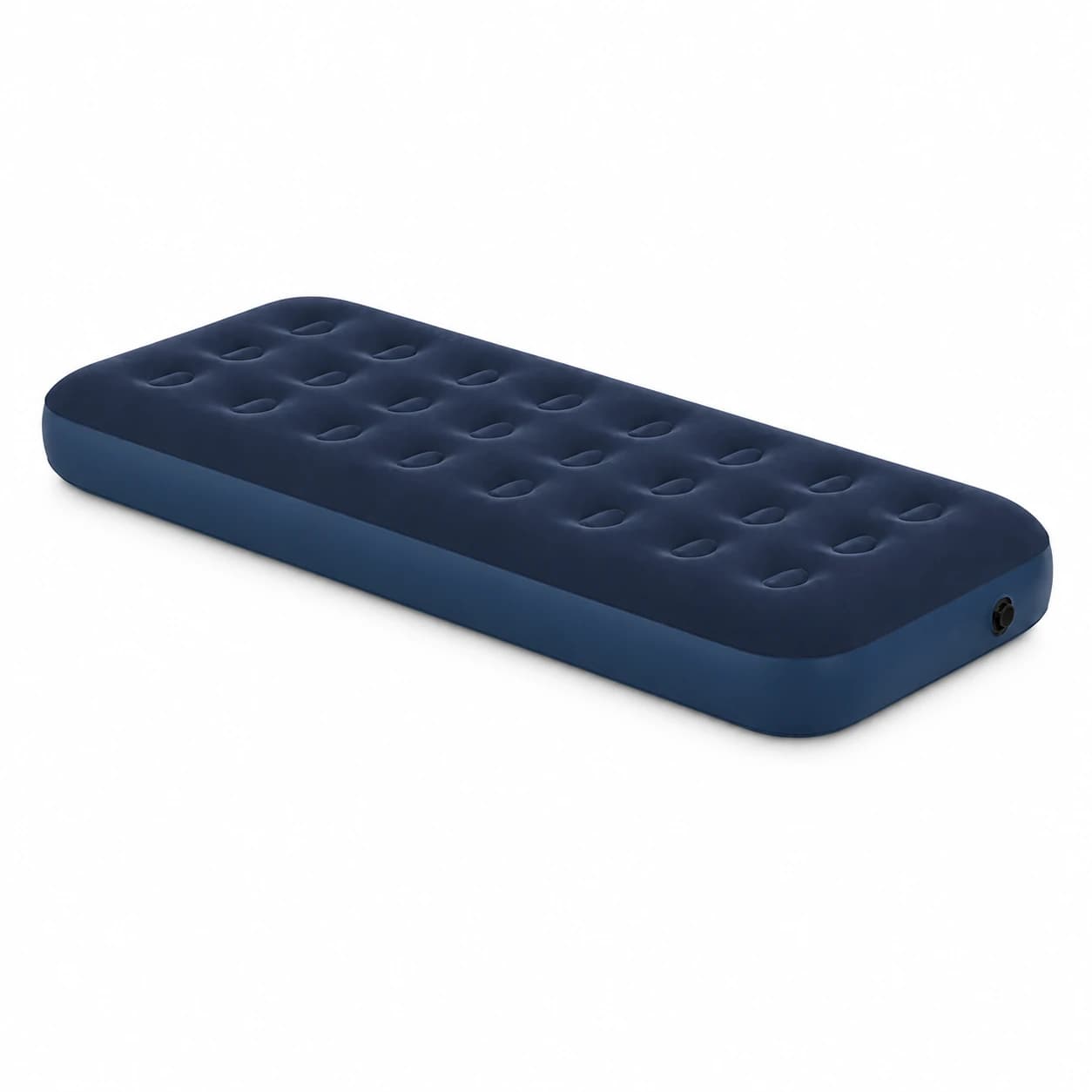
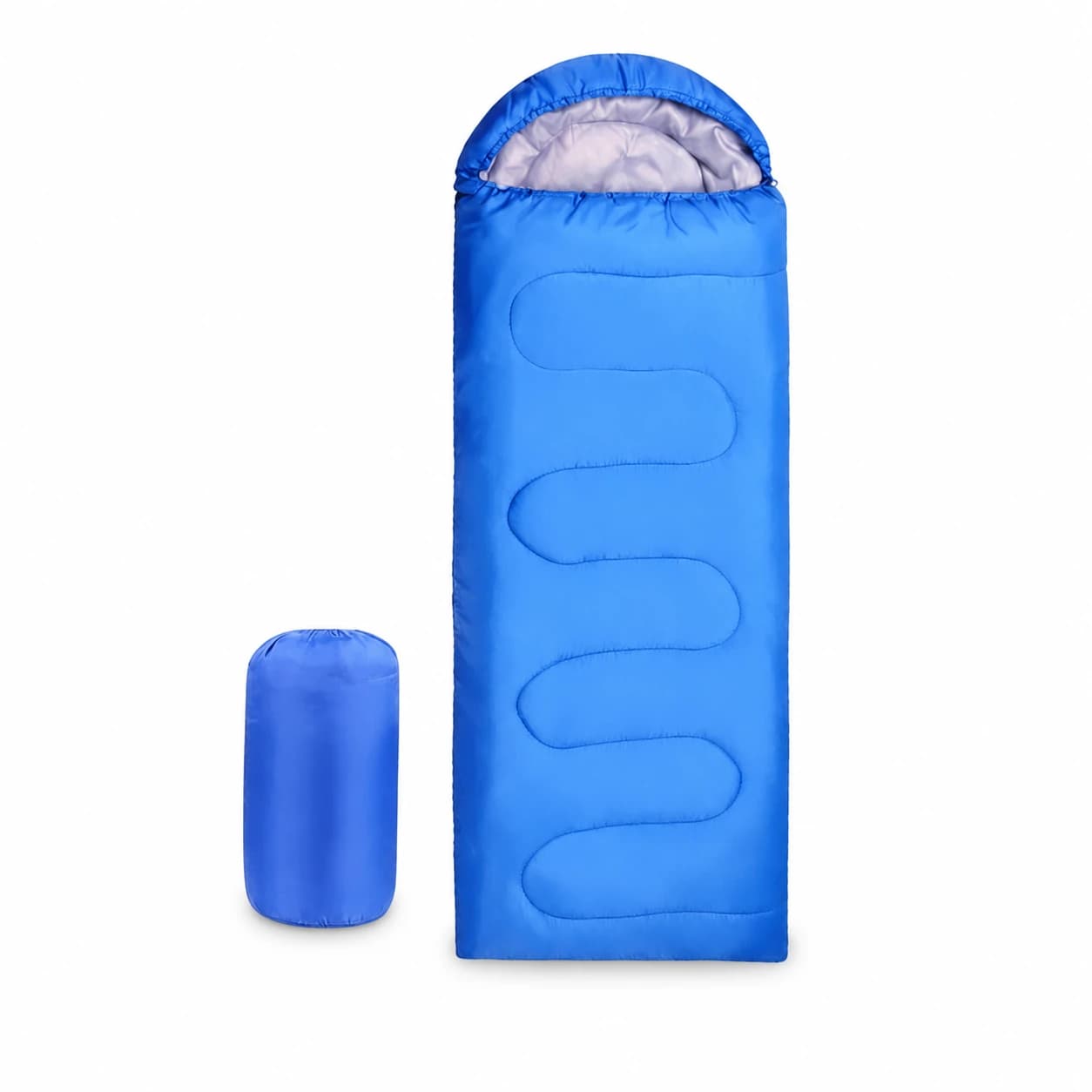
Seawing SKU 18 records a mattress, colour box, repair patch and manual. SKU 25 records a sleeping bag and compression storage sack. Those contents provide separate starting points. They do not prove a shared kit, a common label, an assigned GTIN, a master-carton count or a packaging customization service. If both products are proposed for one offer, record that as a new proposal with a complete contents decision.
Give each product option and intended market its own controlled row. Shared artwork can provide a layout reference, but product identity, contents, code data and approval must still be checked per row. Where a buyer has not chosen a packaging level or responsible party, hold the related artwork decision open instead of filling the blank with an assumed code.
- A Seawing catalogue SKU is not itself evidence of a GS1-assigned identifier.
- Product contents, a retail sales unit and a shipping case are distinct records.
- Artwork approval does not establish product compliance or barcode print quality.
A packaging handoff matrix for each SKU
Copy the controls below, with one row set per exact option. Add the actual document owner and evidence location in your working file; the examples do not assign real barcodes or packing quantities.
| Control | Buyer decision | Evidence to retain | Hold when |
|---|---|---|---|
| Sales unit | Individual item or defined assortment | SKU, option and complete contents list | The proposed contents remain ambiguous. |
| Packaging hierarchy | Retail unit, inner pack and shipping case | Quantity and identity at each applicable level | A case quantity is only inferred. |
| Identification | Responsible identifier owner and scanning context | Authoritative data and the applicable code decision | A copied code cannot be traced. |
| Artwork | Market, language and exact revision | Approved master, proof and named approver | Similar files have competing approvals. |
| Change | Which contents, quantity or version changed | Change log and identifier review | An old code is reused without review. |
Separate the item, the code and the artwork
Identifies the exact option and its own contents.
Identifies the intended sales unit and applicable packaging hierarchy.
Connects approved data to one controlled file and proof.
Packaging decisions around separate products
The cover is a generic AI editorial packaging arrangement. The two product references illustrate separate contents records, rather than an approved combined pack, barcode service or actual shipping specification.
A worked handoff without fictional codes
Keep SKU 18 and SKU 25 on separate product lines. For SKU 18 select the exact mattress option first, then attach the recorded contents. For SKU 25 retain its bag and storage-sack contents. Ask the buyer to identify the intended sales units and markets. Any combined assortment remains proposed until its complete contents, packaging and identification decisions have been agreed. No example GTIN is needed to demonstrate this process.
| Record | Starting point | Next decision |
|---|---|---|
| SKU 18 option | Mattress, colour box, patch and manual | Confirm the exact model and proposed sales unit. |
| SKU 25 | Sleeping bag and compression storage sack | Confirm any separately requested retail presentation. |
| Proposed assortment | Two independent catalogue records | Define every included item before code review. |
| Market artwork | Buyer-supplied market and language brief | Assign copy review and approval responsibility. |
| Release packet | One data sheet and one artwork revision | Retain approval date, proof and change history. |
Five gates before packaging release
- 1Select the exact SKU and option
- 2Define contents and each packaging level
- 3Confirm identifier responsibility and code data
- 4Review market copy and the exact proof
- 5Approve one revision and record later changes
Use identification rules within their scope
GS1 guidance distinguishes packaging levels and the party responsible for assigning trade-item identifiers. The GTIN Management Standard addresses changes such as pack quantity and predefined assortment composition. Route such changes to the responsible party for review; do not assume that every graphic change requires a new identifier or that one existing code can cover every changed offer.
A barcode is not a customs classification, a certification or proof of a legal product label. Destination-market and product-specific requirements need their own review. This article does not promise barcode allocation, packaging manufacture, printing, compliance approval or a particular carton specification from Seawing. Sources and catalogue examples were reviewed on 2 November 2026.
Primary identification references
Discuss your SKU and packaging brief
Send the wholesale page your exact SKU and option list, destination market, quantity by version and packaging, identification and artwork questions. Keep proposed services subject to written confirmation.
Frequently Asked Questions
Is the catalogue SKU a GTIN?
Do not assume so. Keep the catalogue reference separate from an identifier assigned under the applicable identification system.
Can one barcode cover a changed assortment?
A changed predefined assortment requires review under the applicable GTIN rules by the responsible party before the old identifier is carried forward.
Does a colour box prove the shipping case quantity?
No. Retail packaging and shipping-case configuration need separate records and confirmed quantities.
Who should approve the artwork?
Name an authorized approver for the exact revision, with separate responsibility for supplied product copy, market requirements and identification data.
Does a successful scan approve the label?
No. Identification data, print-quality verification and product or market label requirements are separate checks.
What belongs in the release packet?
Retain the exact SKU and option, contents and packaging hierarchy, authoritative code data, approved artwork and proof, approver, date and change log.