
Sleeping Bag Hoods and Zippers: A Retail Comparison Brief
Compare sleeping bag hood and zipper options through a version-specific retail brief: opening side, travel, usable dimensions, packaging and sample evidence.
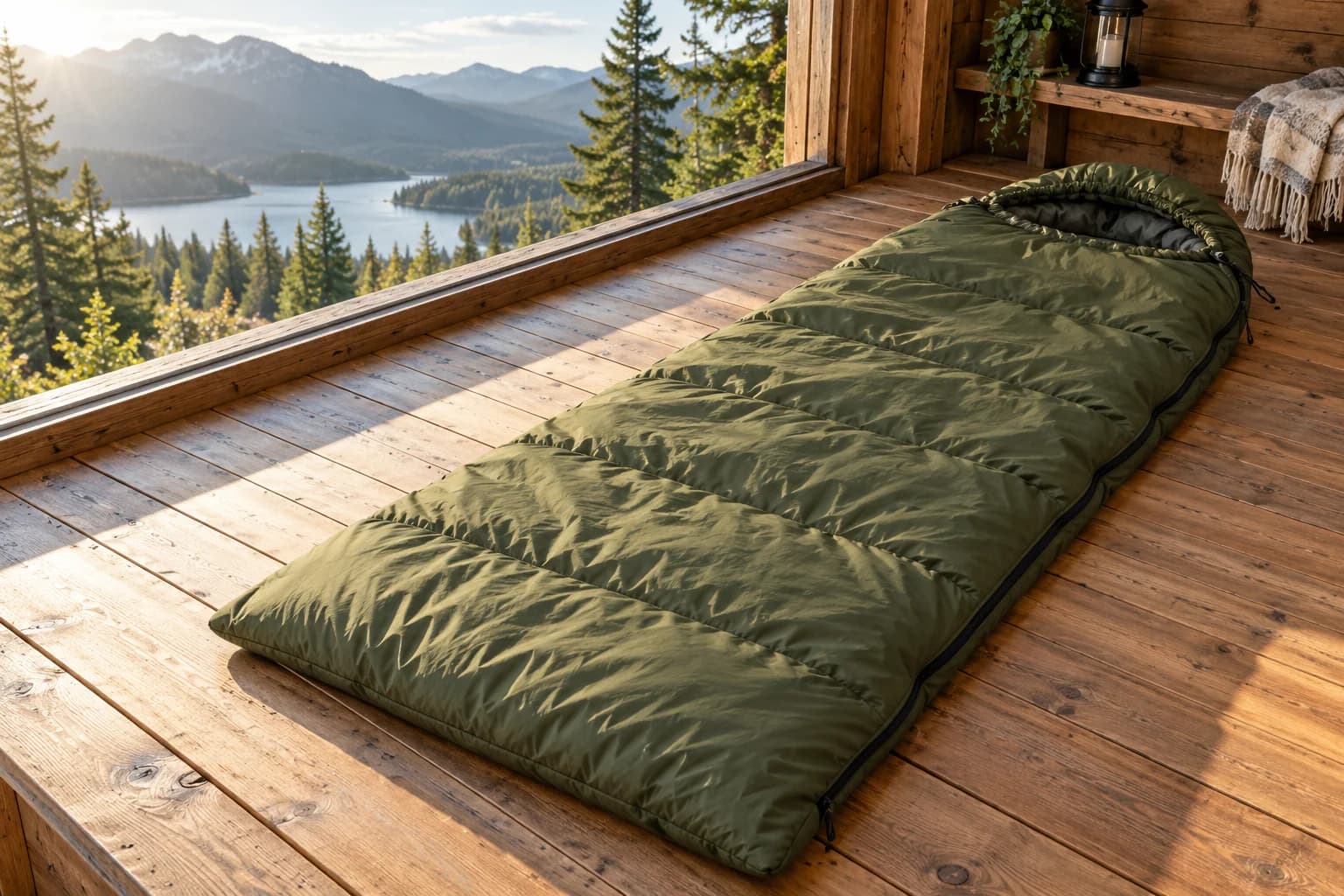
AI-generated editorial photographs illustrate generic opening and packing concepts. They do not depict SKU 25, a real Seawing sample or a test.
Start with the hooded envelope record
This brief is for retail category buyers turning opening details into a range decision. SKU 25 is published as an envelope sleeping bag with a drawstring hood, royal-blue colour, 170T polyester outer and lining, and a filling described as Hollow Cotton Fiber. Those are catalogue descriptors. Keep the selected option and revision attached to them; do not infer fibre chemistry, insulation performance or a wearer-height range from the names.
The record lists a sleeping bag and a compact compression storage sack. Use that list to identify the presentation being discussed, then reconcile it against the offered sample and packaging revision. The live record does not publish zipper handedness, gauge, travel, a joining partner or usable interior measurements. These become explicit supplier questions, rather than blank cells filled with another bag’s values.
A range comparison should distinguish access from thermal performance. Start with whether the intended shopper needs an opening on a particular side, a specified foot-end opening or a particular hood arrangement. Ask which options are actually offered. Record an unavailable option as unavailable; do not turn a requested feature into a claim about the current SKU. Existing shape and general specification guides remain separate decisions.
- Published reference: SKU 25, envelope format with drawstring hood; royal blue.
- Published materials: 170T polyester outer and lining; filling labelled Hollow Cotton Fiber.
- Published pack list: sleeping bag and compression storage sack. Zipper configuration and usable measurements require version-specific answers.
Five opening fields for a comparable retail row
Use this matrix for each offered option. The question column defines the evidence needed; it does not describe additional Seawing features.
| Field | What to identify | Record to request | Retail decision |
|---|---|---|---|
| Hood | Attached shape and adjustment arrangement | Revision-linked drawing and operation sequence | Describe the confirmed opening; avoid an inferred warmth benefit. |
| Zipper side | Left/right/centre from the sleeper inside the bag | Annotated photo showing the agreed viewpoint | Use one convention across shelf labels and staff sheets. |
| Opening travel | Start, stop and any separate foot opening | Zipper path, slider arrangement and sample demonstration | Explain access only for the configuration reviewed. |
| Dimensions | Overall length, hood contribution and usable space | Measurement landmarks, state, units and tolerances | Do not convert overall length into a wearer-height promise. |
| Joining and parts | Exact proposed partner and mating components | Part identifiers and a demonstrated matched pair | Publish a joining claim only after that pair is confirmed. |
Keep three decisions separate
The outline identifies a format. Record the hood opening and its controls separately.
Side, travel, sliders and foot opening describe operation, not temperature performance.
A reviewed configuration supports its own shelf description; any thermal claim needs separate scoped evidence.
Opening and packing illustrations
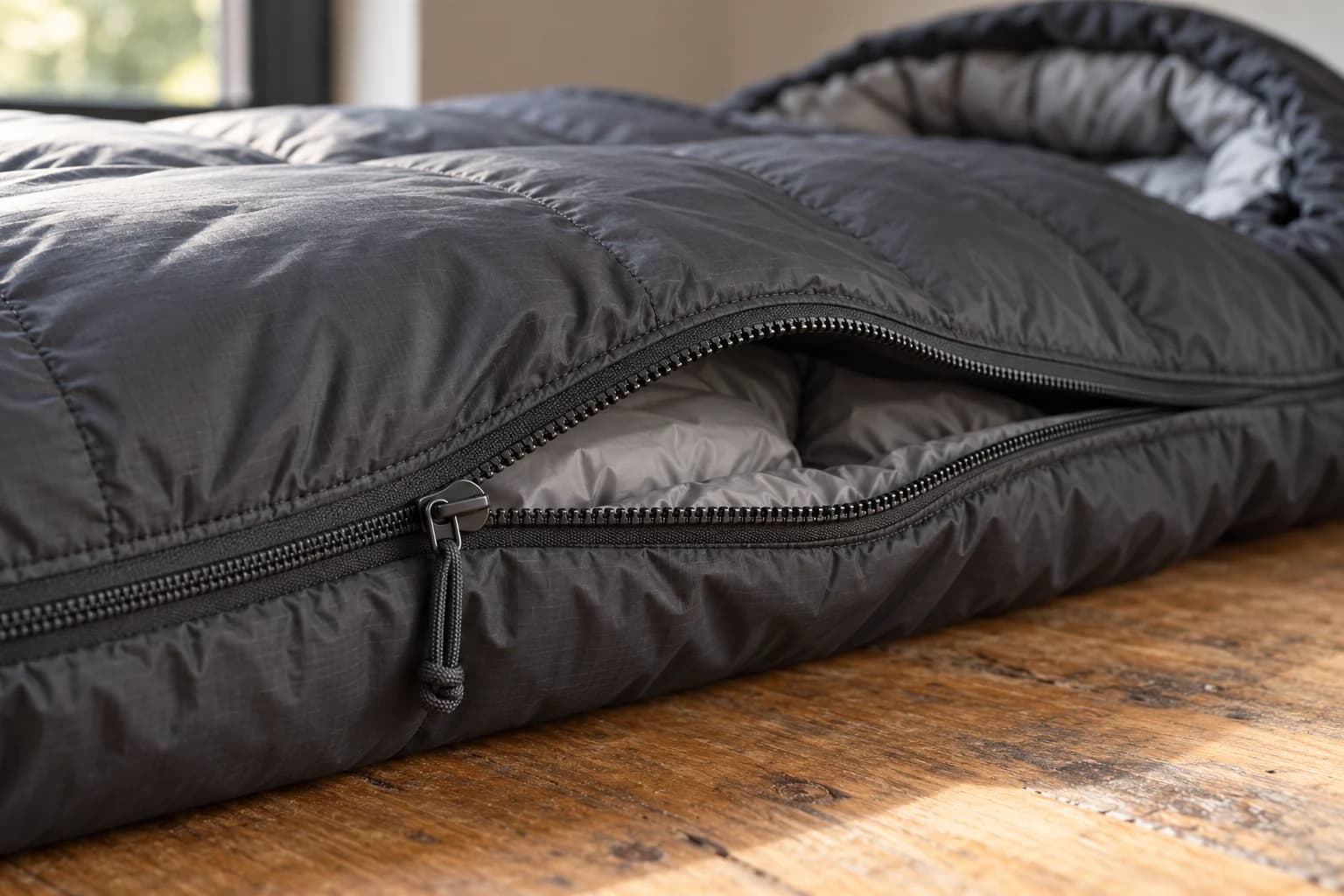
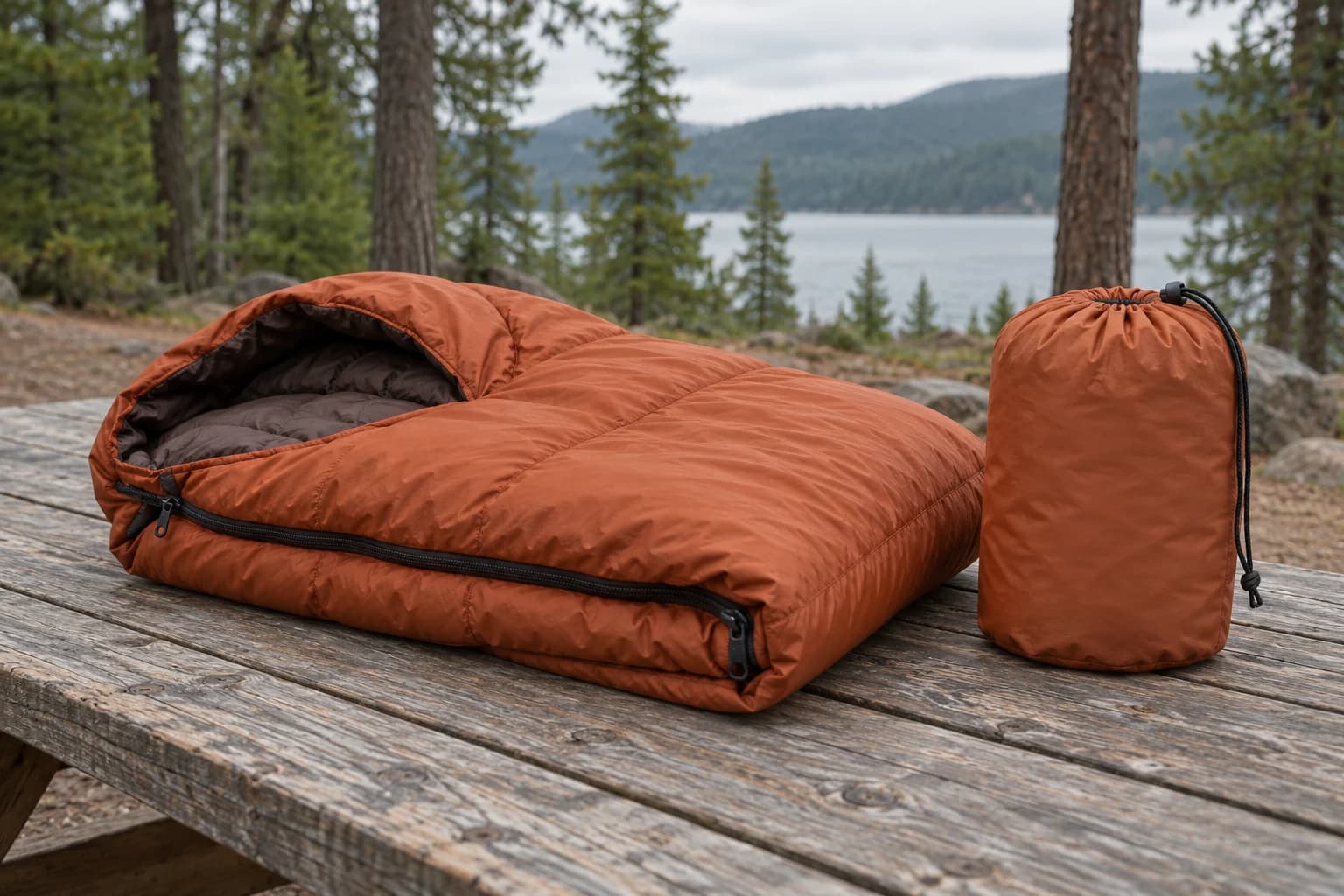
These independent AI-generated editorial photographs show generic bags and opening states. Colours, components and packing arrangements are illustrative, not SKU 25 specifications.
Turn the comparison into a supplier handoff
Send the product reference, market, channel and estimated quantity with an opening brief. Ask for a dated answer for every option rather than one general yes. A labelled sample, drawing and pack list should agree. Retain unresolved fields as questions and approve the retail description only for the configuration actually reviewed.
| Buyer input | Supplier record | Handoff check |
|---|---|---|
| SKU, option and range role | Revision, colour and sample identifier | All documents refer to the same configuration. |
| Shopper access requirement | Hood and zipper operation diagram | Viewpoint and opening endpoints are explicit. |
| Dimension questions | Overall and usable measurements with method | Units, state and landmarks are retained. |
| Proposed joining or replacement | Partner/part identifiers and scoped demonstration | A similar slider is not a universal fit claim. |
| Packaging and consumer information | Actual contents, label artwork and instructions | Pack, sample and approved shelf text agree. |
Five steps to an approved opening record
- 1Identify the optionName SKU 25, revision, market, channel, quantity and the range role.
- 2Define the viewpointMark hood controls and zipper side on a photo from the agreed sleeper perspective.
- 3Request separate measurementsKeep overall length, hood extent, usable space and opening travel distinct.
- 4Reconcile the sampleReview operation, pack contents and any proposed joining pair against the records.
- 5Approve and retainKeep the agreed label text and reopen affected fields when the zipper, hood or pattern changes.
Use original guidance within its scope
Marmot’s own FAQ explicitly defines zipper-side labels from the person inside the bag. Grüezi bag’s FAQ cautions against automatically assigning a zip side from the shopper’s dominant hand. Together these support a practical purchasing rule: write the viewpoint and proposed use, then review the actual opening. Their terminology and joining advice are not specifications or compatibility evidence for SKU 25.
REI separates hood, zipper, fit and accessory considerations. Its broad shape categories do not replace measurements of the offered bag. ISO 23537-1:2022’s public abstract identifies a separate scope for adult sleeping-bag thermal, dimensional and mass requirements and excludes certain special-purpose and children’s bags. We reviewed the public scope, not the paid full standard. A hood, fabric label or smooth-looking zipper does not establish a test result, certification or market conformity.
Original sources reviewed October 31, 2026
Review the sleeping bag and send an opening brief
Open the SKU 25 record. Send the chosen presentation, market, channel and quantity with questions about hood operation, zipper viewpoint and travel, usable measurements, pack contents and any proposed joining partner.
Frequently Asked Questions
Which viewpoint should define left and right zip?
State the side as seen by the sleeper inside the bag, and ask the supplier to annotate that convention on the actual option’s drawing or photograph.
Does a left zip mean the bag is for right-handed users?
Do not make that automatic assignment. Record the proposed access arrangement and review the actual opening with the intended use; handedness alone is not a fit specification.
Can opposite zipper sides prove two bags join?
No. Request the exact partner versions, mating components and a demonstrated pair. Side labels alone do not establish compatible teeth, travel or geometry.
Does the hood establish a temperature rating?
No. Treat hood construction as a configuration field. Any temperature statement needs separate evidence for the actual version and applicable conditions.
Can overall length become a shopper-height limit?
Not by itself. Ask for overall length, hood contribution, usable interior measurements, landmarks and the supplier’s supported fit guidance.
What should the retail buyer send first?
Send SKU/option, market, channel and quantity, then request hood and zipper diagrams, opening travel, separate measurements, sample identification and packaging information.