
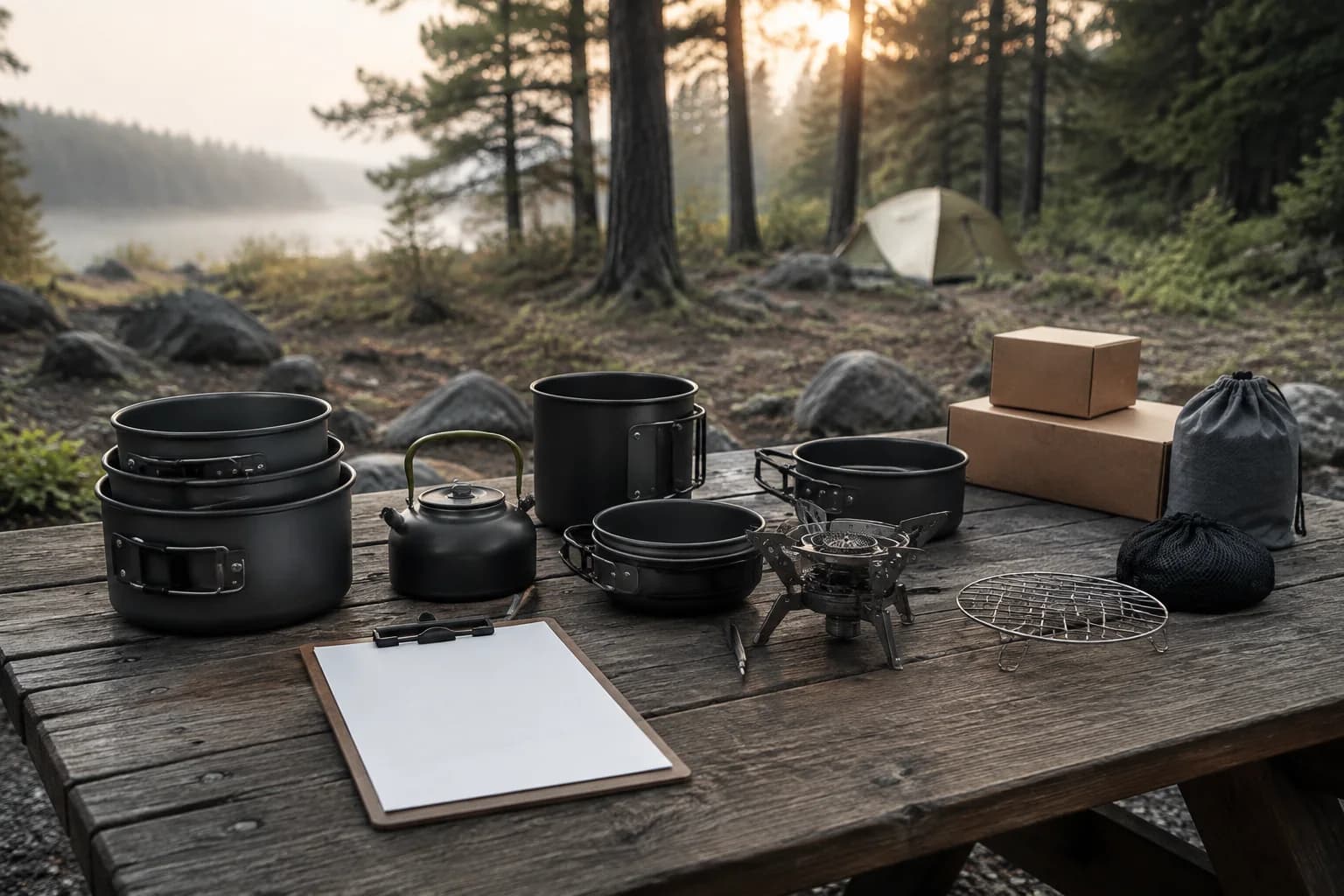
Wholesale Camping Cookware: Materials, Weight, Packaging & QC Guide for Buyers
Specify wholesale camping cookware as a complete retail set: identify every component and food-contact surface, record usable capacity and measured set we…
Direct answer: buy the documented set, not an ambiguous piece count
A buyer-ready cookware RFQ starts with the use case and exact bill of materials. State the pot, pan, lid, kettle, cups, utensils, handles, carry bag and packaging included; distinguish cookware bodies from accessories; and require dimensions, usable capacities, net/gross weights, material or coating declarations and target-market evidence for the selected SKU. Approve a nested sample and packaging mock-up before treating price quotations as comparable.
Compare cookware materials through the intended use
A material family changes weight, handling, care and evidence questions, but the name alone does not establish grade, coating, migration performance or durability. Ask the supplier to identify each food-contact component and any finish or coating separately.
| Decision field | Buyer question | Evidence or sample to request |
|---|---|---|
| Aluminium or aluminium alloy | Which alloy, wall thickness, surface treatment and components use it? | SKU-linked material declaration, approved sample and applicable food-contact evidence |
| Stainless steel | Which grade is proposed for bodies, handles, fasteners and accessories? | Component-level material statement plus sample finish and edge review |
| Coated surface | What coating system, colour, application area and care limitations apply? | Coating specification, supplier declaration and market-appropriate test scope |
| Plastic, silicone or wood | Which parts contact food or heat, and what temperature/use limits are stated? | Component composition, intended-use declaration and care/label wording |
| Mixed set | Does every quoted piece match the frozen bill of materials? | Numbered pack list, labelled sample photo and signed specification revision |
Fields that make two camping cookset quotations comparable
Keep values at SKU and variant level. Do not copy a capacity, weight or compliance statement from a visually similar set. The current Seawing ID 44 page is a catalogue reference; its 600 g weight and aluminium-alloy wording are supplier-provided fields that still need order-specific confirmation.
| RFQ block | Record explicitly | Common failure prevented |
|---|---|---|
| Set identity | Model, colour, finish, number of cookware bodies and separate accessory count | Marketing piece count disguising a different pack list |
| Dimensions and capacity | Rim/base diameter, height, usable capacity and measurement basis per vessel | Nominal capacity compared with usable capacity |
| Weight and nesting | Measured net set weight, carry-bag weight, nested dimensions and tolerance | Unverified catalogue weight or poor shelf/pack fit |
| Handles and hardware | Material, attachment, fold direction, clearance and locked/open condition | Heat, stability or packing issues left outside the sample approval |
| Retail and master pack | Divider, bag, insert, label, barcode, carton count, dimensions and gross weight | Freight quote or shelf presentation based on the wrong pack |
Use a published product to freeze the pack list
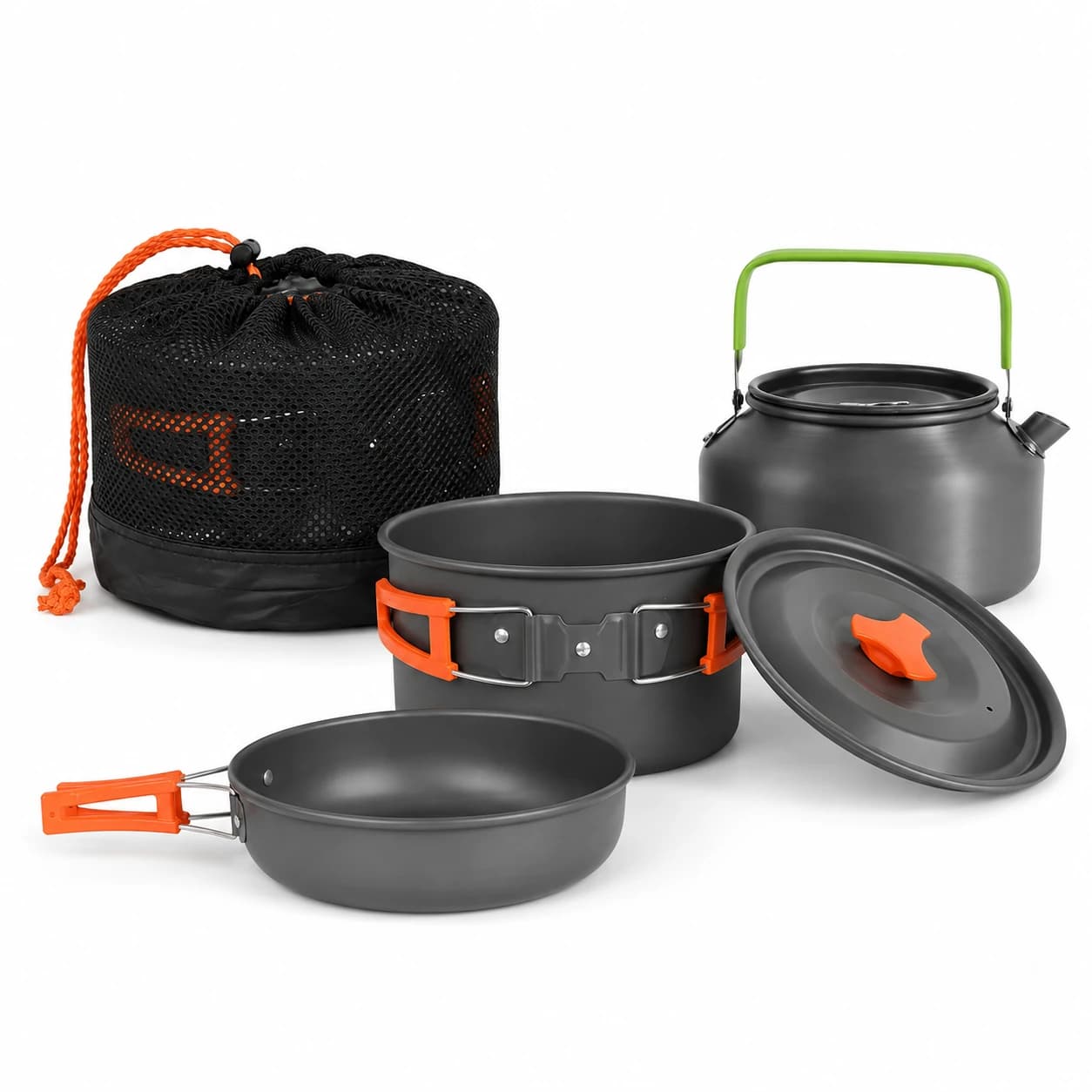
ID 44 shows an eight-piece nesting cookware reference with a 0.8 L kettle, cooking vessels, cups, folding cutlery and carry items. Confirm the final included-item list, dimensions, component materials, finish, care instructions, packaging and evidence in the written quotation. For single-item assortment building, compare the published stainless-steel kettle and compact grill references separately rather than merging their claims into the set.
From assortment idea to approved cookware order
- 1Define the user and meal taskState group size, trip type, heat source, cleaning context and target retail position.
- 2Freeze the bill of materialsNumber every vessel, lid, handle, utensil, cup, bag and packaging component.
- 3Complete the specificationRecord material, finish, dimensions, capacity, measured weight, nesting and care fields.
- 4Approve sample and evidenceLink the physical sample, packaging mock-up and requested documents to one dated revision.
- 5Inspect the bulk orderCheck identity, count, workmanship, fit, labelling and packaging against the approved record.
Packaging and QC should follow the same numbered specification
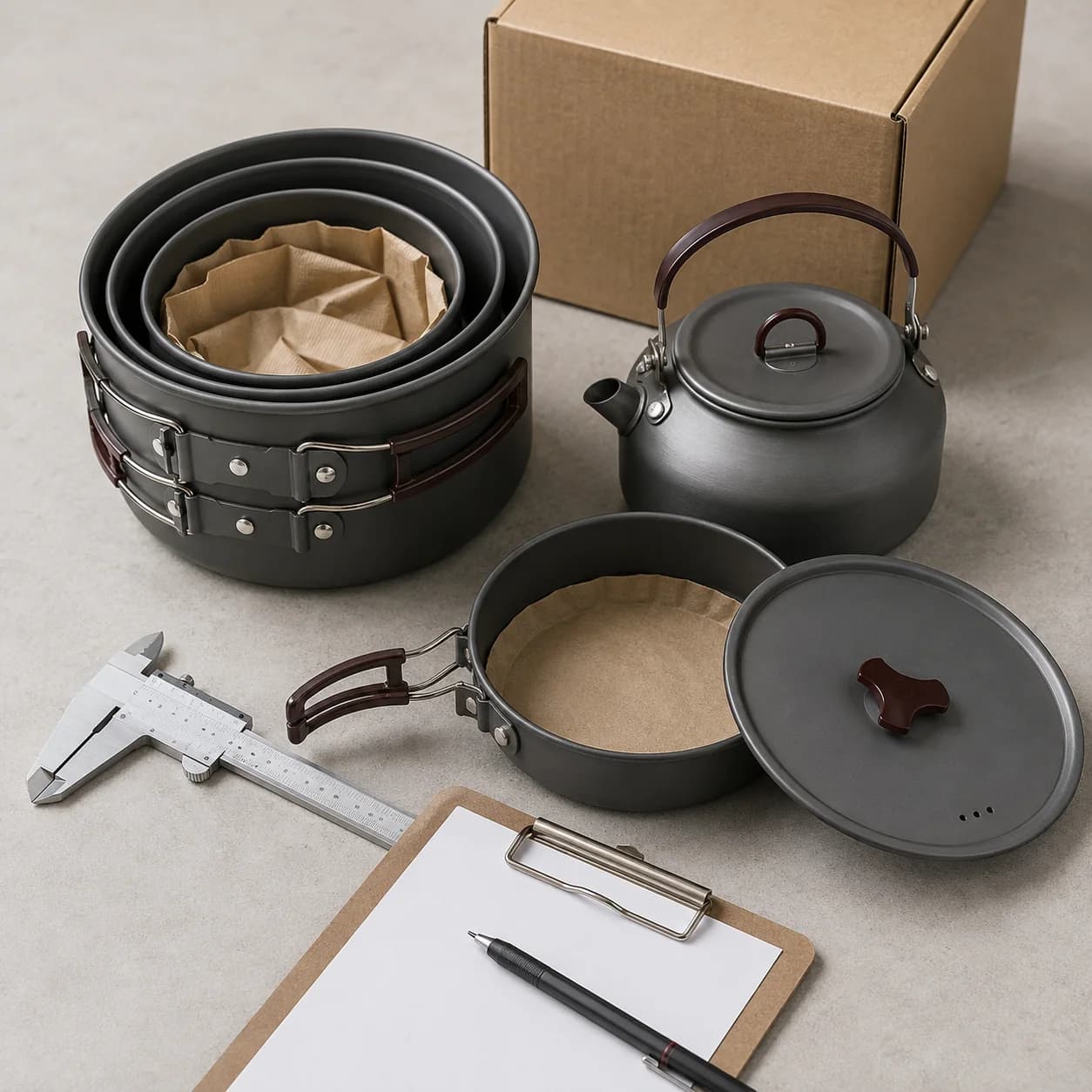
Use the approved sample to define observable workmanship: edges and burrs, lid and handle fit, nesting contact points, surface consistency, odour or contamination, accessory count, bag closure, label placement and carton protection. Sampling plan, acceptance criteria and test methods must be agreed for the actual order; a generic checklist is not a passing report.
- Photograph and number the complete set in packing order.
- Protect coated or polished contact surfaces from nesting abrasion.
- Match retail copy, barcode and care language to the target market.
- Measure retail and master-carton dimensions and gross weight after final packing.
- Record defects and evidence against the approved SKU revision, not a generic product family.
Food-contact compliance belongs to the market and intended use
FDA food-contact guidance and the European Commission food-contact-material framework describe regulatory controls for substances and materials that contact food. They do not certify a Seawing product. The importer should identify the destination, intended food and use conditions, then agree which declarations, supporting documents or laboratory work are required for the exact materials and configuration before placing reliance on a compliance statement.
Frequently Asked Questions
What should a wholesale camping cookware RFQ include?
Include the user case, exact bill of materials, dimensions and usable capacity, component materials and finishes, measured set weight, nesting size, handles, retail/master packaging, target market and required evidence.
Does an eight-piece set always contain eight cookware vessels?
No. Sellers may count lids, cups, utensils or bags differently. Use a numbered pack list and approved sample photo.
Is aluminium alloy cookware automatically food-contact compliant?
No. Identify the exact material, surface treatment, intended use and destination-market evidence. A material-family name is not a compliance conclusion.
How should buyers compare cookset weight?
Compare the same configuration and measurement basis: cookware bodies, lids, accessories, carry bag and retail packaging should be stated separately where relevant.
What should be checked before bulk shipment?
Confirm SKU identity, component count, dimensions, workmanship, handle and lid fit, surfaces, labels, retail pack, carton protection and the agreed order-specific inspection or test records.
Request a Camping Cookware Specification & Quote
Ready to move from research to a quotation? Send us your specification and target market — our team comes back with MOQ, lead time and pricing.