
Camping Kettle Materials and Capacity: A Buyer Comparison
A B2B camping-kettle comparison that separates material, capacity, dimensions, weight, components, heat-source limits and market evidence.
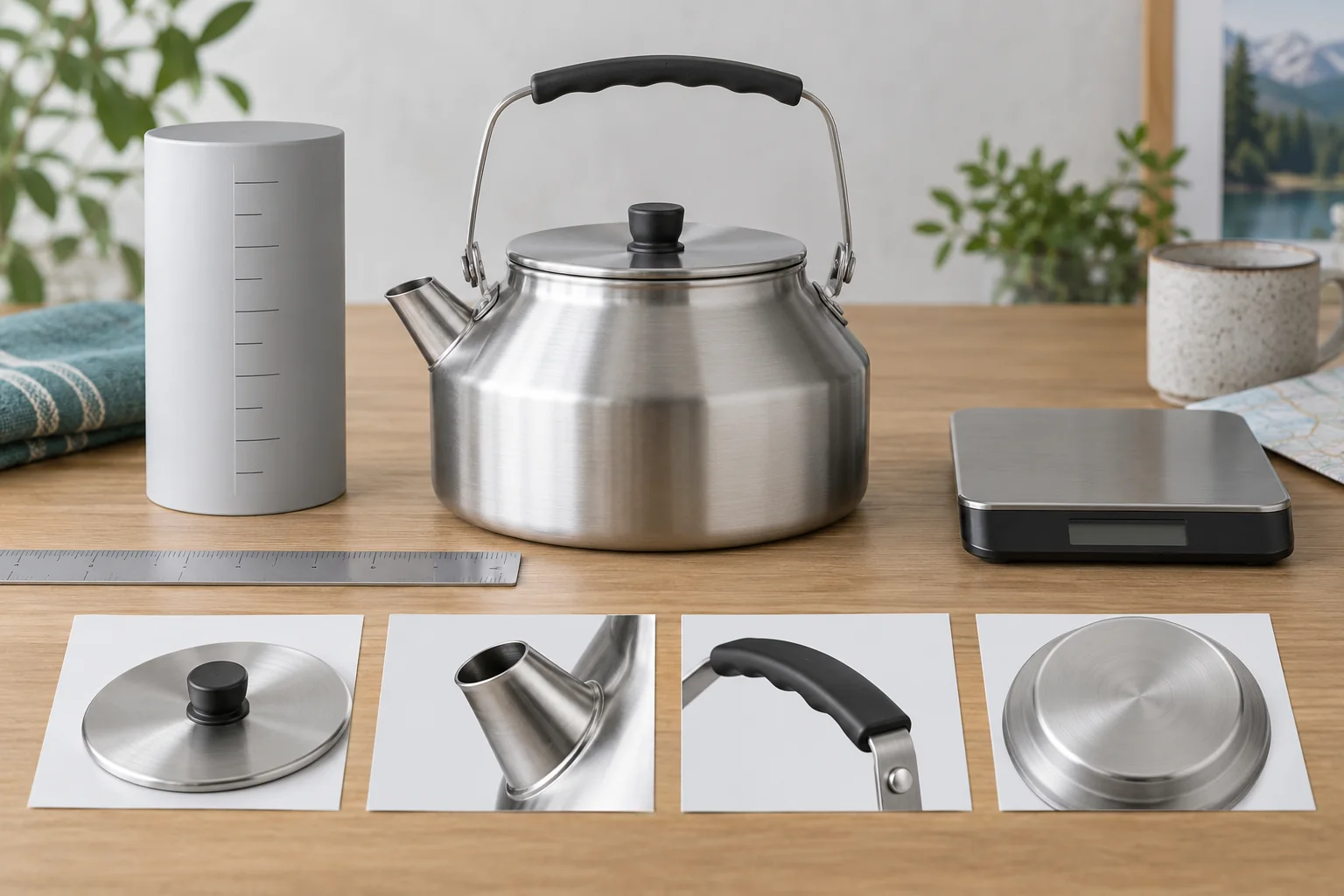
Cover: AI-generated editorial concept. It does not represent a Seawing product, person, factory, customer site, capacity measurement, heat test, certification, food-contact approval or performance result.
Keep material, capacity, dimensions and performance separate
A kettle can share an external size with another version while differing in wall shape, fill line, lid clearance, spout position or usable volume. Capacity must therefore be stated with a measurement method and a named version; it should not be calculated from the outer dimensions.
Consumer guides commonly compare litres, weight and material. A B2B buyer must also record material grade, component construction, heat-source restrictions, instructions, packaging and market evidence. External sources define the questions and legal context, not facts about this Seawing reference.
What the current Seawing kettle record supports
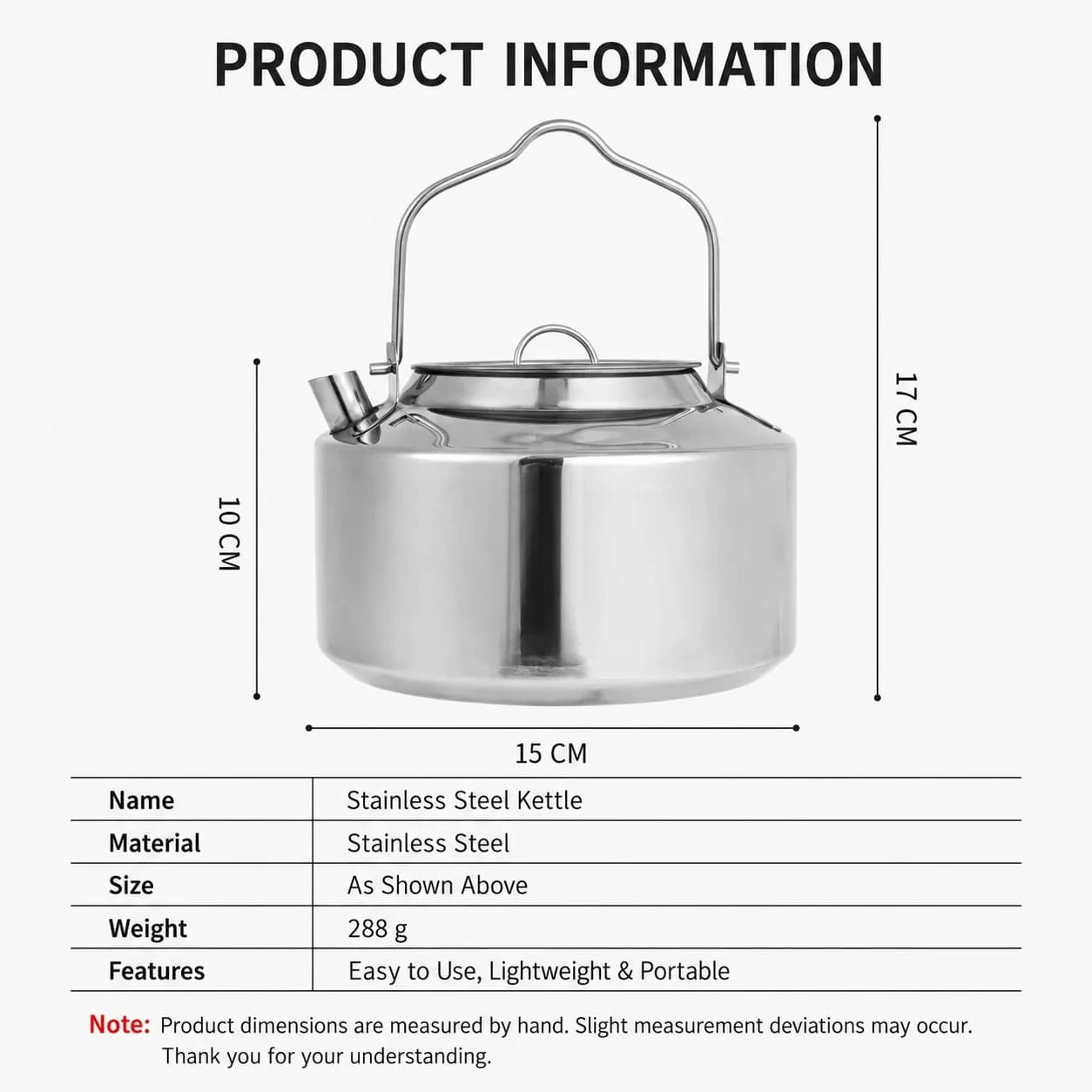
- Product reference: stainless-steel camping kettle
- Published external dimensions: 10 × 15 × 17 cm
- Published reference weight: 288 g
- Capacity: not established in the current published record
- Steel grade, thickness and component materials: require confirmation
Camping kettle comparison matrix
Use the same measurement definitions for every shortlisted version and keep missing fields open for confirmation.
| Decision field | Record for the selected version | Evidence to request | Do not assume |
|---|---|---|---|
| Material | Body, base, lid, spout, handle and fastener materials/grades | Component specification and applicable material records | Grade, thickness or corrosion result from 'stainless steel' |
| Capacity | Total and recommended usable volume plus method | Dated measurement sheet for the exact version | Litres from external dimensions or a photograph |
| Dimensions | Overall, base-contact, opening and packed dimensions | Dimensioned drawing and measured sample | Stove fit or packed volume from one size triplet |
| Weight | Empty unit weight and included-parts basis | Calibrated sample record and tolerance | Shipping weight or durability from 288 g |
| Use limits | Permitted heat sources, fill limits, handle/lid instructions and maintenance | Current manual and version-specific test records | Boiling time, induction compatibility or safe handle temperature |
Three layers in a defensible kettle specification
Record overall size, base contact, opening, packed state and empty weight.
State total and usable volume with fill point, method and sample identity.
Link materials, heat-source limits, instructions and market records to the same version.
Product views identify the kettle, not its capacity or heat performance
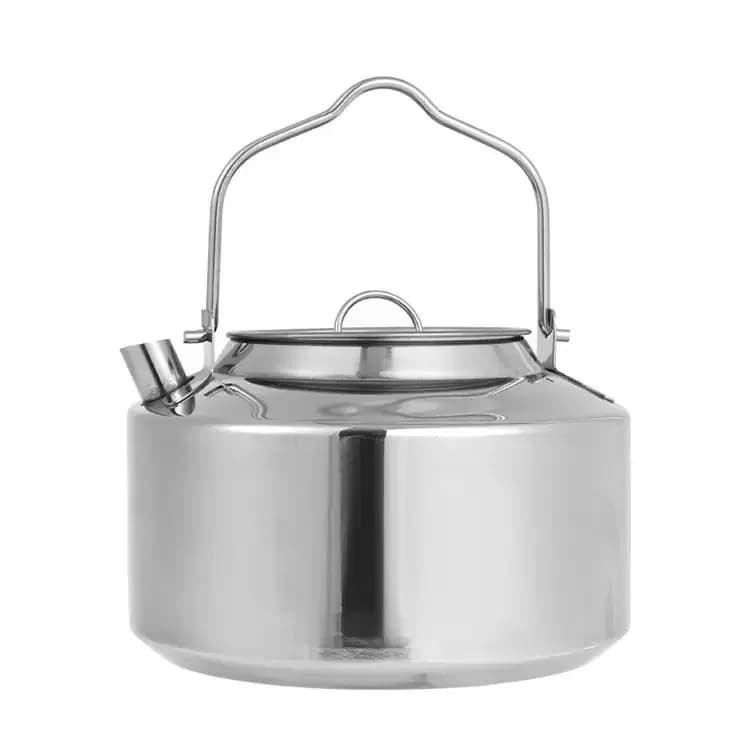
These site-hosted images belong to the stainless-steel kettle record. They help confirm the visible body, lid, spout and handle layout, but they do not prove volume, steel grade, thickness, base construction, heat-source compatibility, boiling time, corrosion resistance, handle temperature, food-contact safety, certification or market compliance.
Copy-ready camping-kettle buyer brief
Use the same fields when requesting a sample and when approving retail or distributor data.
| Buyer field | Supplier confirmation | Acceptance record |
|---|---|---|
| SKU/version, destination, channel and quantity | Current product identity and revision | Approved dated specification |
| Required total and usable capacity | Value, units, fill point and measurement method | Signed measurement record |
| Required material fields | Material/grade/thickness by body, base, lid, spout and handle | Applicable declarations and reports |
| Intended heat source and use | Permitted sources, limits, warnings and care instructions | Approved manual and test scope |
| Packing and shelf data | Unit/packed dimensions, weight basis, included parts and packaging | Approved sample and pack list |
From catalogue dimensions to an approved kettle brief
- 1Identify the versionRecord product URL, revision, sample date, destination and quantity.
- 2Measure capacityDefine total and usable fill points, method, units and sample identity.
- 3Map componentsRecord materials and construction for body, base, lid, spout, handle and fasteners.
- 4Confirm intended useMatch permitted heat sources, instructions, care and warnings to the version.
- 5Approve market dataRelease only values whose method, scope and documentation match the selected version and destination.
Material, food-contact and performance boundary
EU Regulation 1935/2004 covers materials and articles intended to contact food and requires suitable information and traceability. It does not prove that this kettle complies; the version's component and market records must be reviewed.
FDA conditions of use distinguish food type and temperature. That is why a material statement without intended-use conditions cannot establish a complete food-contact position for a specific kettle.
BfR reports that element transfer from metal utensils can depend on composition, quality, temperature, food type and contact time. The source supports a confirmation checklist, not a safety, corrosion or durability claim for this SKU.
Sources reviewed for buyer fields
Review the kettle record and request material, capacity and component details
Compare a camping kettle by recording material and grade, total and recommended usable capacity with the measurement method, external and base dimensions, empty weight, lid, spout and handle construction, packed state, permitted heat sources and destination documents. Seawing's current kettle record supports stainless steel, 10 × 15 × 17 cm and 288 g only. Those fields do not establish capacity, steel grade, wall thickness, boiling time, stove compatibility, corrosion resistance, handle temperature, food-contact status or compliance.
Review the kettle record and request material, capacity and component details
Frequently Asked Questions
Can kettle capacity be calculated from 10 × 15 × 17 cm?
No. External dimensions do not define internal geometry or the recommended fill line; request a measured capacity record.
Does stainless steel identify the grade?
No. Ask for the grade and construction of the body, base, lid, spout, handle and fasteners.
Does 288 g describe the packed or shipping weight?
No. It is the published reference unit weight; packing and shipping weights need separate records.
Can a product photo prove stove or induction compatibility?
No. Request the permitted heat sources, base specification and version-specific instructions or tests.
Do material and weight prove boiling time?
No. Boiling performance requires a defined water volume, starting temperature, heat source, environment, endpoint and sample.
What belongs in the first kettle RFQ?
Include SKU/version, destination, quantity, capacity definition, component materials, dimensions, heat source, packing and required market documents.
Review the kettle record and request material, capacity and component details
Ready to move from research to a quotation? Send us your specification and target market — our team comes back with MOQ, lead time and pricing.