
Hiking Backpack Fabrics and Hardware: A Buyer Checklist
Compare a hiking backpack's fabric zones, webbing, zippers, buckles and seams by exact version. A product-manager brief for SKU-linked evidence.
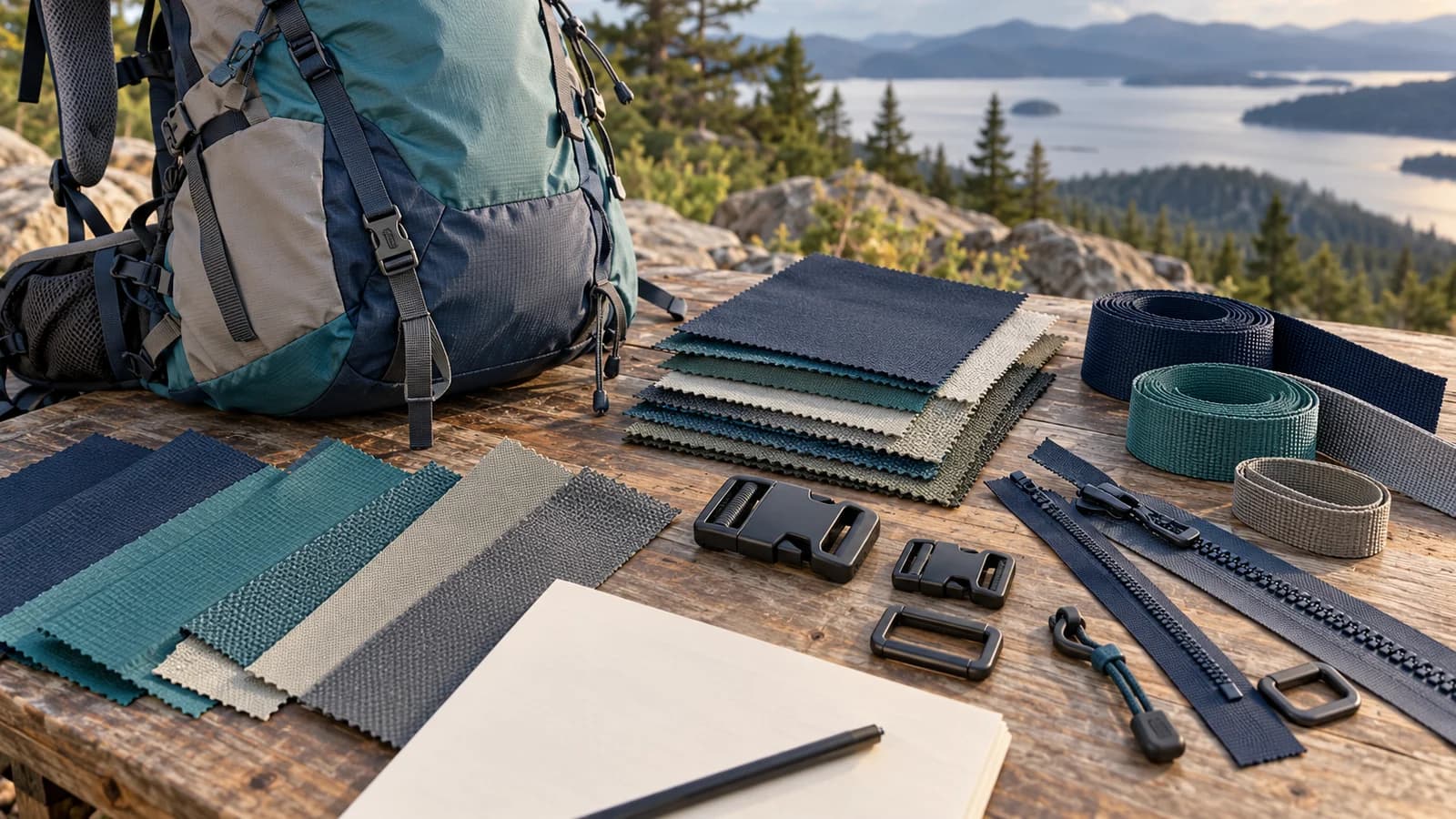
AI-generated editorial cover, not SKU 41, a supplied component set, factory, customer or test result.
Start from SKU 41, not a generic pack recipe
The 30 L lightweight hiking-backpack record is SKU 41. Its published catalogue fields identify 30 L and a hiking, travel, casual and sport use profile; the supplier describes it as lightweight and water-resistant without a test rating. Neither the product name nor an image establishes the fabric fibre, denier, coating, specific zipper, buckle model or seam strength for the version a buyer might order.
Product managers should request a revision-controlled component map before comparing quotations. A material line such as 'nylon' or a label like 'quality buckle' leaves out the fabric zone, coating, weight, tape width, hardware interface and stitch location. Ask for an identified sample and a parts list that can be reconciled against photos of the main opening, pocket openings, shoulder harness, hipbelt and base.
REI's backpack guide is strong at explaining pockets, access and rain-cover decisions for users. Hardware makers such as YKK and Duraflex publish multiple product families and sizes. Those pages show why a buyer needs a precise part identifier; none says SKU 41 uses their parts.
- Exact reference: SKU 41, 30 L lightweight hiking backpack.
- Published use profile: hiking, travel, casual use and sport; water resistance is supplier-described without a rating.
- Fabric grade, coating, hardware maker/model, seam method and test outcomes are not established for the selected version.
Component-by-component purchasing matrix
Write one line per zone or opening; do not borrow a material or test report from a different pack.
| Zone or component | Identification field | Evidence to request | Do not infer |
|---|---|---|---|
| Main shell/base/lining | Fibre, weave, weight or denier, coating and zone map | Revision-labelled material sheet and swatches | Abrasion or waterproof result from a fibre name |
| Shoulder straps and webbing | Fibre, width, padding, path and anchor construction | Cut/sew drawing and labelled sample | Load rating from strap appearance |
| Main and pocket zippers | Opening map, chain type/size, slider, tape and puller | Actual part codes and installation detail | YKK or weather protection from visible teeth |
| Buckles and adjusters | Function, mating halves, slot width, material and part code | Hardware list and webbing-interface sample | Interchangeability from similar shape |
| Seams and accessories | Stitch/edge location, reinforcement and included items | Construction sheet, pack list and scoped test method | Strength, certification or rain-cover inclusion |
Three records for each component
Name the fabric zone, opening, strap or buckle position on the exact pack.
Record material and finish or manufacturer part code, size and counterpart.
Tie a dated sample, drawing, test request and acceptance decision to one revision.
See the actual pack; verify its hidden specification
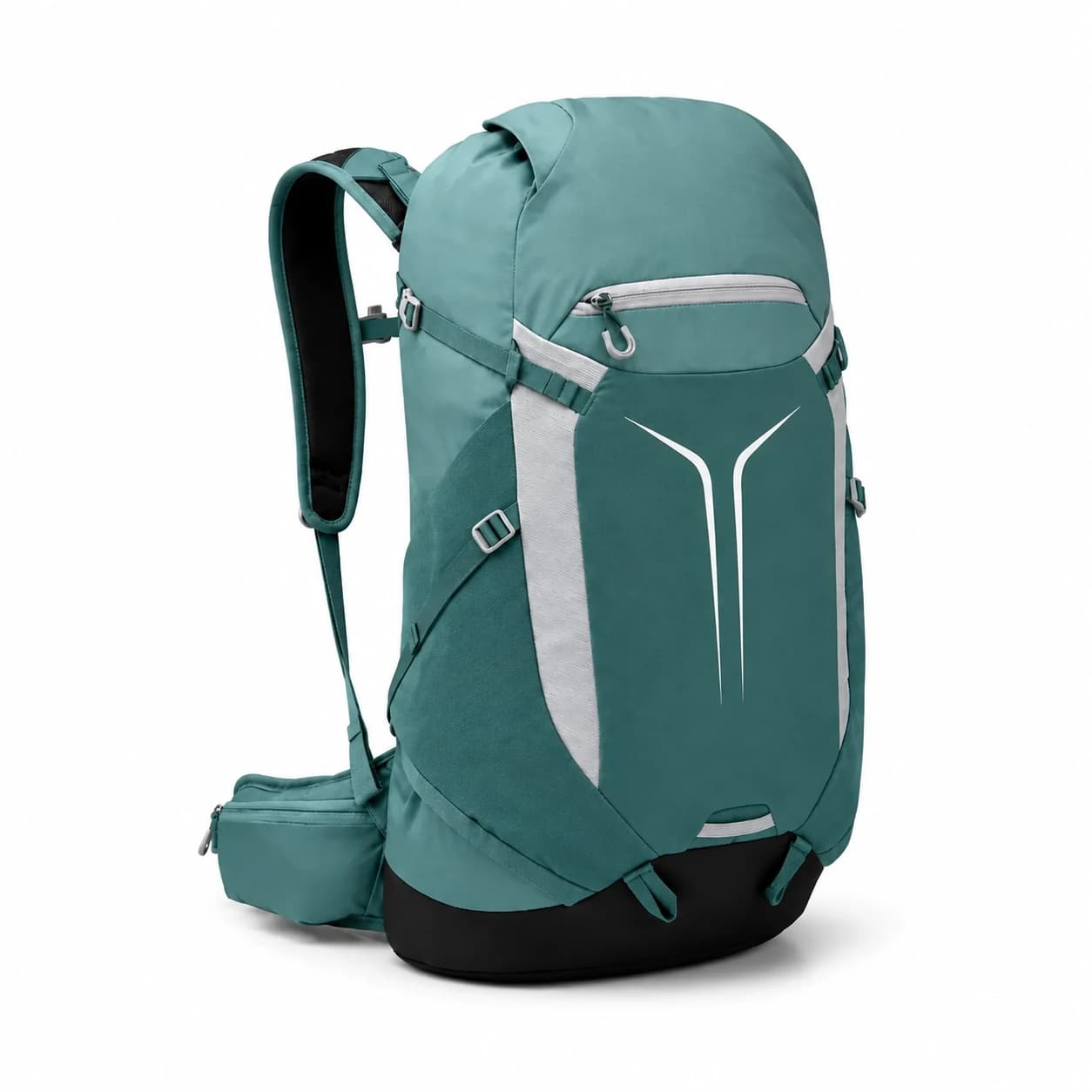
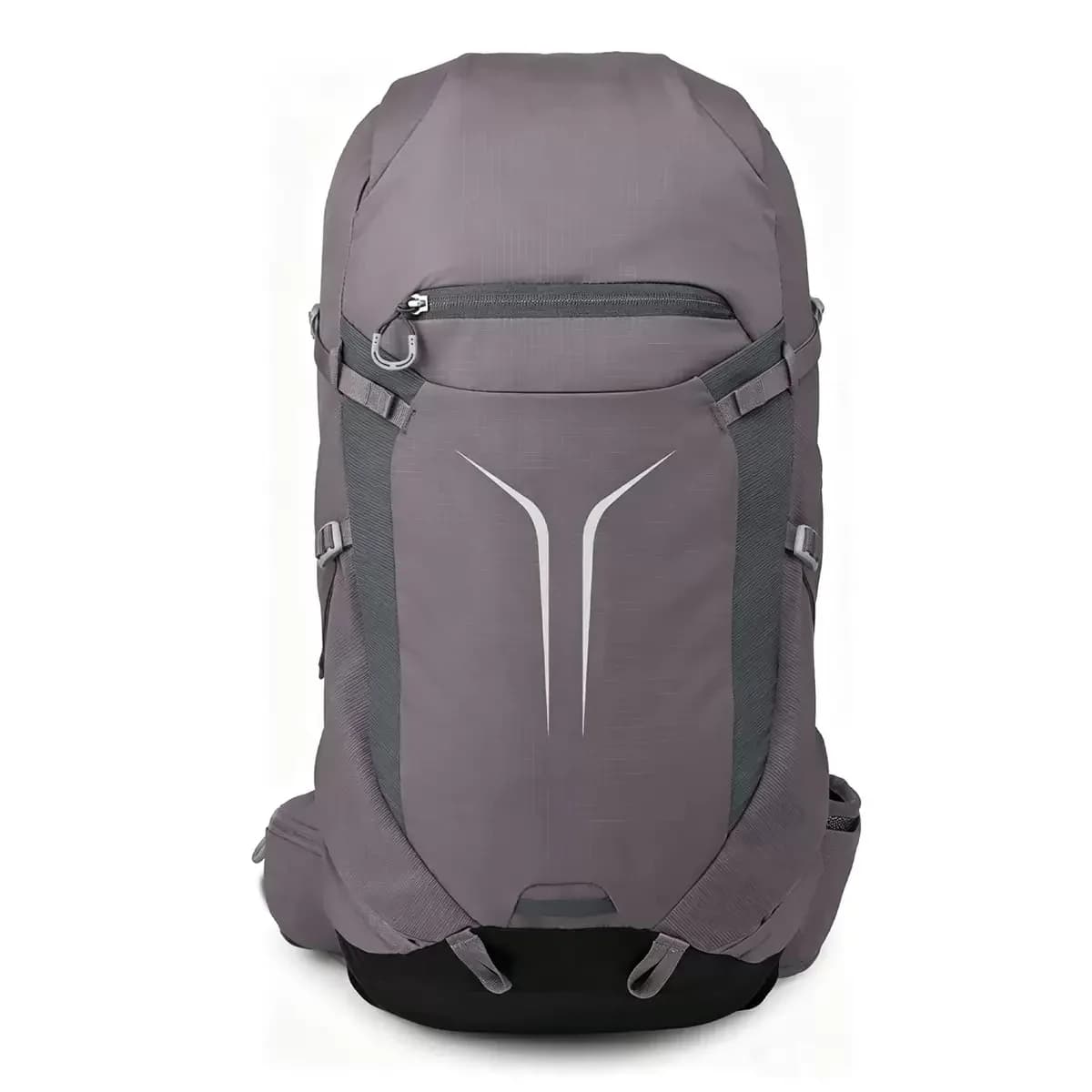
These two distinct site-owned catalogue photographs show teal and grey presentations of SKU 41. Their appearance helps locate parts, not establish fibre grade, hardware brand, resistance or test performance. The cover is an AI editorial concept, not a bill of materials for SKU 41.
A construction brief worth sending
Include target market, channel and quantity as buyer requirements. Ask the supplier to indicate which offered revision meets the brief and to flag substitutions before approval.
| Buyer field | Supplier response | Acceptance evidence |
|---|---|---|
| SKU, option, market and quantity | Exact offered revision and colour | Dated record and labelled sample |
| Fabric zones | Outer, base, lining and pocket material/finish | Zone map, swatches and applicable documents |
| Closure map | Each zipper, slider and puller identifier | Part list and installed sample |
| Strap interfaces | Webbing width, buckle/adjuster pair and stitch path | Drawings and sample inspection |
| Testing and pack list | Which methods and accessories apply to this revision | Scoped reports and agreed contents |
Five steps from appearance to approved component set
- 1Select a versionName SKU 41, colour, revision, market and required quantity.
- 2Divide the pack into zonesSeparate shell, base, lining, openings, straps, seams and accessories.
- 3Identify each partRequest codes, dimensions, mating hardware, materials and assembly drawings.
- 4Check the sampleCompare the labelled sample with the component map and request scoped tests where needed.
- 5Freeze the recordApprove one revision and document any substitutions before public claims or orders.
Why component names need source and scope
YKK's product catalogues show separate coil, moulded and specialist zipper families. Duraflex's official catalogue separates buckles, strap adjusters and other hardware, including recently introduced side-release designs. The names illustrate a specification vocabulary, not a claim that either brand supplies SKU 41. Ask for an exact part number and approved alternative if a brand is proposed.
CORDURA's original Classic fabric technical sheet demonstrates that a fabric family may have different finishes, coatings or laminations; a branded fabric name alone would not define every zone of a finished pack. REI notes that seams and zippers can admit water even when pack fabric has a treatment. Therefore request the selected fabric zone and construction evidence before promising water protection. Recent 2026 supplier guides on backpack hardware were reviewed as competitor content, but their universal denier, load and test thresholds were not imported. No global backpack compliance result is inferred from this checklist.
Original component sources reviewed October 17, 2026
Review the 30 L pack and request its exact component brief
Use the SKU 41 record to identify the desired option, then send the fabric-zone and hardware matrix with market, channel and quantity. Request a labelled sample, part codes and revision-matched documents before any material or performance claim.
Frequently Asked Questions
Does 30 L establish the fabric or hardware?
No. Capacity does not identify the shell, base, lining, zipper, buckle or seam for SKU 41. Request a version-linked component map.
Can a visible zipper be called YKK?
No. Appearance does not prove a manufacturer or model. Request the installed zipper's maker, chain, size, slider and part code.
Is a higher denier automatically more durable?
No. A denier value is only one material field. Compare the selected fibre, weave, coating, construction and applicable test evidence under the same method.
Do matching buckles always interchange?
No. Identify both mating halves, webbing width, slot design and revision, and verify the installed sample before approving a substitute.
Does water-resistant mean all seams and zippers are sealed?
No. The supplier description does not establish a rating or construction for each opening. Request scope, method and version-specific evidence before a water-protection claim.
What should a first hardware enquiry contain?
Include SKU 41, colour/revision, market, channel, quantity and a zone map. Ask for the material sheet, zipper and buckle part list, seam drawing, included accessories and scoped documents.