
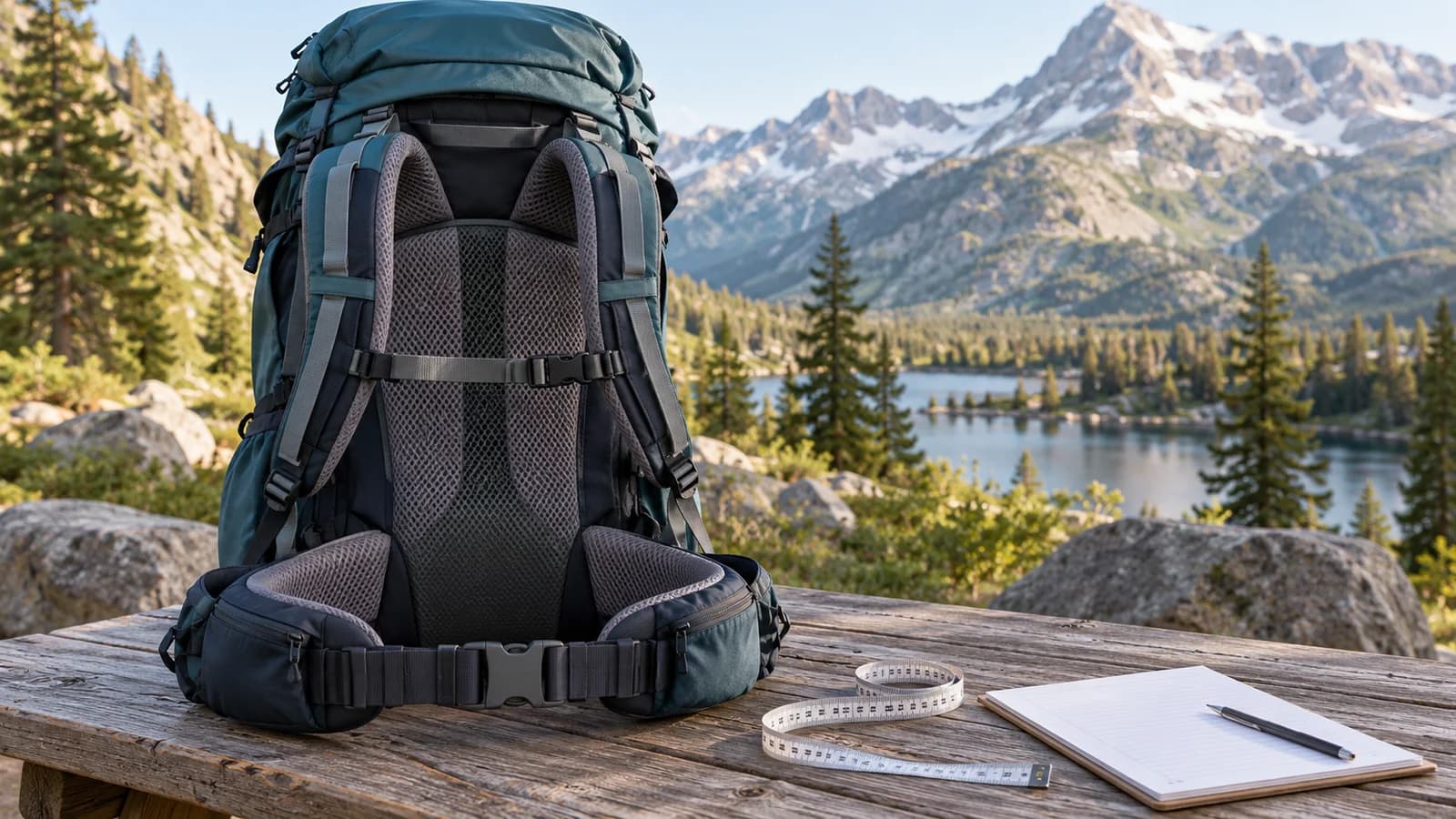
Hiking Backpack Fit Data Retailers Should Request
Request torso, hipbelt and harness data for an exact hiking-backpack version. A retailer checklist separates a 55 L catalogue reference from measurable fit evidence.
AI-generated editorial imagery, not an exact Seawing product, buyer, fitting test or performance result.
Begin with the 55 L product record
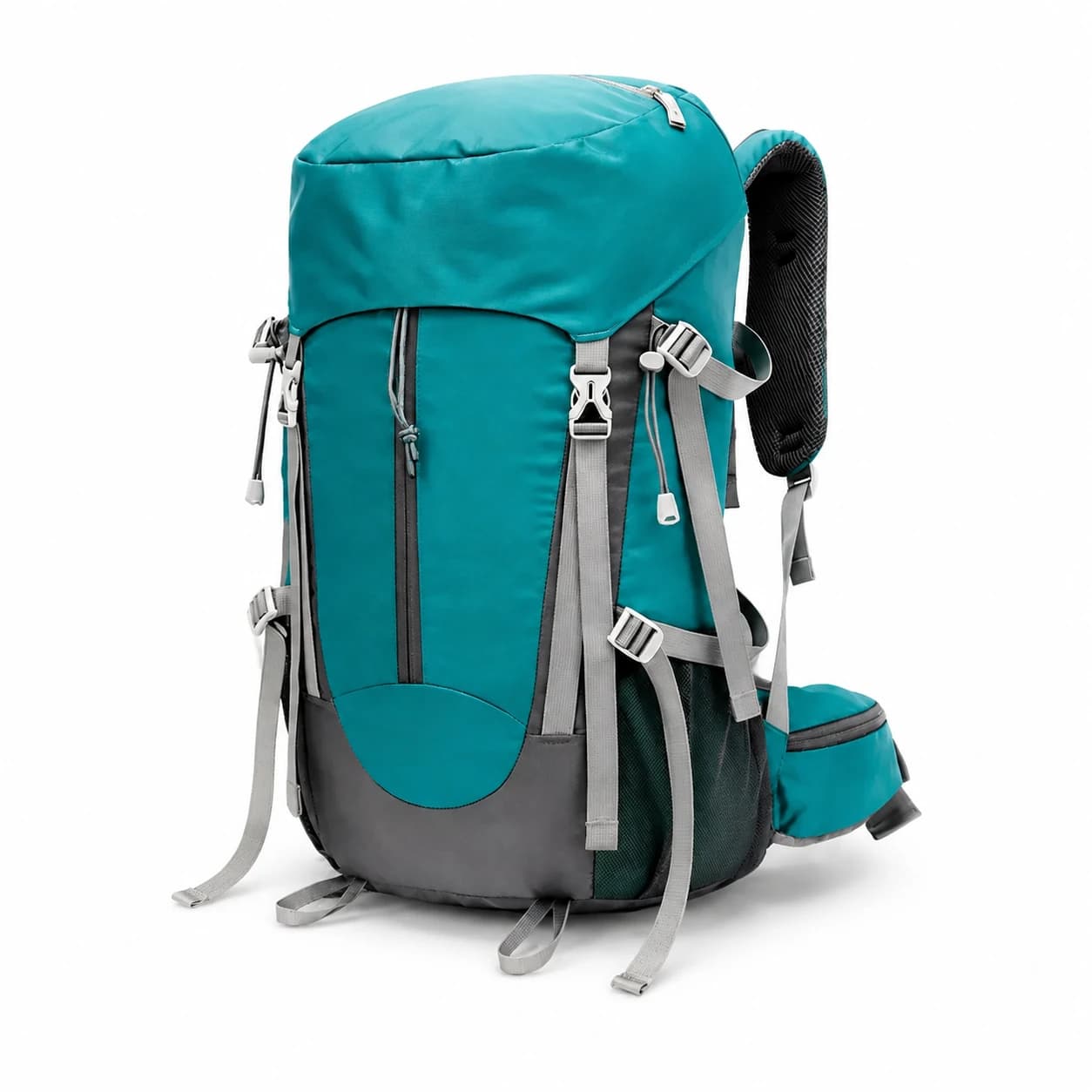
SKU 37 is the 55 L hiking-backpack reference. The published record names a polyester shell and lining and describes curved shoulder straps. These fields identify the catalogue item and a visible design concept, not a measured fit result. Ask which colour and production revision the response covers before using any sizing statement in a shelf card or online filter.
Pack volume answers how a bag is described for storage; it does not tell a buyer whether the harness suits a customer's torso. Do not turn the label 55 L or a model photograph into a height, hip circumference, load or comfort recommendation. Keep the pack's external dimensions, measured capacity method and body-fit dimensions in different columns.
Osprey's own sizing guide distinguishes torso length, hipbelt and shoulder harness, and REI stresses torso length rather than overall height. Those sources explain why the questions matter; their ranges and fitting rules belong to their own product lines. The Seawing version needs its own measurement points, tolerances and fitting instructions.
- Exact reference: SKU 37, 55 L hiking backpack.
- Published shell and lining: polyester; curved shoulder-strap description.
- No published SKU-specific torso range, hipbelt range, fit trial, load rating or adjustment travel.
Fit-data decision matrix for a retailer
Compare evidence at the same product revision; a blank range remains a supplier question, not a zero value.
| Field | What to request | Retail use | Evidence boundary |
|---|---|---|---|
| Torso/back length | Measurement landmarks, pack-size range and adjustment increments | Size filter and fitting appointment | 55 L is not a torso size |
| Hipbelt | Measurement at hip crest, padded span, minimum/maximum closure and buckle adjustment | Confirm likely customer fit before a shelf claim | Waist size or gender label is not a substitute |
| Shoulder harness | Strap shape, anchor points, adjustment travel and instructions | Compare fit controls between revisions | A curved-strap description does not prove comfort |
| Sternum/load-control straps | Presence, adjustment path, limits and replacement details | Explain controls shown on the selected sample | A photo does not establish travel or safety |
| Fitting trial | Labelled sample, loading method, participant measurements and observations | Train staff and decide which sizes to stock | Another brand's fitting result is not this SKU's result |
Keep three measurements apart
The SKU's published 55 L catalogue descriptor; request its capacity method separately.
Torso and hip measurement landmarks used for the intended customer group.
The actual revision's harness and hipbelt positions, ranges and fitting sequence.
Reference image and illustrative fit detail
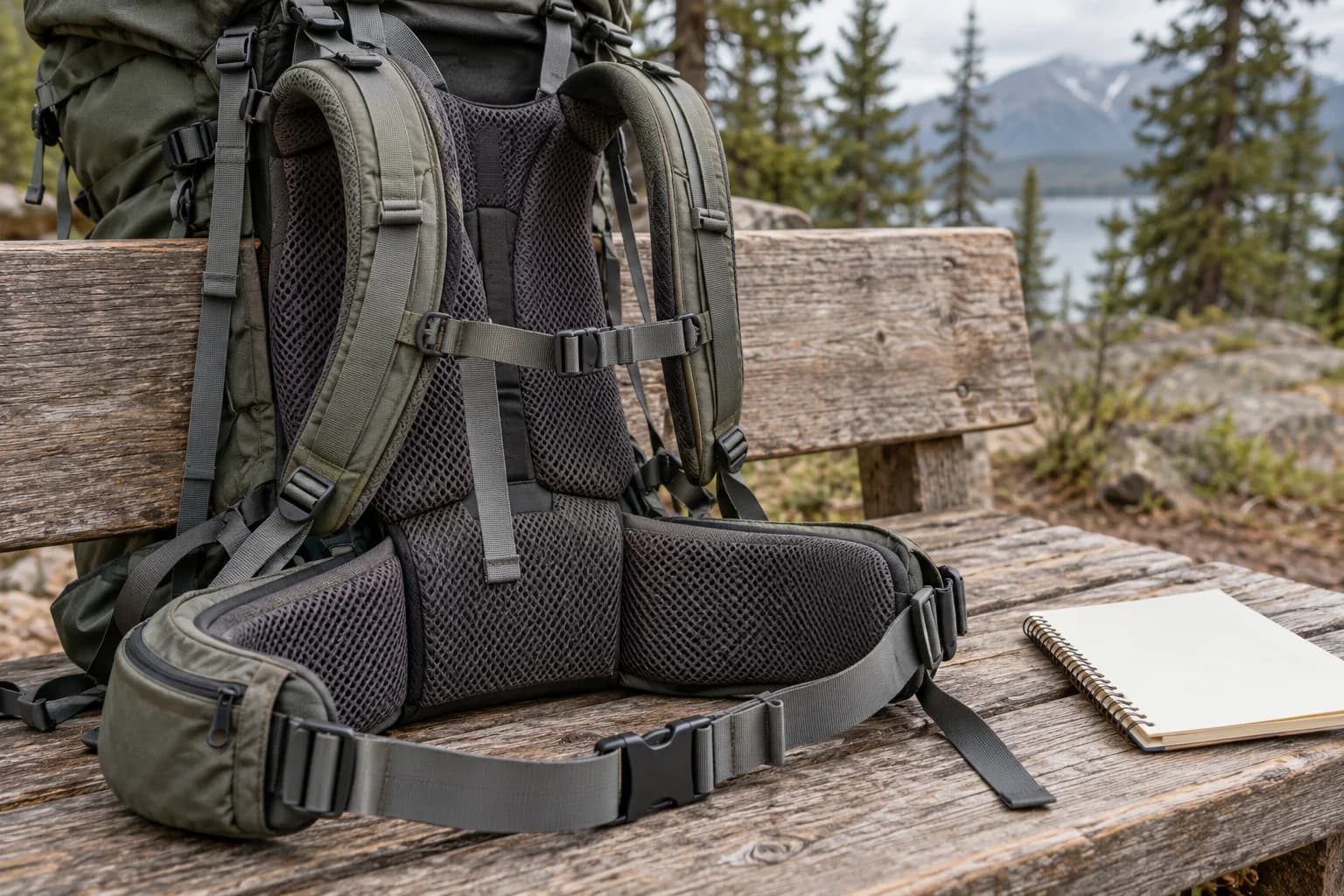
The clean site-owned SKU 37 catalogue photo identifies the pack's appearance. The second image is an AI-generated generic harness detail for editorial explanation; it is not the Seawing product or a fit test.
Ask for a version-linked fit sheet
A retailer can send this brief with market, channel, quantity and a named SKU. Request the supplier's evidence before publishing size advice; a test fitting can then check whether the stated method is usable for staff.
| Buyer input | Supplier to identify | Approval record |
|---|---|---|
| SKU, colour, market, channel, quantity | Exact revision and offered size options | Dated version sheet |
| Intended shopper body-size range | Torso and hip landmarks, range and measurement method | Annotated measuring diagram |
| Harness use | Shoulder, sternum, hipbelt and any load-control adjustments | Instructions and labelled sample |
| Shelf sizing advice | Applicability, exclusions and wording | Retail review against a fitting trial |
| Post-sale support | Replaceable or adjustable parts, if offered | Version-specific parts record |
Five steps from product reference to shelf guidance
- 1Name the versionStart with SKU 37, selected option, market, quantity and revision.
- 2Collect measurementsRequest torso and hip landmarks, range, units and the way they were measured.
- 3Map adjustmentsMark every relevant strap, buckle and permissible position on the same sample.
- 4Trial the instructionsHave retail staff use the stated fitting sequence on a labelled sample; log what remains unclear.
- 5Approve wordingPublish only the version-specific size advice supported by the agreed records.
What current fit guidance supports—and does not
Osprey's original size-and-fit guidance separates torso length, hipbelt and shoulder strap geometry. REI's fitting article explains where torso and hip measurements are taken and why a try-on matters. Deuter's German adjustment guide describes a sequence for hipbelt, shoulder straps and sternum strap; Salomon's Spanish guide also begins with positioning the hipbelt. These are fit-method examples across markets, not Seawing sizing tables or an endorsement of SKU 37.
A review of current English, German, French, Spanish, Portuguese and Arabic search results on October 17, 2026 found consumer fitting tutorials and product-size charts, but few version-controlled retail data sheets. A buyer therefore needs the supplier to state the method, sample and revision explicitly. No relevant new backpack-fit regulation was established for this page; destination-market label or safety obligations must be assessed for the actual product and sales market, not assumed from a generic guide.
Original fit sources reviewed October 17, 2026
Review the 55 L pack and request fit data for your version
Open the SKU 37 record and send the model, option, target market, channel and quantity with the fit-sheet questions above. Ask for a labelled sample and keep any unconfirmed measurement out of consumer-facing size guidance.
Frequently Asked Questions
Does 55 L tell me which shopper fits the pack?
No. It is a capacity descriptor, not a torso or hip measurement. Request the selected revision's fitting ranges and their measurement method.
Can I use a customer's height as the size chart?
Not without a version-specific, validated relationship. Fit guides from Osprey and REI emphasize torso and hip measurements; ask the supplier for the exact pack's own chart and instructions.
Do curved shoulder straps prove comfort?
No. SKU 37's description identifies a strap shape, not an outcome for a wearer or load. Inspect the labelled sample and request adjustment details before writing benefit copy.
Can another backpack's hipbelt range be reused?
No. Size ranges and hardware may differ by model and revision. Keep the source product and measurement points attached to every number.
What should the retailer ask for first?
Send SKU 37, chosen option, market, channel and quantity. Request torso and hip measurement landmarks, adjustment ranges, fitting instructions and a labelled sample under one revision.
Is a catalogue photo enough for staff training?
No. A photograph can identify visible controls, but staff need the actual adjustment sequence, range and sample to check how the selected version fits.