Air Beds

Inflatable Air Beds & Travel Mattresses: Sourcing Guide

How to source inflatable air beds and travel mattresses wholesale — material and flocking, pump options, size range, MOQ and packaging, and the phthalate/REACH chemical compliance that gates PVC goods.

Quick answer: four decisions before you sample

An inflatable air bed looks simple, but a sound wholesale order turns on four decisions: material and top surface, pump arrangement, size range, and chemical compliance. The last of these is the one importers underestimate — because the product is PVC, the phthalate and REACH/Prop 65 limits are what actually gate it at customs, not the general safety marking. Settle these on paper first and the sample tells you something; sample first and you are guessing. This guide works through each.

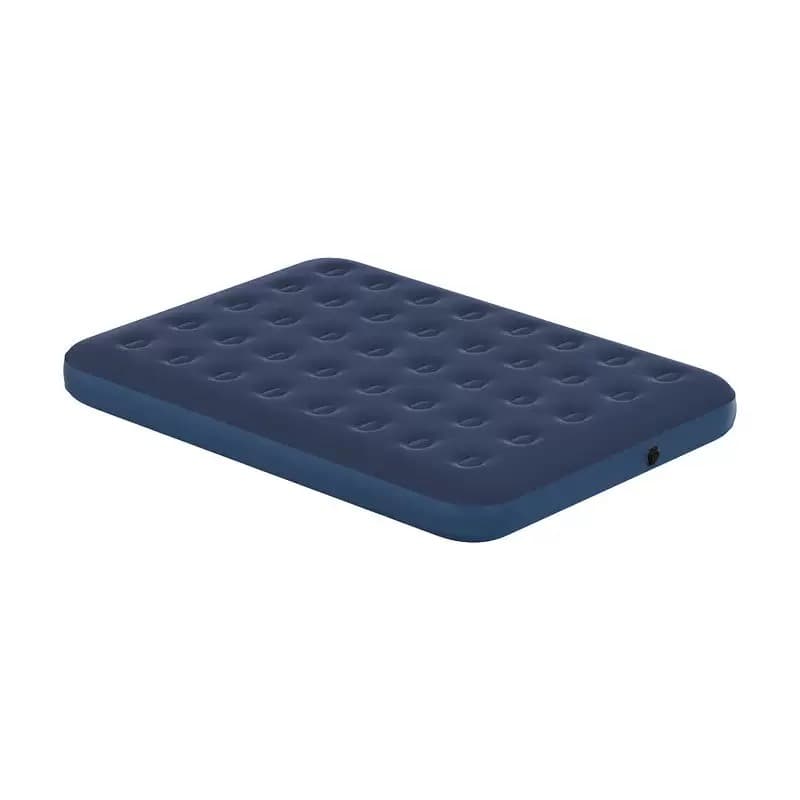
Blue flocked inflatable travel mattress with a soft velvety top surface
A soft flocked top is the mainstream comfort standard — warmer and less slippery than bare PVC.

What you are sourcing

“Air bed” covers a spread of products, and the first job is to be clear which one your channel wants. A travel or camping mattress is thin, light and packs small for portability; a household guest air bed is thicker and taller for occasional indoor use; a self-inflating pad uses open-cell foam rather than pure air. This guide centres on the inflatable travel mattress — the most versatile line for a B2B range — but the sourcing logic carries across. Our own inflatable travel mattress is a flocked-top model built for exactly this position.

Material, flocking & comfort

Nearly all air beds are PVC, and the meaningful choices are the wall construction and the top surface. A flocked top — a soft, velvety layer bonded to the PVC — is the mainstream standard: it feels warmer and less slippery than bare plastic and keeps a sheet in place, which is what buyers expect and what keeps review scores up. Internally, air beds use beams or coils to hold their shape under load; more and better-bonded beams give a flatter, firmer sleep. The full material-and-construction detail is the subject of our companion air mattress materials & sizes guide; for sourcing, the rule is to specify a flocked top and confirm the wall gauge in writing.

Pump options

How the bed inflates is a genuine product decision, not a detail, because it changes cost, weight and where the product fits:

Inflation options for air beds, from a sourcing view
Pump typeBest forTrade-off
Built-in electricHousehold guest beds, convenience linesHigher cost; an added failure point
External pump (electric/foot)Value and mixed useA separate item to pack and not lose
Valve only (no pump)Travel & camping, ultralightBuyer supplies inflation; lightest and cheapest

Match the arrangement to your channel — a convenience-led household range wants a built-in pump, while a travel line is better light and valve-only — and confirm exactly what ships in the box.

Size range

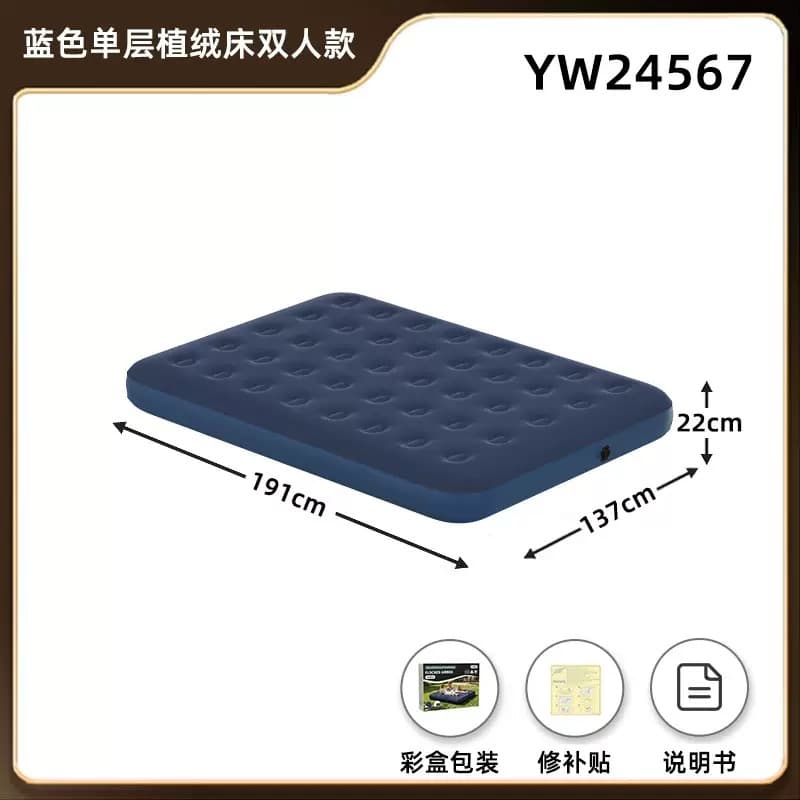
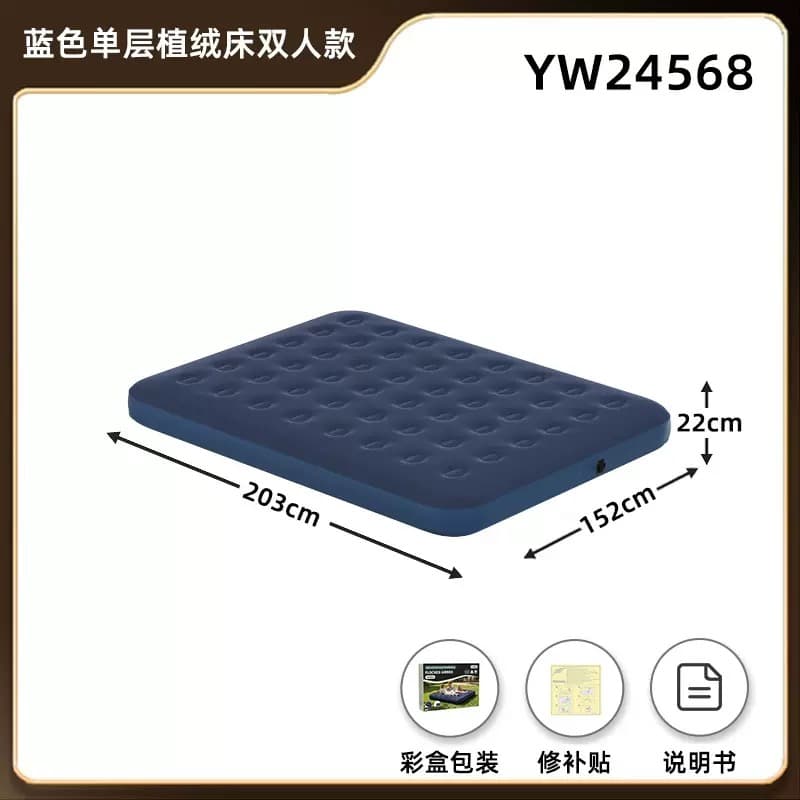
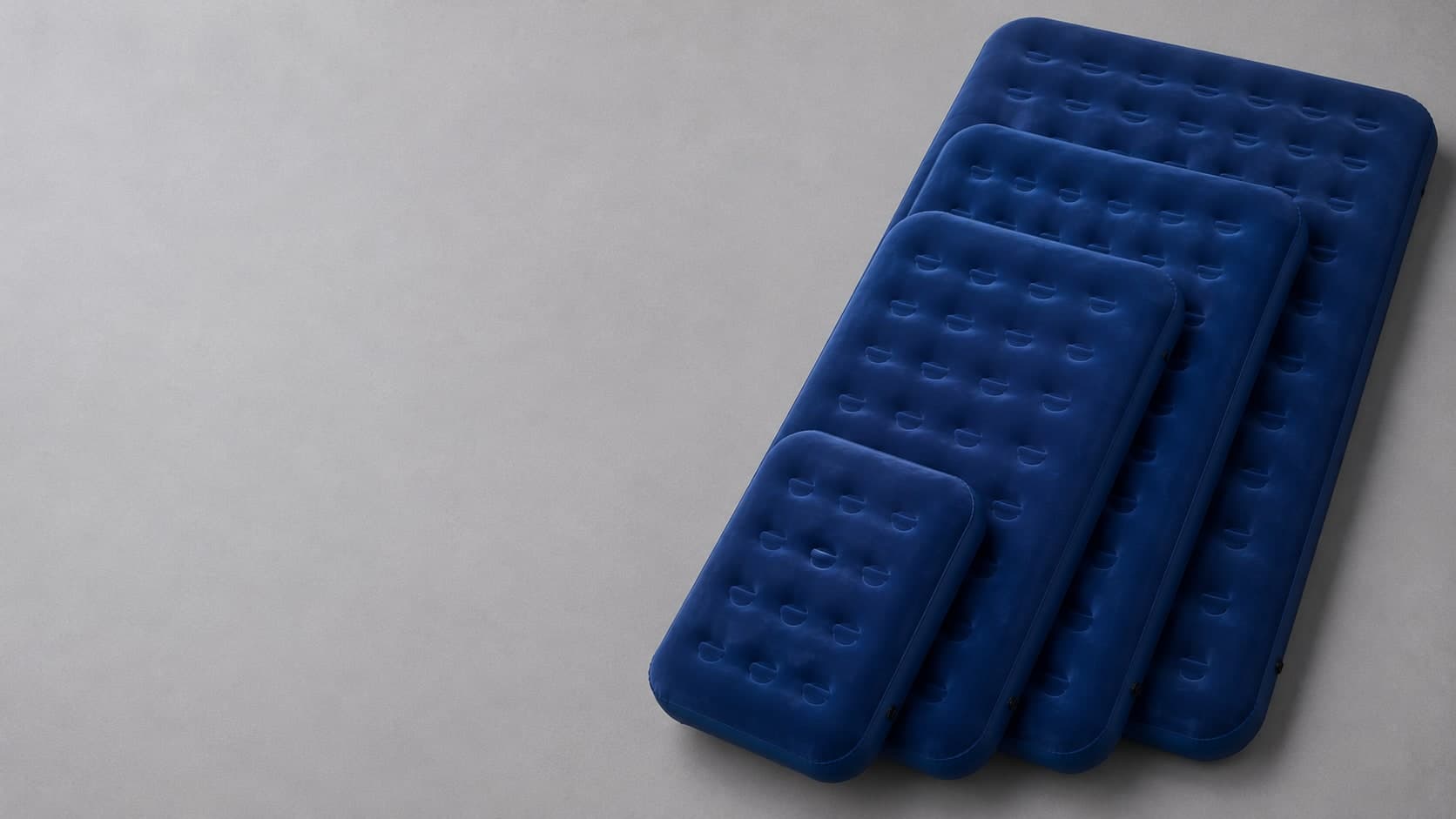
Carrying a spread of sizes lets one product line serve solo travellers, couples and families. Our travel mattress runs in five sizes, all a consistent 22cm thick:

Inflatable travel mattress size range (all 22cm thick)
SizeDimensionsSuits
Narrow single191 x 73 cmBackpacking, tight spaces
Single191 x 99 cmSolo travellers
Double191 x 137 cmCouples, guest use
Queen203 x 152 cmFamily, comfort-led
King203 x 183 cmMaximum sleeping area

Mixing sizes in one order is also the efficient way to reach a workable quantity without over-committing on any single size while you learn what your channel sells.

King size inflatable travel mattress, 203x183cm, with flocked top
A five-size spread serves solo, couple and family buyers from one line.

MOQ, packaging & inclusions

On existing tooling, outdoor-gear MOQ starts at around 10 pieces per model, and because sizes share a design you can spread a first order across the range. Payment runs a 30% deposit with the balance against a copy of the bill of lading, and samples take about 10–15 days.

Decide the in-box inclusions early, because they affect both cost and returns. Our mattress ships in a printed colour box with a repair patch and a manual — the repair patch in particular cuts returns, since a small puncture becomes a fix rather than a refund. If you are building retail packaging, design the artwork and barcode once, before production, rather than relabelling later.

Chemical certification that gates import

For a PVC product the gating compliance is chemical, and it is the step most first-time air-bed importers miss:

Typical air-bed import requirements by market (confirm per product)
MarketChemical ruleAlso applies
United StatesProp 65 (phthalates, listed substances)CPSC general safety
European UnionREACH (phthalate restrictions)CE / GPSR general safety
United KingdomUK REACHUKCA / general safety

The practical move is to specify compliant, phthalate-controlled PVC from the start rather than testing a finished bed and finding a material problem you then have to re-source. We arrange the testing pathway per order; the cross-category picture is in our outdoor product certification guide.

The sourcing workflow

Run a first order in this sequence and each step de-risks the next:

  1. 1Fix material & topSpecify a flocked top, PVC wall gauge, and beam construction on paper.
  2. 2Choose the pumpBuilt-in, external or valve-only — matched to your channel.
  3. 3Set the size rangePick the sizes to carry; plan a mixed first order across them.
  4. 4Lock chemical complianceAgree phthalate/REACH/Prop 65 limits before sampling.
  5. 5Sample & inspect10–15 day sample; test seams, valve seal, flocking and inflation.
A de-risked air-bed sourcing workflow

Common mistakes to avoid

  • Treating chemical compliance as an afterthought. For PVC it is the main import gate — specify compliant material up front.
  • Buying bare PVC to save a little. A cold, slippery top drives returns; a flocked top is usually worth the small premium.
  • Not confirming what ships in the box. Pump, repair patch and packaging all change cost and returns.
  • Skipping the valve-seal check on the sample. A slow leak is the number-one air-bed complaint; test it before you commit.
  • Committing deep on one size. Spread a first order across sizes and let sell-through guide the reorder.

Key takeaways

  • Decide material, pump, size range and chemical compliance before sampling.
  • A flocked PVC top is the mainstream comfort standard; specify it in writing.
  • Pump choice (built-in / external / valve-only) follows your channel.
  • PVC means phthalate/REACH/Prop 65 limits are the real import gate.
  • MOQ from ~10 pieces per model; mix the five sizes to keep a first order small.

Frequently Asked Questions

What should I check before sourcing inflatable air beds?

Four things, in order: the material and top surface (a soft flocked PVC top is the mainstream choice for comfort), the pump arrangement (built-in electric, external, or none), the size range you will stock, and the chemical compliance for your destination market. Because air beds are PVC, phthalate and REACH/Prop 65 limits are the gating requirement, so settle those before you sample.

What is a flocked air mattress and is it better?

Flocking is a soft, velvety layer bonded to the top surface so it feels warmer and less slippery than bare PVC and holds bedding in place. For most consumer and camping channels a flocked top is the expected standard — our travel mattress uses one. Bare-PVC beds are cheaper but feel cold and plasticky, which shows up in reviews, so flocking is usually worth the small premium.

Do inflatable mattresses come with a built-in pump?

It varies by model, and it is a decision to make deliberately. A built-in electric pump is convenient but adds cost and a failure point; an external pump keeps the mattress simpler and cheaper; a valve-only design is the lightest and most compact, which suits travel and camping. Match the pump arrangement to your channel and confirm exactly what is included before you order.

What sizes do inflatable travel mattresses come in?

Our travel mattress runs in five sizes, from a narrow single at 191x73cm up to a king at 203x183cm, all 22cm thick — narrow single, single (191x99), double (191x137), queen (203x152) and king. Carrying a spread lets you serve solo travellers, couples and families from one product line, and mixing sizes is an efficient way to reach a workable order quantity.

What certification do PVC air beds need to import?

The gating requirements are chemical. PVC and its plasticisers fall under REACH in the EU and UK and California's Prop 65 in the US, with phthalate limits the usual concern; general product safety (CE/GPSR, UKCA, CPSC) also applies. Specify compliant, phthalate-controlled material from the start rather than testing a finished bed and discovering a material problem you then have to re-source.

See Our Inflatable Travel Mattress

Ready to move from research to a quotation? Send us your specification and target market — our team comes back with MOQ, lead time and pricing.

Call usWhatsApp