OEM / ODM

The OEM/ODM Product Development Workflow, Step by Step

The OEM/ODM product development process end to end — NDA, concept and CAD, prototyping, tooling, compliance testing and mass production — with what the buyer and the factory each do at every stage and how long it takes.

Quick answer: six gates, in order

Turning an idea into a shipped, certified product is not one big leap but a sequence of gates, each of which closes with a written approval before the next opens. The value of thinking in gates is that it stops the two failures that wreck custom projects: building on an assumption that was never confirmed, and discovering a compliance problem after the money is spent. This guide walks all six stages, says exactly what you and the factory each do at every one, and gives realistic timings.

A product moving from design drawing to finished unit through the OEM/ODM pipeline
OEM/ODM development is a pipeline of gated stages, not a single handover — each stage de-risks the next.

Why a gated workflow matters

Every stage in product development produces an input the next stage depends on: CAD defines what the prototype tests, the approved prototype defines what the tooling is cut to, compliance defines what production must not deviate from. Skip a gate and you carry an unverified assumption downstream, where fixing it costs far more. A prototype approved before the specification is truly fixed leads to tooling cut to the wrong shape; tooling cut before the compliance pathway is agreed leads to a certified-test failure and a re-tool. The gates exist so that each expensive commitment is made only against a confirmed input.

The six stages at a glance

  1. 1NDAProtect the concept, CAD, tooling and any source code before anything is shared.
  2. 2Concept & CAD2D/3D engineering and UI/UX turn the idea into a fixed, buildable specification.
  3. 3Prototyping3D printing and functional test builds prove the design — iterated in ~10–15 days.
  4. 4Tooling & mouldsCut the moulds for volume; client owns 100% of client-funded tooling.
  5. 5ComplianceCE/FCC/RoHS and market-specific lab testing before the run, not after.
  6. 6Mass productionStrict in-line QC through the run, then DDP logistics to your door.
The OEM/ODM development workflow, gate by gate

Stage-by-stage walkthrough

1. NDA. The first document, before any drawing changes hands. It establishes that your concept, CAD, tooling and source code remain yours and are never reused or shared. Signing it at the outset is what lets the concept stage be candid.

2. Concept & CAD. Engineering and industrial-design work turns a brief or a sketch into a fixed specification — 2D and 3D CAD, UI/UX where there is a digital element, materials and dimensions written down. This is the cheapest place to change your mind, so resolve ambiguity here rather than at the tooling gate.

3. Prototyping. A functional prototype — often 3D-printed or a test build — proves the design behaves as intended, and is iterated until it does, typically in cycles of about 10–15 days. Nothing is committed to steel yet, so this is where you push on fit, ergonomics and function.

4. Tooling & moulds. Once the prototype is signed off, the moulds are cut for volume production. This is usually the largest single fixed cost, which is why tooling ownership matters: in our OEM work the client owns 100% of client-funded tooling and moulds, keeping you free to move production later if you ever need to.

5. Compliance. The product goes through the laboratory testing its destination market requires — CE, FCC, RoHS and the market-specific pathways — arranged per order and per target market. Locking this before tooling avoids the worst outcome, a re-tool after a failed test. For the full picture across categories, see our outdoor product certification guide.

6. Mass production. The run proceeds with strict in-line quality control — inspection during production, not only on the finished batch — and ships DDP. Production runs in a 7,000 m² facility across 10 lines, so a first order and a large reorder use the same capability.

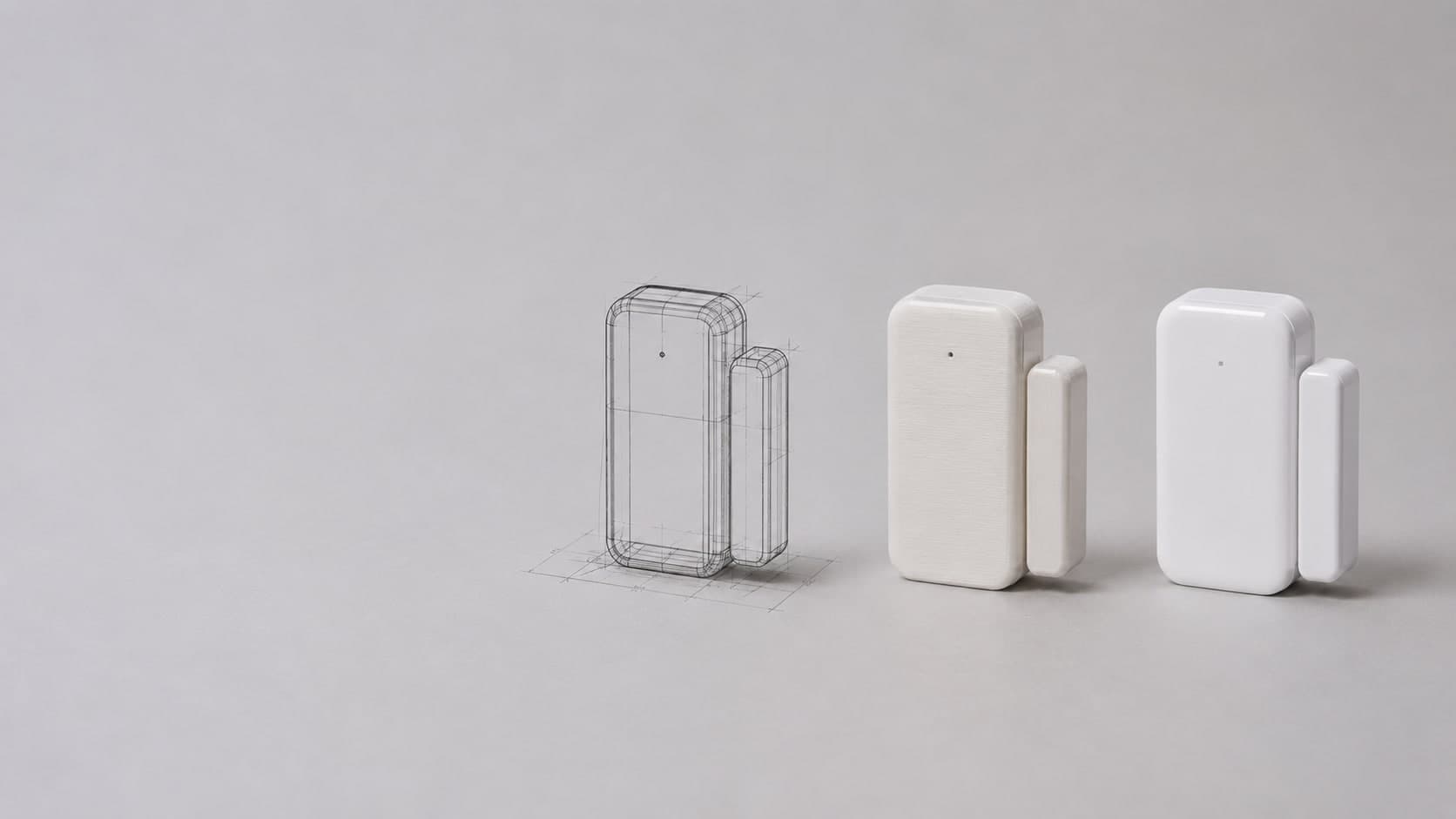
A finished smart door and window sensor produced through the OEM/ODM workflow
The same six-stage pipeline runs whether the end product is a smart-home device or a piece of outdoor gear.

Who does what at each gate

The buyer's job and the factory's job at each stage
StageYou (the buyer)The factory
NDASign before sharing anythingProvide and honour the NDA
Concept & CADGive the brief; approve the specEngineer the CAD and UI/UX
PrototypingTest and sign off fit and functionBuild and iterate the prototype
ToolingApprove and fund the tooling you ownCut and validate the moulds
ComplianceConfirm target marketsArrange the lab testing pathway
Mass productionApprove the pre-production sampleRun in-line QC and ship DDP

How long it takes

Two stages drive the schedule. Prototyping runs about 10–15 days per iteration, and most projects take more than one. Compliance is the other variable: where certification testing is on the critical path it can add roughly a month, which is why agreeing the pathway early matters so much. Tooling adds lead time on a first run; a repeat order on existing, already certified tooling skips prototyping and tooling entirely and goes straight to production. Payment tracks the stages too — our terms are a 30% deposit with the balance against a copy of the bill of lading.

The single biggest lever on the timeline is the discipline of the early gates. A fixed spec and an agreed compliance pathway before tooling is cut is what separates a project that ships on schedule from one that re-tools halfway through.

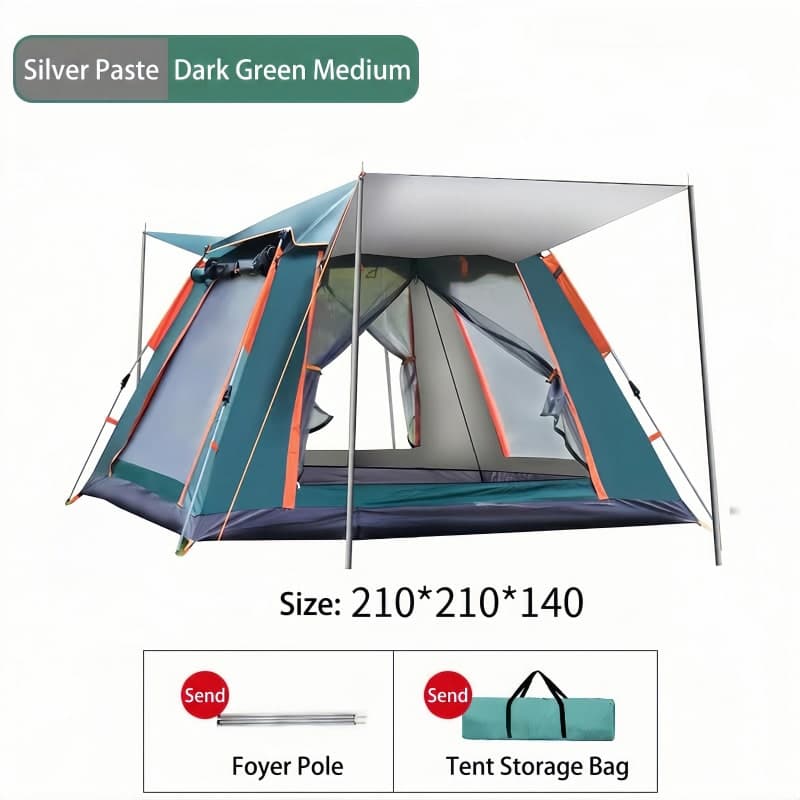
A finished automatic tent produced through the OEM/ODM development workflow
A repeat order on existing, already certified tooling skips prototyping and tooling and goes straight to production.

Common mistakes to avoid

  • Sharing the idea before the NDA. Protection is a first step, not a formality to backfill later.
  • Approving a prototype while the spec is still moving. Tooling gets cut to whatever you signed off — fix the spec first.
  • Cutting tooling before compliance is agreed. A failed certification test after tooling means a re-tool and a missed season.
  • Funding tooling without confirming ownership. Get the 100% client ownership in writing before you pay.
  • Inspecting only the finished batch. In-line QC catches a drift mid-run, when it is still cheap to correct.

Key takeaways

  • OEM/ODM development is six gated stages: NDA, CAD, prototype, tooling, compliance, production.
  • Each gate closes with a written approval before the next opens.
  • Prototyping (~10–15 days/iteration) and compliance (~a month if on the critical path) drive the timeline.
  • Own your client-funded tooling — confirm it in writing before funding it.
  • Lock the spec and the compliance pathway before cutting tooling.

Frequently Asked Questions

What are the stages of OEM/ODM product development?

Six: an NDA to protect your idea, concept and CAD to fix the design, prototyping to prove it works, tooling to build the moulds for volume, compliance testing to clear your destination market, and mass production with in-line quality control and DDP shipping. Each is a gate — it closes with a written approval before the next stage begins, so nobody builds on an unconfirmed assumption.

How long does OEM/ODM development take from concept to production?

The variable stages are prototyping and compliance. Rapid prototyping runs about 10–15 days per iteration, and where laboratory certification testing sits on the critical path it can add roughly a month. Tooling adds lead time on a first run, while a repeat order on existing tooling skips straight to production. Fix the spec early and lock compliance before tooling and the whole timeline compresses.

Who owns the tooling and moulds in an OEM project?

In our OEM work the client owns 100% of client-funded tooling and moulds. That matters because the mould is often the most expensive fixed cost and the thing that ties you to a factory — owning it keeps you free to move production if you ever need to. Confirm tooling ownership in writing before you fund it; it is a term, not a given, across the industry.

Do I need an NDA before sharing my product idea?

Yes — make it the first step, before any drawing or specification changes hands. A signed NDA sets out that your concept, CAD, tooling and any source code stay yours and are not reused or shared. We sign one at the outset of every custom engagement precisely so the concept stage can be candid without exposing your idea.

What is the difference between prototyping and sampling?

A prototype proves the design works — often 3D-printed or a functional test build — and is iterated before any tooling exists. A sample is a production-representative unit made once tooling is cut, used to sign off quality and fit before the full run. Prototyping answers 'is the design right'; sampling answers 'is the production right'. Both are cheap insurance against an expensive mass-production mistake.

See Our OEM/ODM Capabilities

Ready to move from research to a quotation? Send us your specification and target market — our team comes back with MOQ, lead time and pricing.

Call usWhatsApp