
Portable Camping Grills: Material and Cleaning Design
Compare portable camping grill materials, removable parts, cleaning access and packing records. Build a version-specific checklist for a retail enquiry.
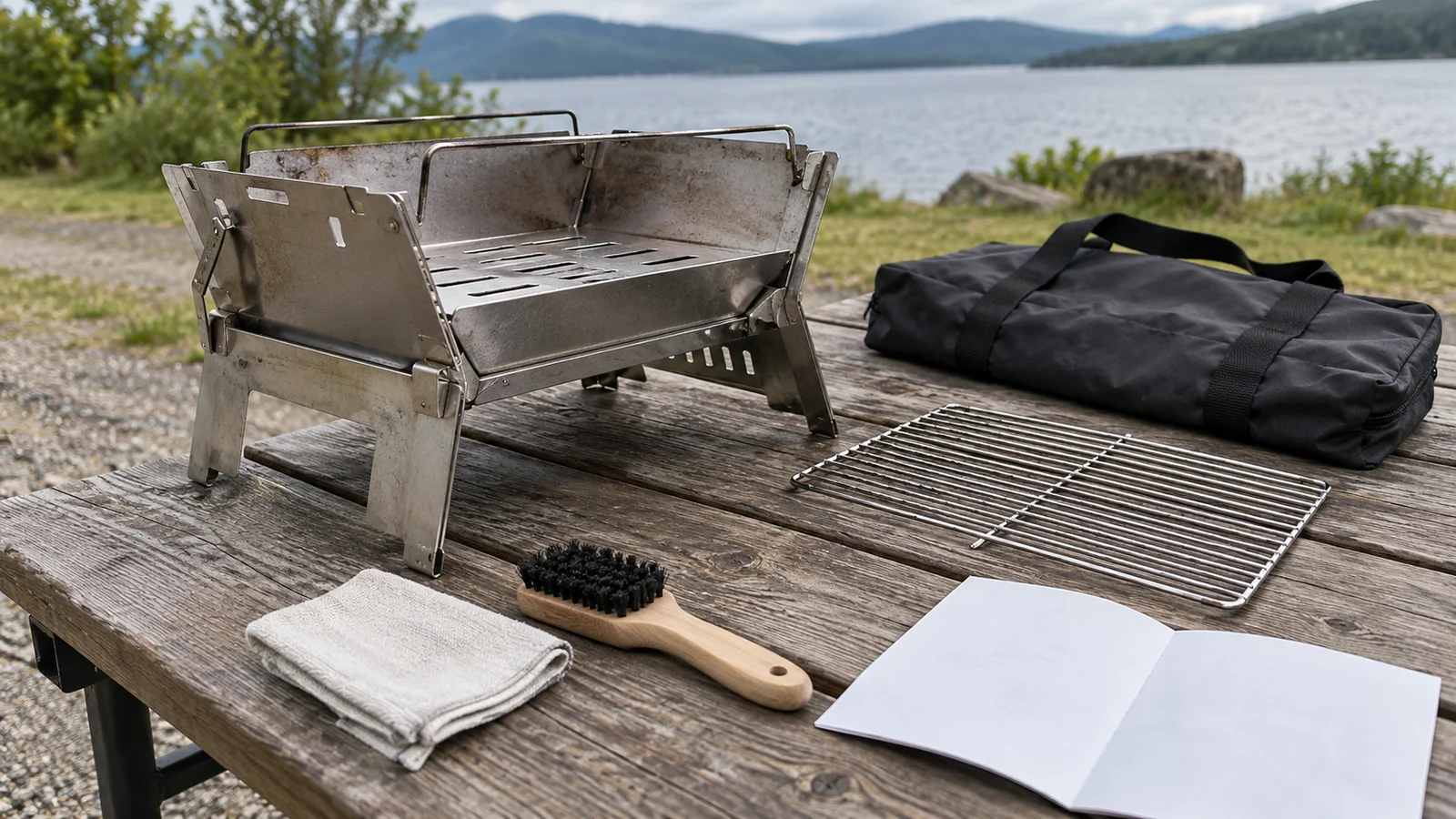
AI-generated editorial concept, not an exact Seawing product, factory, customer site, cleaning test or certification.
Turn the material name into a component record
This portable camping grill material guide is for retail and category buyers comparing a compact product reference. Begin with the exact product URL, selected option, destination market and intended range role. A shiny cooking grate and a folding body are useful visual identifiers, but neither supplies a complete bill of materials. Ask for a drawing or labelled photograph that names the body panels, cooking grate, support frame, hinges, handles, fasteners and any separate tray.
The mini-grill listing names 304 stainless steel, 201 stainless steel and iron as material options. It does not establish that every visible component uses the same material, or that all options have identical weight and packed dimensions. Record the selected version first; attach the published reference fields to it only after the supplier confirms their applicability. This prevents an attractive catalogue image from becoming the specification for a different ordered variant.
Treat material, thickness, surface finish and joining method as separate fields. Ask which parts contact food, which receive heat and which are handled during assembly or storage. The practical question is not simply whether a grill is stainless steel: it is whether the ordered component map, care instructions and supporting documents all describe the same revision. A material name alone is not a corrosion, food-contact or durability result.
- Named reference: Mini Stainless Steel BBQ Grill, SKU 34.
- Listed material options: 304 stainless steel / 201 stainless steel / iron.
- Published packed dimensions: 24 × 24 × 5 cm; reference unit weight: 1,361 g.
- The listing’s 1–2-person positioning is a range descriptor, not a measured cooking-capacity or safety result.
Portable grill material and cleaning comparison
Use one row per component and one column per offered version. Compare documented construction and access instead of assigning a better-quality ranking from the material name alone.
| Decision field | What to record | Evidence to request | Do not infer |
|---|---|---|---|
| Body and tray | Material option, thickness, finish and joints | Version-labelled drawing and specification | Rust resistance, fuel type or heat output |
| Cooking grate | Material, finish, food-contact area and removal path | Component record, applicable documents and manual | Food-contact suitability from the word stainless |
| Frame and fasteners | Materials, hinges, locking sequence and spare-part identity | Assembly instructions and identified sample | Load rating or stability from a photograph |
| Cleaning access | Parts removable without damage and areas that retain residue | Care instructions with exclusions and tools | Dishwasher suitability or universal soaking |
| Packing | Drying requirement, protected edges, bag and packed state | Dated pack list and measured selected sample | Final carton size from the folded-size field |
Three records that must agree
A selected version with a material and finish map for each named component.
The same version’s permitted cleaning tools, removable parts, exclusions and drying sequence.
A pack list identifying the grate, frame, accessories, protection and instruction revision.
Identify the reference before discussing care
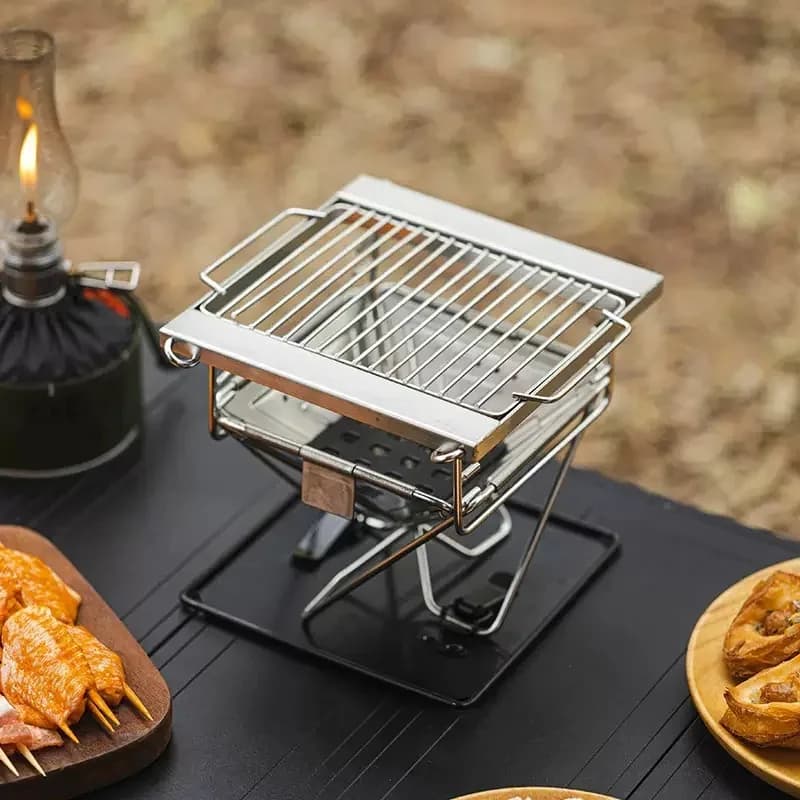
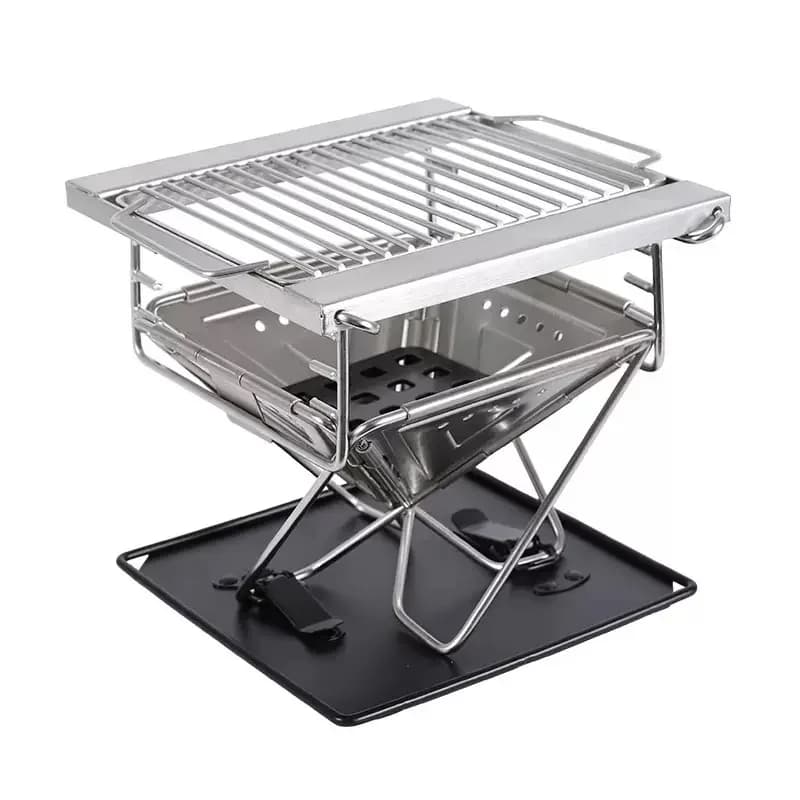
These two site-owned catalogue photographs identify SKU 34 from different views. They show its appearance only; they are not cleaning, fuel, food-contact or stability test evidence.
A care and packaging brief a supplier can answer
Make the request specific enough for a written response. A broad question such as ‘is it easy to clean?’ leaves the procedure, exclusions and supplied tools undefined. Ask for the care document alongside the parts list, then check the selected sample against both. Record any unresolved point internally rather than promoting it as a product benefit.
| Buyer input | Supplier response | Acceptance record |
|---|---|---|
| SKU, option, market and quantity | Version and applicable reference values | Dated specification and sample ID |
| Body, grate, frame and fasteners | Material, finish and thickness per component | Labelled component map |
| Cleaning and residue removal | Tools, detergents, removable parts and exclusions | Version-specific care instructions |
| Drying and packing | Dry-state checks, bag, protection and spare parts | Agreed pack list and photographs |
| Labels and documents | Instruction language, warnings and applicable market evidence | Document revision and scope |
Five steps from reference to approval
- 1Select the optionRecord SKU 34, market, quantity and the requested material version.
- 2Map the partsSeparate body, grate, frame, fasteners and accessories in a labelled record.
- 3Review the care sequenceIdentify which parts may be removed and which must not be soaked or cleaned with a particular tool.
- 4Check the packed stateUse an identified sample to confirm the agreed dry packing and protection.
- 5Approve one revisionKeep specifications, care instructions, labels and pack list under the same version identifier.
Read current care guidance, not a universal recipe
Manufacturer guidance illustrates why cleaning cannot be inferred from a material label. SKOTTI’s own FAQ excludes its burner tube and gas hose from its soaking advice and gives a different method for its enamel-coated KAST. Weber’s Go-Anywhere guide separately addresses the cooking grate and bowl. These are useful examples of component-specific instructions, not permission to use those procedures on Seawing’s mini grill. Request the selected product’s own method and exclusions.
The U.S. CPSC published a wire-bristle grill-brush recall statement on February 26, 2026. That current notice means older cleaning articles recommending wire brushes need careful review. For a retail brief, identify the proposed cleaning tool, ask about applicable recalls and obtain current manufacturer instructions; do not bundle a tool merely because it appears in an old guide. The notice concerns its stated products and U.S. context, not a test result for SKU 34.
The European Commission’s food-contact overview is a starting point for destination-specific document questions. A grade label, a photograph or another brand’s declaration does not establish that the selected Seawing version meets a market requirement. Ask the supplier to identify the food-contact components, intended use and evidence scope; have the relevant market specialist review the documents before making a compliance claim. Also confirm the product’s permitted fuel and heat-source instructions rather than copying the setting shown in a photograph.
Original sources reviewed on October 15, 2026
Review the mini grill and prepare a version-specific enquiry
A useful portable grill comparison ends with one selected option and a coherent component, care and packing record. Send the product reference, market, quantity and the questions in the brief above. That gives the supplier a concrete scope to answer without turning a catalogue image into a guarantee of fuel suitability, cleaning performance or compliance.
Review the mini grill and prepare a version-specific enquiry
Frequently Asked Questions
Does stainless steel identify every component?
No. SKU 34 lists material options, not a material map for every part. Ask which option applies to the body, cooking grate, frame and fasteners, together with finish and thickness. Keep the response linked to the selected version.
Does 304 stainless steel prove food-contact suitability?
A grade name alone does not establish suitability for a particular contact surface, intended use or market. Identify the food-contact parts and request the applicable documents for the ordered version; do not transfer another brand’s evidence.
Can all folding grill parts be soaked?
Do not assume that. Ask which parts are removable, which may be wet-cleaned and which are excluded. Manufacturer instructions for other grills show that different components and finishes can require different care.
Is the folded size the export carton size?
No. The published 24 × 24 × 5 cm field describes a packed product reference. Final packaging, protective materials, included accessories and units per carton need their own agreed measurements.
Should a buyer copy an old wire-brush recommendation?
No. Review current product instructions and applicable recall information. The CPSC’s 2026 notice makes the proposed cleaning tool a specific sourcing question; it is not a reason to assume any particular tool is supplied with this grill.
What should the first enquiry include?
Include the product URL, material option, market, quantity, component map, cleaning exclusions, packing scope and instruction language. Ask the supplier to identify one version and the documents that support its response.