Private Label Outdoor Rainwear: Jackets, Rain Suits, Seams & Buyer Specifications
Build a private-label outdoor rainwear specification around wearer, climate and activity; then lock shell and lining construction, seam map and treatment,…
Direct answer: specify the whole garment system, not only a waterproof fabric
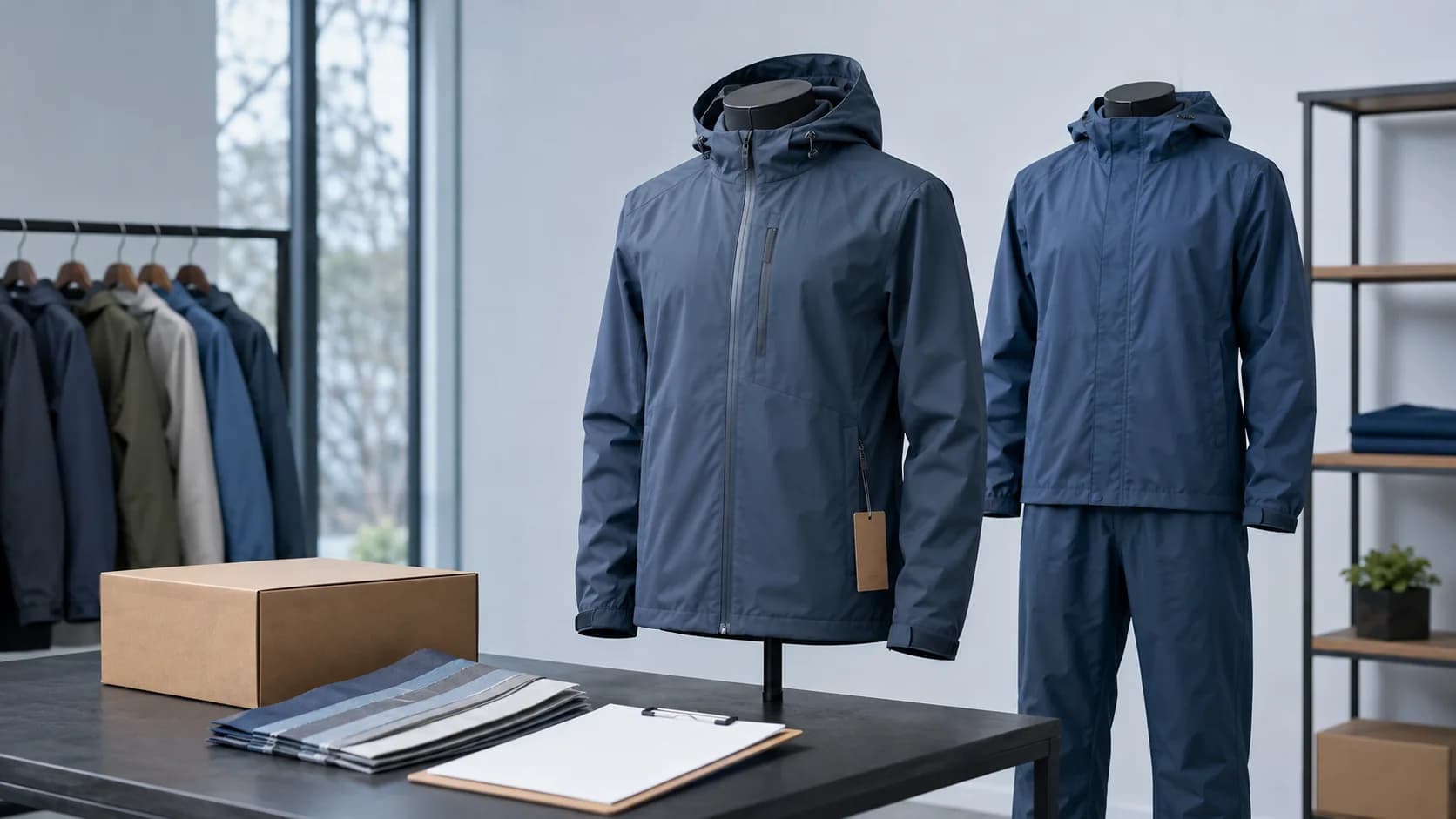
Rainwear performance and buyer fit depend on how fabric, coating or membrane, seams, hood, cuffs, hem, zippers, vents and garment pattern work together. Start with the target wearer and exposure, choose jacket, poncho or jacket-and-pants format, map every construction feature, and state which claims require a named method, unit, sample and report. Private-label artwork comes after the base construction and size set are controlled.
Choose a rainwear format by user task and specification burden
These formats answer different range jobs. No format is universally more waterproof, breathable or durable; those outcomes require a defined construction and appropriate evidence for the exact sample.
| Format | Useful buyer questions | Specification risks to close |
|---|---|---|
| Technical shell jacket | Activity level, layering, hood, pockets, ventilation and packability | Fabric and seam claims detached from the exact colour, size or construction |
| Jacket-and-pants rain suit | Coverage, entry method, waist/ankle adjustment, storage bag and size pairing | Top and bottom treated as one SKU without separate measurements and components |
| Reusable poncho/raincoat | Adult/child fit, length, hood/cuff closure, reuse and care wording | Generic thickness or waterproof language without material or method |
| Work or promotional rainwear | Visibility, branding area, repeated use, labels and destination rules | Logo placement or colour change alters seams, materials or compliance scope |
A private-label rainwear specification that can survive sampling
Write each claim beside its construction and evidence field. ISO 811 is a textile resistance-to-water-penetration method; citing it does not establish a garment result. The current Seawing product descriptions retain supplier wording and tell buyers to request relevant documentation.
| Specification block | Fields to lock | Evidence boundary |
|---|---|---|
| Shell system | Fibre, weave/knit, mass, coating or membrane, layers, face/back and colour | Confirm exact variant; material shorthand is not a result |
| Seam map | Stitch type, allowance, taped/welded/sealed locations, tape type and width | A seam-sealed description needs sample and verification scope |
| Garment engineering | Hood, cuffs, hem, storm flap, zipper, pockets, vents, lining and reinforcement | Component changes can alter fit and water entry paths |
| Size and grading | Base size, body measurements, garment measurements, tolerance and size set | Do not approve bulk from a single unspecified sample |
| Brand and label pack | Logo method/location, fibre/care/origin labels, warnings, languages, barcode and packaging | Applicable wording and responsible-party duties depend on market |
Anchor the brief to jacket, suit or poncho references
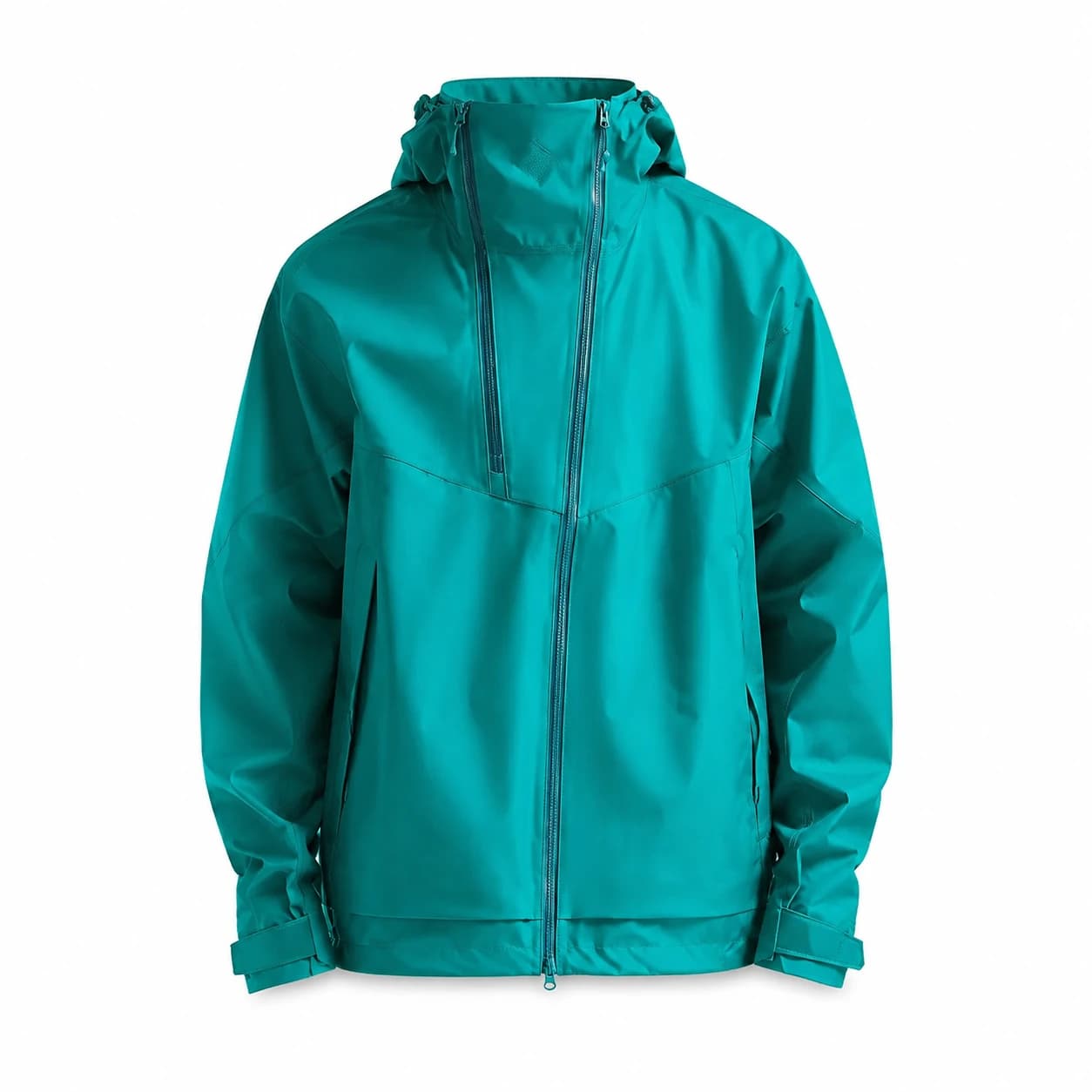
ID 42 is a 3-layer hiking jacket reference described by the supplier as seam sealed, with adjustable closures, ventilation details and custom logo embroidery. ID 45 is a packable jacket-and-pants rain-suit reference; ID 39 is a reusable raincoat/poncho reference. Use these pages to choose a direction, then confirm the selected variant, size set, logo, construction, MOQ, timing, price and target-market evidence in writing.
From wearer brief to controlled private-label rainwear
- 1Define wearer and exposureRecord activity, duration, climate, layering, target market and price position.
- 2Select the garment systemChoose format, shell build, seam treatment, closures, vents and size architecture.
- 3Map claims to evidenceFor each performance statement, name the method, unit, specimen and responsible document.
- 4Approve fit and brandingSign off size set, colour, logo method, labels, packaging and a dated golden sample.
- 5Control bulk productionInspect measurements, construction, seam treatment, artwork and packing against the approved revision.
Treat seams, labels and variants as controlled product data
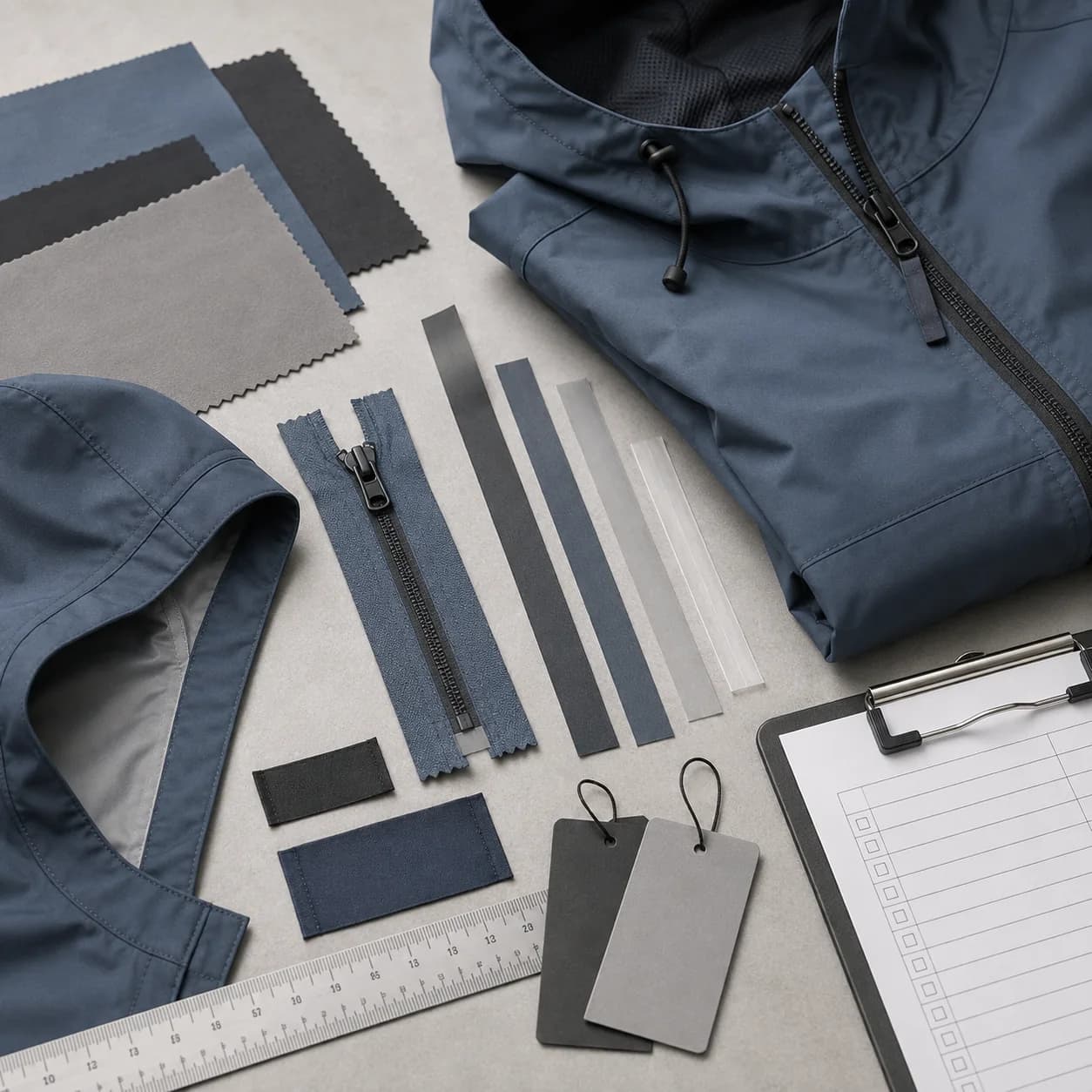
Review seam continuity and ends, tape alignment, stitch damage, zipper/storm-flap assembly, hood and cuff adjustment, ventilation openings, reinforcement, measurements, shade, logo placement, care/fibre/origin labels and packing. If performance testing is required, state whether the specimen is fabric, seam or finished garment and link the result to colour, size and construction revision.
- Create a seam map that names every taped, welded, sealed or untreated location.
- Approve at least the agreed size-set samples and measurement tolerances.
- Keep logo method and placement within the reviewed construction scope.
- Confirm fibre, care, origin, responsible-party and language duties for the destination.
- Link test reports and inspection records to the exact material, colour and revision.
A test method is a request field, not a product claim
ISO 811 supplies a hydrostatic-pressure method for textile fabrics. FTC textile and care-label guidance and destination-market rules help define label responsibilities. EU chemical restrictions may also affect material specifications and timelines. None of these sources proves that a particular Seawing jacket or rain suit passed a test, complies in every market or is available with a particular material; request SKU- and market-specific evidence before ordering.
Frequently Asked Questions
What belongs in a private-label rainwear tech pack?
Include wearer/use case, shell and lining construction, seam map and treatment, closures and ventilation, measurements and tolerances, size set, colour, logo, labels, packaging and evidence requirements.
Does seam sealed mean a jacket is proven waterproof?
No. It describes a construction direction. Request the seam map, exact treatment, approved sample and any agreed method-and-result evidence for the relevant specimen.
Should a buyer test fabric or the finished garment?
That depends on the claim and market. State whether the requirement concerns fabric, a seam assembly or the finished garment, and use an appropriate method and specimen.
Can a logo be added without changing the approval scope?
Not always. Embroidery, heat transfer or patches can affect layers, seams or water-entry paths. Review the final method and placement on the approved sample.
Which labels are needed for private-label rainwear?
Requirements vary by destination and product. Confirm fibre content, care, origin, responsible-party, size, warning and language duties with qualified market guidance.
Request a Private-Label Rainwear Development Brief
Ready to move from research to a quotation? Send us your specification and target market — our team comes back with MOQ, lead time and pricing.