
Building a Camping Sleep-System Assortment
Build a camping sleep-system assortment around separate product roles, exact model records, evidence gaps and a practical retail handoff matrix.
AI-generated editorial photographs illustrate generic range roles. They do not show actual Seawing products, a real store, tested compatibility or thermal performance.
Give each product its own job in the range
This guide is for retail category buyers choosing what to put beside what on a shelf, rather than choosing a zipper or identifying a valve. A sleeping bag, a sleeping surface and an accessory can support the same customer conversation while remaining separate products. Begin with the proposed customer activity and channel, then decide which role each reference should fill. An assortment is an organised choice; it is not automatically a packaged or tested system.
SKU 25 is a royal-blue envelope sleeping bag with a drawstring hood, 170T polyester outer and lining, and filling labelled Hollow Cotton Fiber. Its published contents are a bag and compression storage sack. SKU 18 is a deep-blue PVC air mattress with a flocked top and five size/model references. These facts identify records to compare. They do not establish fibre chemistry, thermal performance, a shared fit envelope or a common packaging specification.
For a concrete handoff, identify one mattress option: YW24565 is listed at 191 × 73 × 22 cm. Put that code in the sleeping-surface row and SKU 25 in a separate bag row. Leave the bag's usable measurements and the proposed combination review unresolved until supported. Do not fill those cells from the mattress dimensions. This prevents a buyer's desired kit from becoming an unsupported product description.
- SKU 25: envelope format, drawstring hood, 170T polyester outer and lining; filling labelled Hollow Cotton Fiber.
- SKU 18: PVC/flocked construction; YW24565 is one listed 191 × 73 × 22 cm option, not the whole family.
- SKU 18 contents: mattress, colour box, repair patch and manual. A pump is not listed; SKU 25 has its own separate contents record.
A five-row assortment decision matrix
Create one line per exact offered version. The rows below separate range decisions from evidence needed before presenting a combination.
| Range decision | Catalogue starting point | Additional evidence | What the buyer can decide |
|---|---|---|---|
| Sleeping-bag role | SKU 25 format and published material labels | Usable measurements, applicable label and exact option | Which reference to investigate for the proposed shopper brief. |
| Sleeping-surface role | SKU 18 selected model and listed dimensions | Measurement state, intended operating information and scoped thermal evidence | Which model belongs in the comparison; no inferred season rating. |
| Pairing and space | Two independent product records | Actual usable outlines, chosen shelter and a reviewed layout | Whether to develop a proposed pairing, rather than claim it already fits. |
| Accessories and contents | Separate contents lists | Pump, adapters, pillow or other requested item identifiers | Which items are supplied separately or need a new kit proposal. |
| Retail presentation | Selected references and channel | Approved labels, packing revision and a complete contents list | Whether to merchandise separately or review a documented combined offer. |
Separate three levels of assortment evidence
A SKU identifies its own published facts and contents. Keep each revision separate.
A buyer can shortlist related products without claiming they fit or share a thermal rating.
A documented combination needs matching samples, labels, instructions and a defined pack list.
Illustrating product roles and packing
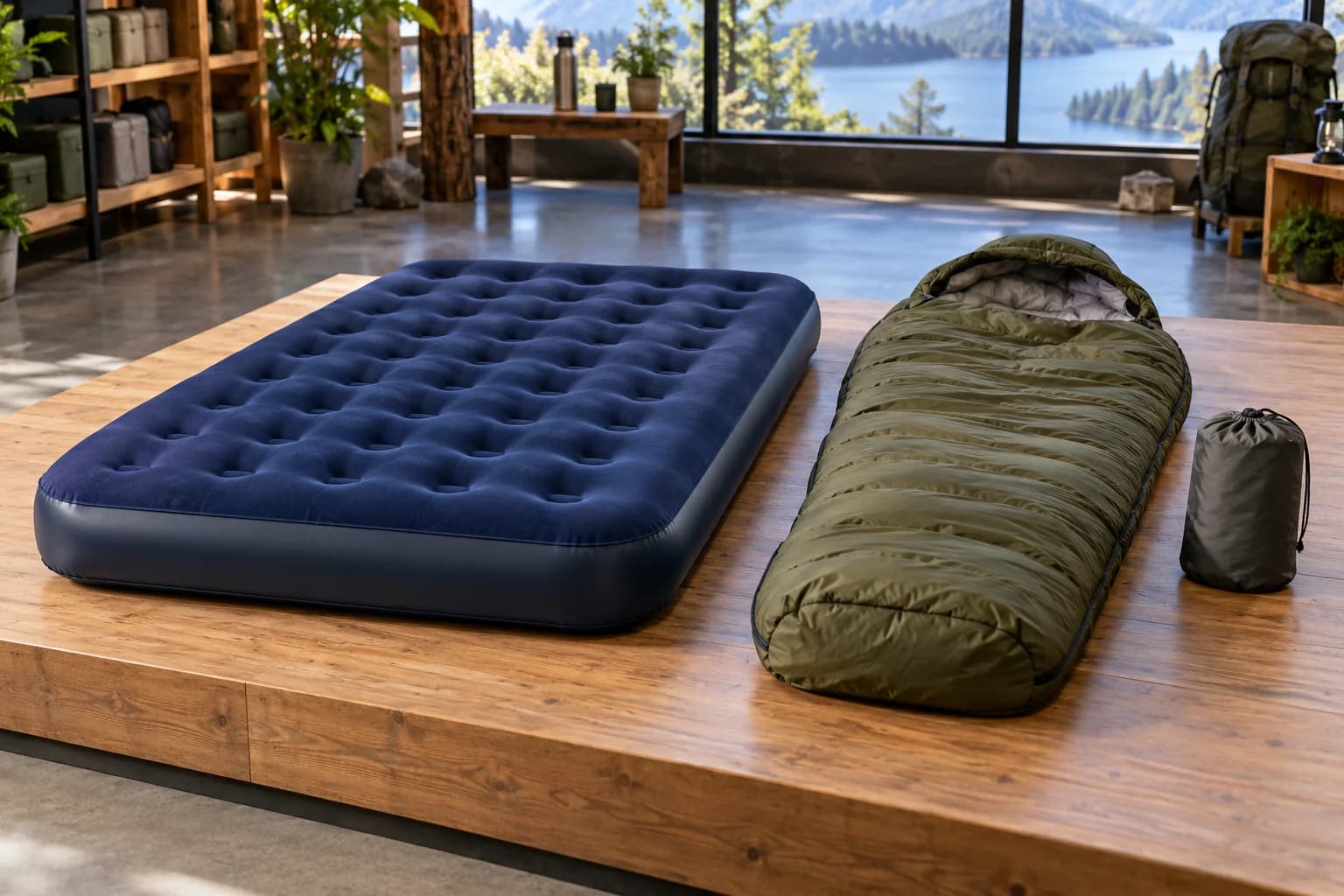
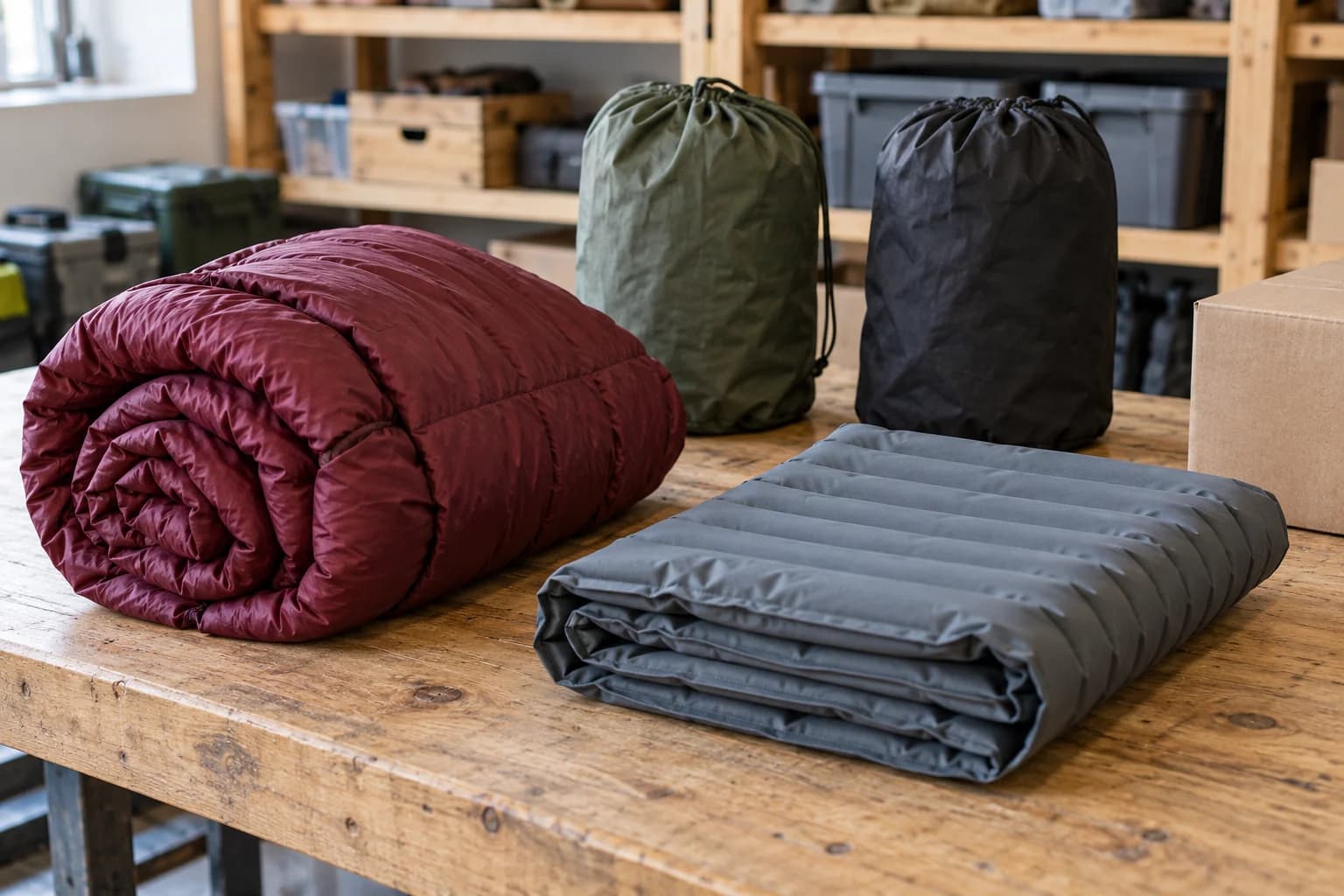
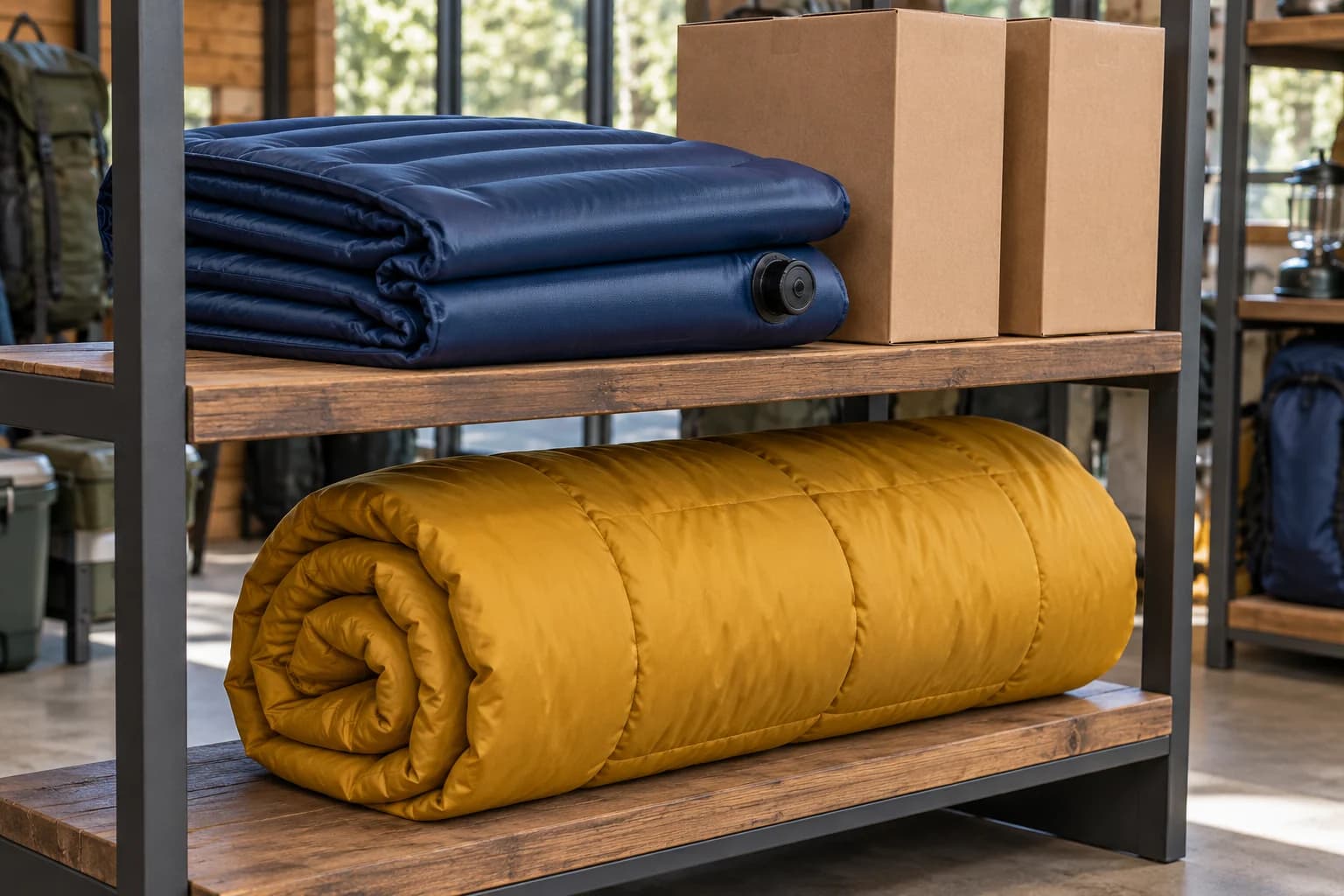
These three independent AI-generated editorial photographs show generic sleep products in showroom, packing and shelf arrangements. They are not SKU 25, SKU 18, a real Seawing store or evidence of an approved combination.
A worked brief without invented performance
Use this as a blank purchasing tool. In the first column, enter the actual brief, such as a retail channel seeking separately packaged sleeping-bag and mattress references. In the second, put SKU 25 and the chosen SKU 18 model on distinct lines. In the third, mark each decision as documented, requested or rejected. Do not insert a temperature, wearer size, sales forecast or packing quantity simply to complete the sheet. Send market, channel and estimated order quantity with the unresolved questions.
| Buyer input | Record to attach | Decision to retain |
|---|---|---|
| Customer activity and transport constraints | Intended use description; no assumed SKU suitability | Which roles the range must cover. |
| Bag and mattress references | SKU 25 plus one named SKU 18 model/revision | Which exact products are being considered. |
| Proposed pairing and shelter | Separate usable outlines and a sample/layout review | Fit remains unconfirmed until supported. |
| Separate sale or proposed kit | Current contents, requested additions and packing revision | Keep existing offers separate from the proposed kit. |
| Market-facing copy | Approved labels, instructions and scoped supporting records | Only supported claims move onto the shelf sheet. |
Five steps from catalogue to range handoff
- 1Define the range jobWrite the shopper activity, market, channel, transport constraints and quantity before choosing a combination.
- 2Shortlist independent recordsChoose exact bag and mattress versions; retain their separate published facts and contents.
- 3Map evidence gapsSeparate fit, thermal claims, accessories, operation and packaging into distinct decision fields.
- 4Review the proposed presentationReconcile labelled samples, the layout, instructions and the contents for any proposed kit.
- 5Approve and control changesRetain the agreed shelf description and reopen affected decisions after a product or packing revision.
Use sleep-system guidance without transferring ratings
REI explains that a sleep system involves more than a sleeping bag, while Cascade Designs separates user activity, conditions and construction in its own pad selection. These original guides support starting with the shopper and comparing product roles. Neither guide establishes that Seawing's two catalogue references form a verified system, and their own temperature tables or product segments should not be copied as SKU 25 or SKU 18 recommendations.
Sea to Summit explains R-value as a pad measurement and distinguishes laboratory testing from variable field use. ISO 23537-1:2022's public abstract concerns adult sleeping-bag thermal, dimensional and mass requirements within its stated scope; it is not a rating for a mattress or a mixed retail kit. The public scope was reviewed, not the paid full standard. Keep sleeping-bag ratings, pad R-values and any combination assessment in separate evidence fields. No applicable new requirement or Seawing test result was established in this review.
Original sources reviewed November 1, 2026
Compare sleep records and send an assortment brief
Open the sleep-accessories category and name the exact bag and mattress models. Send market, channel, activity and quantity, then distinguish separate purchases from any proposed combined presentation and list the fit, contents and evidence questions.
Frequently Asked Questions
Is an assortment the same as a tested sleep system?
No. A range groups products for a buyer decision. A tested or approved combination requires evidence for the named versions and stated conditions.
Can sleeping-bag and mattress ratings be added?
Do not combine unlike measurements into a temperature promise. Keep bag temperature evidence, pad R-value evidence and any combination assessment separate.
Why name a mattress model rather than SKU 18 alone?
SKU 18 has five published model/size references. A model code keeps dimensions, contents and later answers tied to the option under review.
Is a pump part of the proposed range?
It can be a buyer request, but SKU 18's published contents do not list one. Identify any proposed pump separately and verify the offered kit.
Can published mattress dimensions prove the bag fits?
No. The bag's usable outline, the actual mattress state and the intended shelter/layout need their own records and review.
What should a category buyer send first?
Send market, channel, activity, quantity, exact product versions and whether separate sale or a proposed kit is intended; attach the unresolved evidence fields.