
Trekking Pole Locks and Packed Length: A Buyer Comparison
Compare trekking pole lock questions, usable length, adjustment limits, packed configuration and accessories in a version-specific buyer matrix.
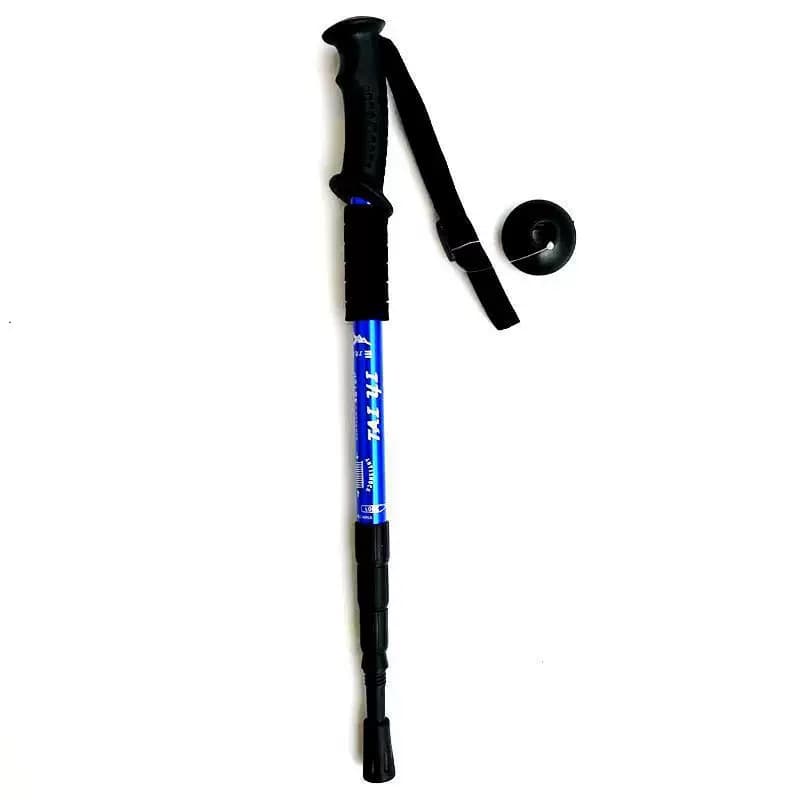
Site catalogue photograph of SKU 4; appearance reference only, not a dimension, lock identification or load test.
Separate locking, adjustment and storage architecture
This trekking pole lock type comparison helps outdoor product and range managers prepare comparable supplier responses. Seawing SKU 4 is the catalogue reference for adjustable trekking poles with several colour presentations. The published name includes anti-shock wording, but this guide makes no measured damping or joint-protection claim. The record does not provide a technical dimension table. Use the exact photo/option identifier in the enquiry instead of estimating shaft material, lock model or length from the image.
Locking and packing describe different jobs. A telescopic section slides within another section; a folding design separates into linked or otherwise connected segments for stowage. A folding pole can also contain an adjustable telescopic section. An external lever, internal twist mechanism or assembly pin therefore needs a location and function, not just a single check box. Ask which mechanism assembles the pole, which sets its working length, and whether different joints use different systems. This is a generic comparison framework, not an identification of SKU 4's internals.
Dimension labels need an agreed state. Ask where the usable length starts and ends, what adjustment interval is permitted, and how insertion or stop markings restrict extension. A fully collapsed telescopic length and a folded bundle length are different packing states. Record whether tips, baskets, straps and bags are fitted, removed or folded alongside the shaft. A photograph beside a backpack cannot establish dimensions or a secure carrying interface. Treat any intended pack or shelter connection as its own compatibility question.
- Reference: SKU 4; retain the selected colour/option and sample identity.
- Locking form, folding architecture and length adjustment are separate fields.
- Request measured usable and packed dimensions with method, units and accessory state.
Compare mechanisms by the questions they must answer
The rows describe generic mechanism families and data requests. They do not rank safety, durability or strength and do not assign a mechanism to SKU 4.
| Field or architecture | What to distinguish | Supplier record to request | Acceptance boundary |
|---|---|---|---|
| External lever | Clamping a specified telescopic joint | Joint location, model ID and operating/adjustment instructions | A lever name does not establish holding force |
| Internal twist | Internal locking of a specified sliding section | Mechanism ID, permitted operation and maintenance method | No universal tightening torque or interchangeability |
| Folding / assembly lock | Joining segments versus setting working length | Section drawing, assembly sequence and any separate adjuster | Folding does not mean fixed length in every model |
| Usable length | Working endpoints, adjustment interval and insertion limit | Dimension drawing, units, stop marks and permitted states | Maximum visible extension is not automatically permitted use |
| Packed length / accessories | Collapsed shaft versus folded bundle and fitted components | Measured packing state, included-item list and part IDs | Compact appearance proves neither dimensions nor accessory compatibility |
One pole, three records to compare
Identify each joint and separate assembly locking from length adjustment.
Record permitted usable length, range, endpoints and insertion restrictions.
State how sections and accessories are arranged when the packing dimensions are measured.
Independent catalogue presentations, no inferred dimensions
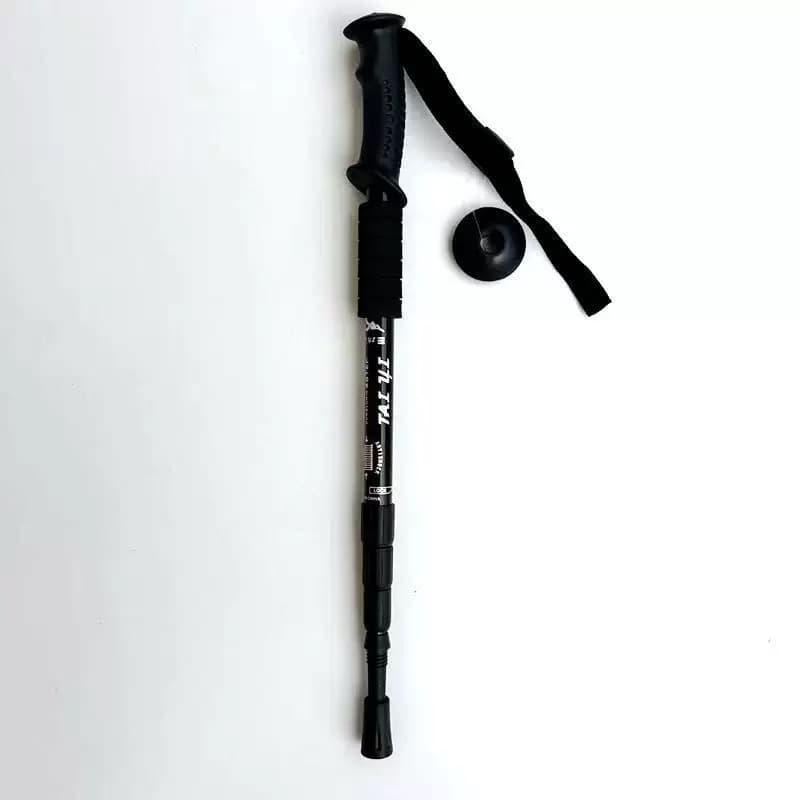
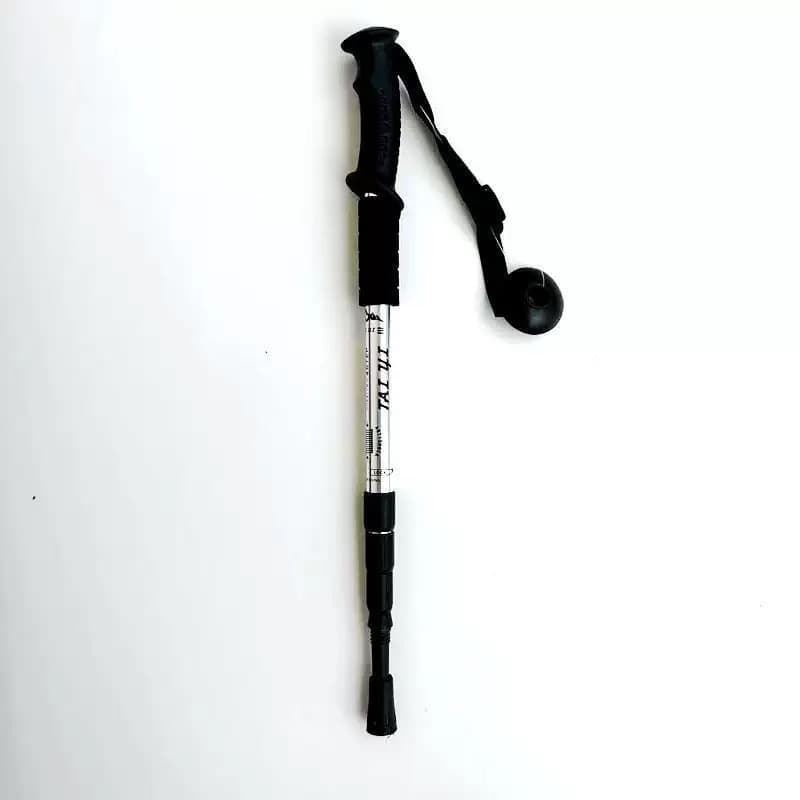
The cover shows a blue SKU 4 presentation. Two separate original catalogue photographs below show black and silver/white presentations. They identify appearance and option references only; the camera position and displayed shaft state are not a measurement method or evidence of a particular lock mechanism. No photograph is counted twice through a crop.
Build a version-specific lock and dimension sheet
Put the selected pole reference, market, channel and quantity at the top of the request. Ask for a drawing that numbers the sections and joins, then use the same numbers in operating instructions and accessory records. Request the supplier's sample-review procedure and acceptance basis rather than inventing a load or cycle threshold. A buyer's handling review is not a certified load test. Any proposed replacement tip, basket, clamp or section needs a matching part identifier and stated version scope; visual similarity is insufficient.
| Buyer requirement | Requested supplier record | Decision to retain |
|---|---|---|
| Selected reference and intended range role | Option/revision, sample ID and numbered section drawing | One configuration for the whole comparison |
| Assembly and adjustment questions | Per-joint mechanism IDs, sequence and instructions | Which control performs which function |
| Working dimensions | Usable endpoints, range, insertion restrictions and method | Permitted states, units and any tolerance |
| Packing and included items | Collapsed/folded measurement state and exact contents list | What is measured, included or separately requested |
| Evidence and future service | Applicable scoped reports, part IDs and change records | Only supported claims and documented replacement matches |
Five steps from catalogue photo to comparable data
- 1Identify the optionName SKU 4, photo reference, revision, market, channel and quantity.
- 2Map the jointsSeparate assembly, length adjustment and each locking mechanism.
- 3Define length statesRequest working, adjustment, insertion-limit and packed measurements independently.
- 4Reconcile the sampleCompare the labelled sample, instructions, dimensions and included-item list.
- 5Approve the recordRetain scoped evidence and reopen affected fields after component substitutions.
Original mechanism guidance is not a SKU test report
REI's selection guide separates external levers, twist locks, buttons and combinations. LEKI's original type guide distinguishes telescopic and folding architectures, including adjustable folding versions. These explain why a buyer should map functions by joint rather than treat folding and adjustable as opposites. Do not copy either source's length ranges, load claims or maintenance settings into SKU 4's specification. Follow the actual offered version's instructions when reviewing a sample.
Black Diamond's product FAQ describes its own mixed folding/telescopic designs. Silva's current pole guide also separates telescopic, folding and other range roles; its 2026 collection is relevant to the choice of comparison fields, not proof of Seawing demand or capability. LEKI's helpdesk connects lock and replacement-part questions to its own systems. These brand-specific sources support document requests, not a claim that their parts fit SKU 4. No generic locking family establishes safe load, service life, shaft grade, certification or suitability as a shelter support.
Original sources reviewed October 26, 2026
Review the pole and request its lock-and-length sheet
Open SKU 4 and identify the exact presentation you want to discuss. Send market, channel and quantity with the numbered-joint, working-length, packed-state and accessory questions. Ask for the offered version's answers before publishing comparison numbers or promising a replacement fit.
Frequently Asked Questions
Is a folding pole always fixed length?
No. Some designs combine folding sections with a separate telescopic adjuster. Request the actual section drawing and identify assembly locks separately from length adjustment.
Which lock type is strongest?
A generic mechanism name cannot answer that for an offered pole. Request version-specific evidence, method, conditions and applicable results; do not transfer another manufacturer's load claim.
Is maximum extension the usable length?
Not automatically. Request permitted working endpoints, adjustment range and insertion or stop restrictions. A visible scale or extended photograph does not establish an approved operating limit.
How should packed length be specified?
State whether the pole is telescopically collapsed or folded, define endpoints and units, and record the arrangement of tips, baskets, straps and any bag. Compare the same state across versions.
Are baskets and replacement sections interchangeable?
Do not assume so. Request exact part identifiers, interface details and applicable version scope, and confirm which items are included. Similar appearance is not compatibility evidence.
What should a product-manager enquiry include?
Send SKU/option, market, channel and quantity. Request joint and mechanism identifiers, working and packed measurement methods, insertion limits, instructions, included items and applicable scoped evidence.