
Rainwear Seams and Care Labels: A Product-Manager Brief
Build a version-linked rainwear seam construction checklist: layers, seam map, sealing, care labels and scoped evidence for the selected jacket.
AI-generated editorial cover, not SKU 42, a factory, customer, seam inspection, approved care label or test result.
Start with SKU 42 and one identified revision
This brief is for outdoor product and category managers approving construction and aftercare information. The SKU 42 jacket record describes three-layer composite outerwear, supplier-described fully sealed seams, adjustable hood and wrist closures, hem adjustment and rear ventilation details. Those descriptors help identify what to ask about; the selected colour, size, lining and production revision must still accompany the response.
Keep three records separate: what the catalogue says, what the construction sheet specifies, and what the evidence establishes. Write the outer face, membrane or coating and inner backer in separate fields. Ask for fibre, finish and supplier material references at each layer. Do not fill a membrane brand, water-pressure result or vapour-transfer value from the name 3L or from a photograph.
Next, mark the hood, shoulder, sleeve, side, pocket and closure junctions on a drawing of that revision. Ask which joins are sewn, taped, welded or otherwise sealed and what covers intersections. A local close-up can establish the appearance of one area, not complete seam coverage. Agree how proposed embroidery or a changed trim would be reviewed before accepting revised construction or care wording.
- Catalogue reference: SKU 42, three-layer hiking jacket.
- Fully seam-sealed is an attributed supplier description, not an independent test result.
- Request an exact layer specification, seam map, care-label revision and applicable reports together.
Rainwear seam construction checklist: five evidence links
Use one row per location and material combination. Record document identifiers and revision dates rather than a generic check mark.
| Field | Supplier question | Evidence to request | Approval boundary |
|---|---|---|---|
| Outer / barrier / inner | Which material and finish is used at each layer? | Revision-linked layer sheet and labelled swatches | 3L does not identify chemistry or performance |
| Seam locations | Which seams and junctions receive which treatment? | Annotated seam map and inside/outside sample photos | One taped area does not prove every seam is taped |
| Sealing system | Which tape or joining method matches this substrate? | Material identifiers, assembly detail and agreed inspection method | No universal tape width or application setting |
| Care label | Which washing, bleaching, drying, ironing and professional-care instructions apply? | Artwork, languages, placement and evidence supporting the whole garment | No copied brand-specific temperature or heat procedure |
| Applicable testing | Which specimen, method, conditioning and acceptance criterion were used? | Report linked to revision, material, seam location and care history | A fabric result is not a finished-jacket result |
Three approvals, one product revision
Identify layers, closures, every seam zone and the proposed joining or sealing system.
Match the label to the complete garment, including tape, trim, colour and any applied decoration.
Attach sample and document IDs, applicable methods, scope and the buyer's recorded acceptance.
Catalogue appearance is not a seam inspection
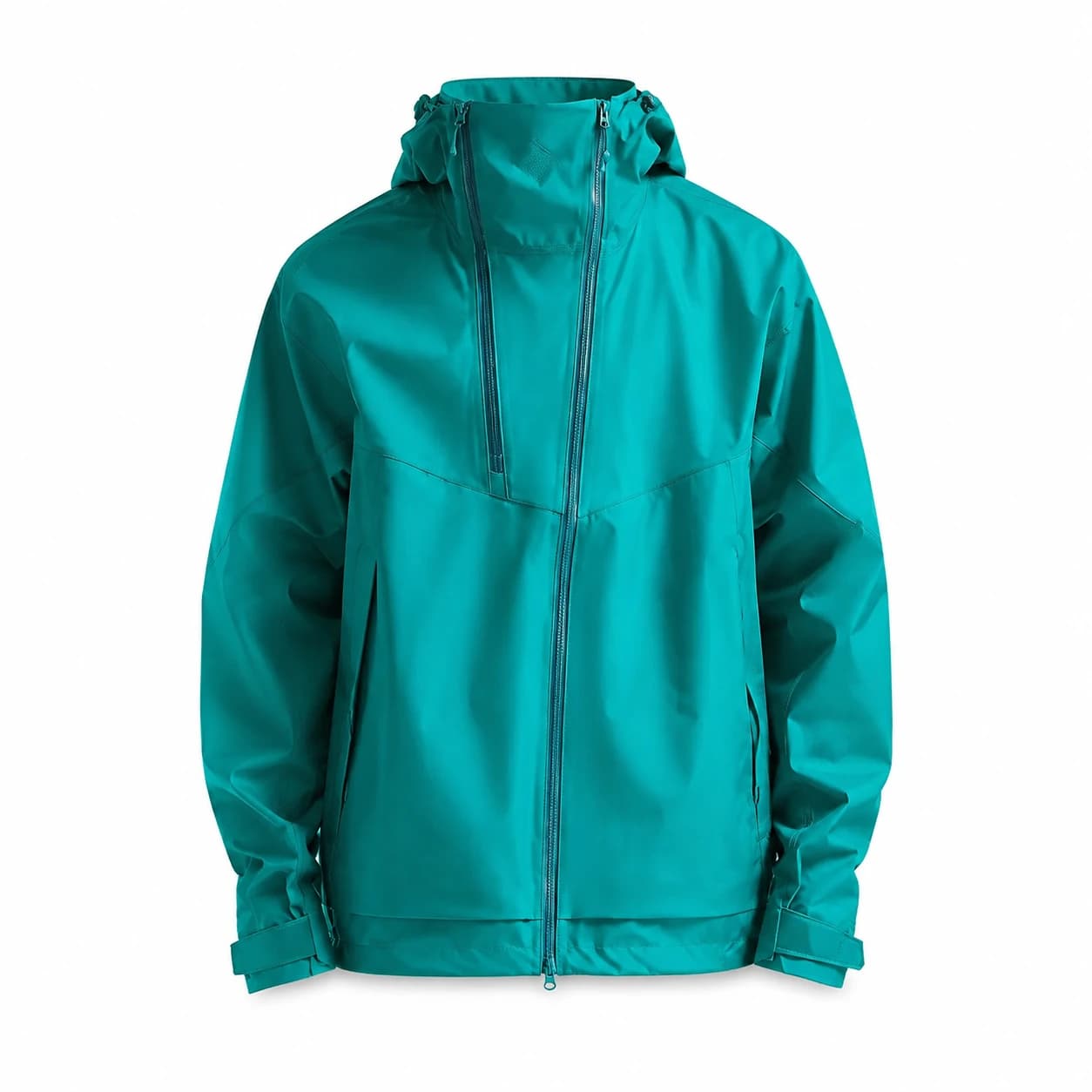
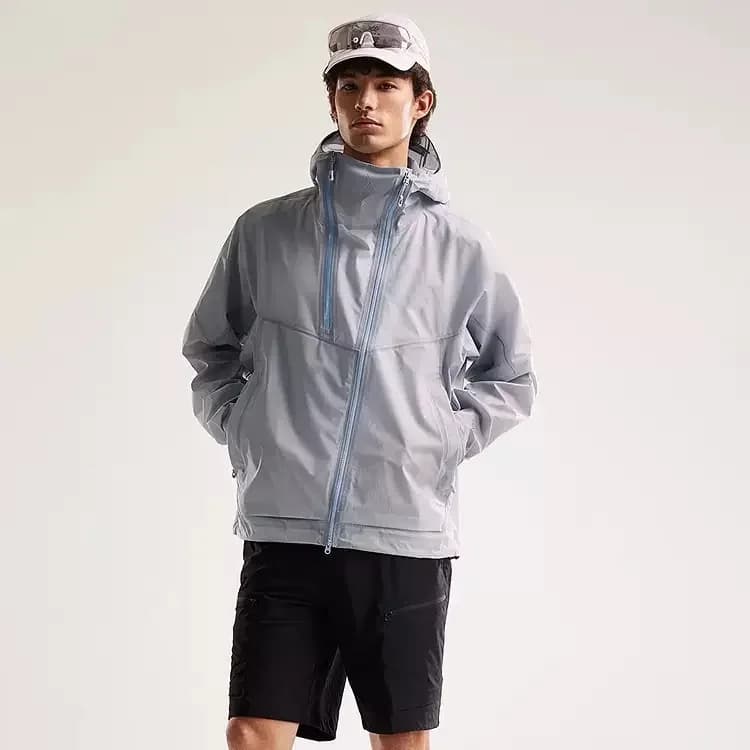
Two independent site catalogue photographs identify teal and worn grey presentations of SKU 42. They show appearance only, not the internal seam map, approved size advice or a performance result. The cover is a generic AI editorial illustration, not an inside view of this SKU.
Send a care-and-construction approval packet
The useful deliverable is a connected record, not a folder of unrelated certificates. Ask the supplier to identify what each document covers and flag substitutions. If a seam tape, colour, trim or decoration changes, reopen the affected material, label and evidence questions rather than assuming the earlier approval still applies.
| Buyer input | Requested supplier record | Decision to record |
|---|---|---|
| SKU, option, market, channel and quantity | Offered revision and labelled sample | Exact version under review |
| Layer and seam questions | Layer sheet, seam-zone drawing and treatment identifiers | Construction accepted or specific gaps to resolve |
| Consumer care information | Label artwork, placement and garment-level evidence basis | Version and language approved by the responsible reviewer |
| Performance claims being considered | Applicable methods, specimen scope, conditioning and results | Only wording supported by that evidence |
| Changes after approval | Material/trim/decoration change log | Which documents and sample checks must be repeated |
From jacket record to usable care information
- 1Identify the versionName SKU 42, option, size set, market, channel and quantity.
- 2Map constructionSeparate layers, seam zones, junctions, closures and treatments.
- 3Request care supportCollect the proposed label and evidence for the complete garment.
- 4Reconcile the sampleCompare the identified sample with the drawing, artwork and scoped reports.
- 5Approve and control changesRecord supported wording and reopen affected approvals after substitutions.
Read external guidance without borrowing its results
KAIDA's seam guide is useful for organising compatibility and seam-map questions. GORE's original care page explicitly directs users to the garment manufacturer's instructions. Its wash and heat procedures are for its own specified products; they are not a care recipe for SKU 42. REI explains rainwear terminology for consumers, but a product manager still needs revision-specific construction evidence rather than a category-level assumption.
GINETEX groups care information into washing, bleaching, drying, ironing and professional care under ISO 3758:2023. That vocabulary helps structure an artwork request; it neither selects a safe procedure for this jacket nor establishes symbol-use permission. The FTC's US guidance discusses evidence for care instructions and the complete garment. Use the original source for destination-market review, not as a global compliance certificate. For any market, ask the responsible reviewer which label and chemical documents apply before approving public claims.
Original sources reviewed October 22, 2026
Review the jacket and request its seam-and-care packet
Open the SKU 42 record and send the selected version, market, channel and quantity with the matrix above. A useful rainwear seam construction checklist ends with a matched sample, seam map, care artwork and applicable evidence—not a promise inferred from a product name.
Frequently Asked Questions
Does 3L prove waterproofness or breathability?
No. It describes a layer-construction concept, not a measured result. Request the actual layer materials and revision-specific test method, conditions, specimen scope and results before a performance claim.
Can I describe every seam as taped from one photograph?
No. Ask for a complete seam-location map and treatment identification. The catalogue's fully seam-sealed wording is a supplier description; a close-up cannot establish every junction or verify performance.
Can I copy GORE's washing temperature?
No. Follow the selected garment's approved instructions. Tape, membrane, trims and decoration may differ; another manufacturer's care recipe is not evidence for SKU 42.
What belongs in a care-label request?
Ask for washing, bleaching, drying, ironing and professional-care instructions, artwork languages, placement, revision and the evidence basis for the complete garment. Have the responsible destination-market reviewer assess applicability.
Does a fabric report cover the finished jacket?
Only within its stated specimen and method scope. Ask separately about seams, closures, care history and the completed garment; never transfer a fabric result to untested assemblies.
When should approval be reopened?
When a relevant material, tape, trim, colour, construction or decoration changes. Record the affected locations and ask which sample checks, care support and reports must be reviewed again.